| Pump type | External gear positive-displacement pump | Two meshing gears carry fluid from the inlet side around the outer edges of the gears to the outlet side. |
| Bidirectional operation | Flow direction can reverse when shaft rotation reverses, if the pump is designed for reversible operation. | Confirm both rotation directions are permitted. Porting, seals, lubrication, and any built-in valves must suit reverse operation. |
| Displacement | Specified in volume per shaft revolution, commonly cm³/rev (cc/rev). | Displacement is a model-specific value. It determines theoretical flow together with rotational speed. |
| Theoretical flow | Flow (L/min) = displacement (cm³/rev) × speed (rpm) ÷ 1,000. | Actual flow is lower because of internal leakage; use the manufacturer’s performance data for the operating pressure, speed, and fluid. |
| Pressure rating | Maximum and continuous pressure ratings vary by pump model and operating conditions. | Check the rated pressure, speed, temperature, and duty cycle on the specific pump datasheet. A relief valve is needed to protect a positive-displacement circuit from overpressure. |
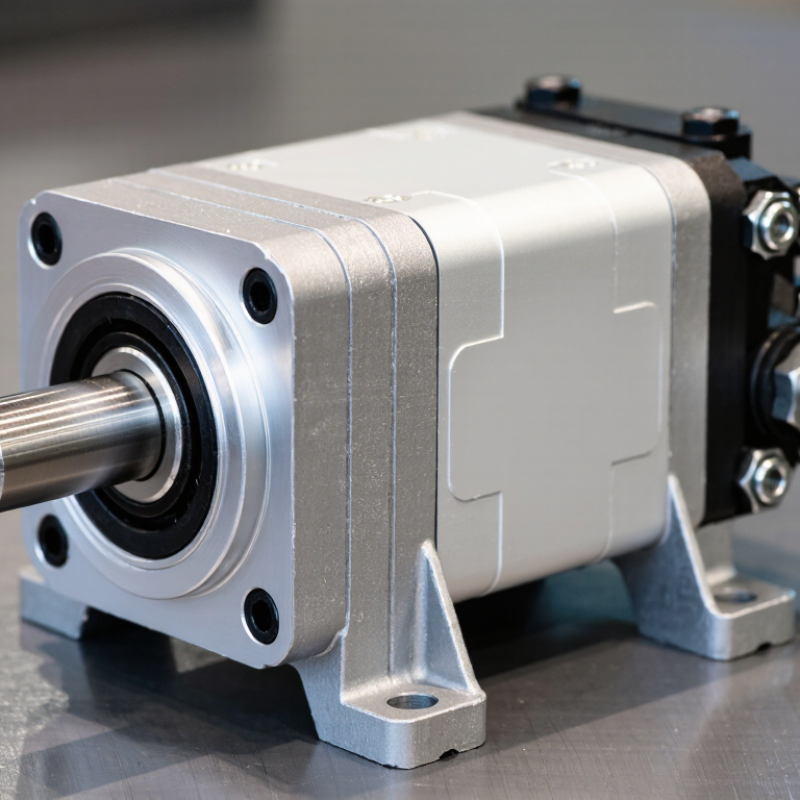
| Aluminum housing | Aluminum alloy may be used for the pump body to reduce mass. | Housing material alone does not establish pressure capability, fluid compatibility, or service life; verify the complete pump specification. |
| Working principle | As gear teeth separate at the inlet, expanding spaces draw fluid in. Fluid is trapped between the gear teeth and housing, then displaced as the teeth mesh at the outlet. | The meshing zone limits direct flow back from outlet to inlet; the pump produces flow, while system resistance determines operating pressure. |
| Fluid and viscosity | Fluid type and viscosity must fall within the pump manufacturer’s specified limits. | Check compatibility with the body, seals, and other wetted materials, as well as the allowable viscosity range at startup and operating temperature. |
| Inlet conditions | Inlet pressure, line size, fluid temperature, and rotational speed affect filling and cavitation risk. | Follow the specified inlet-pressure and suction-line requirements; avoid restrictions and keep the inlet line appropriately sized. |
| Choosing a suitable pump | Match displacement, flow, pressure, shaft speed, rotation, port arrangement, mounting, fluid, and temperature to the application. | There is no universally best pump for every system. Compare model-specific datasheets and confirm reversible operation before purchase. |



 © Copyright 2020 Tianjin Tanghaidongyang Valve Co., Ltd. All Rights Reserved.