Custom sewer jetters generally fall into three practical groups: portable electric units, trailer-mounted systems, and truck-mounted machines. Portable models suit indoor drains and short branch lines. Their compact frames fit through doorways, but limited water capacity can interrupt longer jobs. Small jobs.
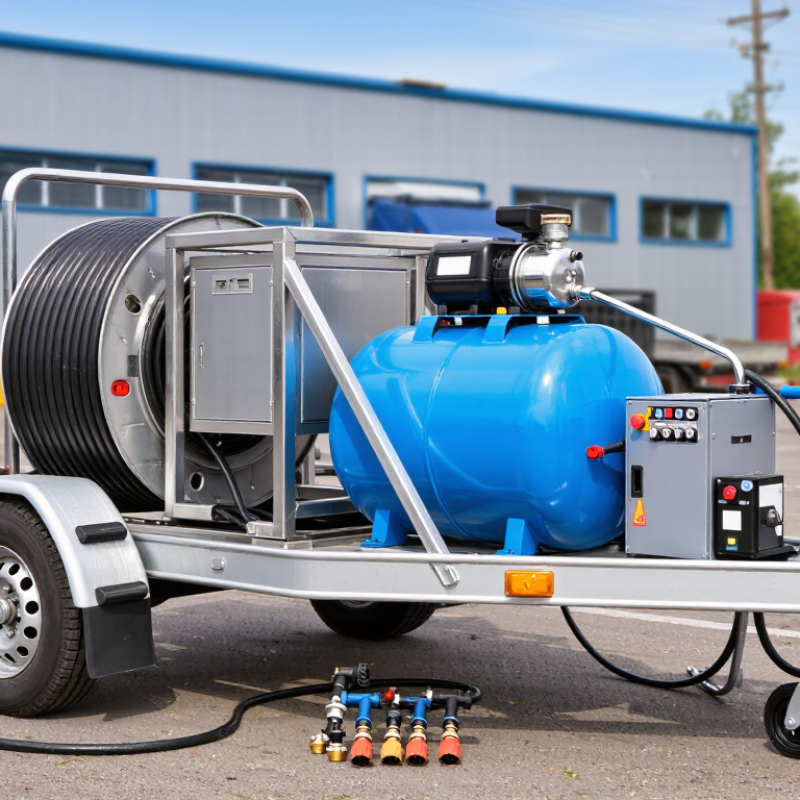
Trailer-mounted jetters provide more water and flow for contractors clearing building laterals, commercial drains, and local sewer lines. Truck-mounted systems are designed for sustained work on larger municipal mains, where operators may need longer hose runs and greater debris-carrying flow.
Pressure alone is not the whole story. A high-pressure, low-flow unit may open a blockage but leave sediment behind; nozzle choice, pipe condition, and operator control also matter.
The U.S. EPA’s 2022 Clean Watersheds Needs Survey estimated $630.1 billion in wastewater and stormwater infrastructure needs over 20 years. That figure is not a jetter-sales forecast, but it shows the scale of assets requiring attention.
Buyers should match machine capacity to pipe diameter, access, and expected duty cycle, then check water-tank size, hose handling, and serviceability. Capacity charts can mislead. I would also verify performance on the smallest lines in the planned workload, since oversized equipment can be awkward where access is tight.



 © Copyright 2020 Tianjin Tanghaidongyang Valve Co., Ltd. All Rights Reserved.