2026 Best Swing Check Valve Types for Global Buyers?
Choosing the right swing check valve for 2026 requires more than comparing prices or catalog photographs. Global buyers must match valve design with fluid, pressure, temperature, installation angle, and maintenance access. A wastewater line may need a resilient-seated model. A refinery discharge line may demand a metal-seated valve with stronger pressure and temperature resistance. Small details matter.
Industry reports show why this market deserves careful screening. Grand View Research identifies industrial valves as a major global equipment market, supported by water infrastructure, energy projects, and process industries. MarketsandMarkets also highlights rising demand for automated and digitally monitored valves. These reports do not isolate every swing check valve type. That limitation should be acknowledged. Still, their findings reveal broader purchasing pressures: longer service life, lower leakage risk, and easier inspection.
Greg Johnson, a long-time valve-industry educator and former Valve Magazine contributor, offers a useful principle: “The valve has to fit the application.” It sounds obvious. It is often ignored. Buyers should review API 6D, ASME B16.34, and applicable water-service requirements before approving a supplier. They should also inspect hinge-pin construction, disc clearance, reverse-flow behavior, and pressure-loss data. A heavier body is not automatically better. A cheaper quotation may hide difficult replacement work.
This 2026 guide compares swing check valve designs for international buyers, including wafer, flanged, tilting-disc, and non-slam alternatives. The goal is practical selection, not marketing certainty. Some project data will remain incomplete. Good engineering admits that—and verifies the missing details before shipment.
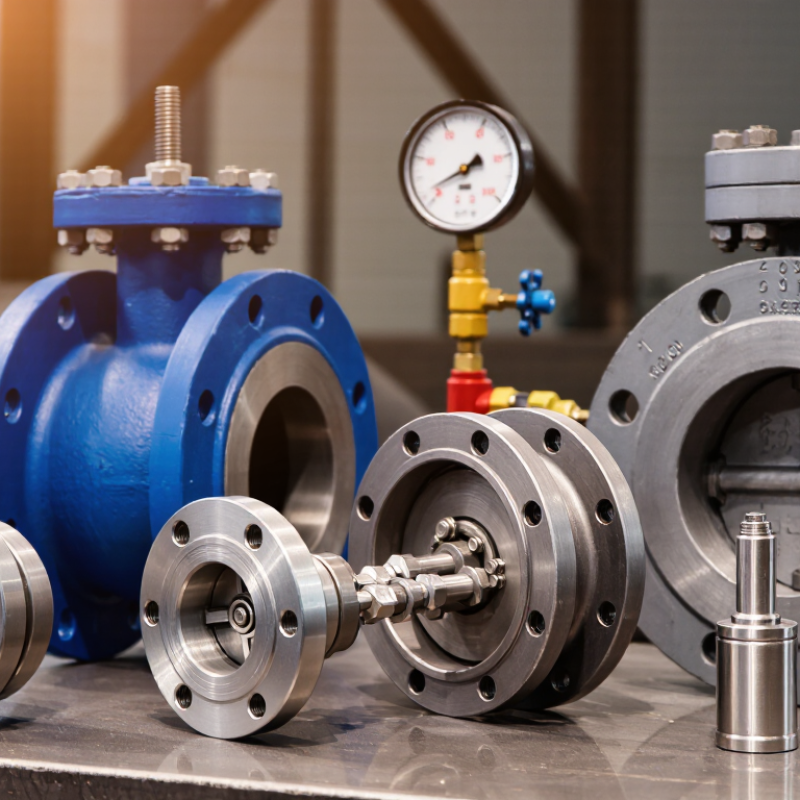
What Is a Swing Check Valve and How Does It Work?
A swing check valve is a one-way valve that controls fluid movement inside a pipeline. Its main parts include a valve body, hinged disc, seat, and hinge pin. When forward pressure rises, the disc swings away from the seat. Fluid then passes through the open flow path.
When the pump stops, gravity and reverse pressure move the disc back toward the seat. The disc closes against the seat and limits backflow. It needs no motor or manual operator. That simple action makes it useful in water, wastewater, process, and many industrial piping systems.
The valve works best when installed in a suitable horizontal line, although some designs allow vertical installation with upward flow. Always check the manufacturer’s flow arrow and installation limits. A poorly positioned disc may close slowly or remain partly open. That can increase wear and create damaging water hammer.
For global buyers, disc material, seat design, pressure rating, temperature range, and connection standard deserve careful review. A metal seat may tolerate heat and rough service. A resilient seat can provide tighter closure in cleaner, moderate-temperature fluids. Yet no option is perfect. Dirty fluid can collect around the hinge, while fast flow can cause disc movement and noise.
From practical maintenance experience, inspect the hinge, seat surface, and internal deposits during planned shutdowns. Ask for pressure-test records and material certificates. These documents support reliable purchasing, but they do not replace site-specific engineering judgment.
2026 Best Swing Check Valve Types for Global Buyers
Comparative engineering index for common swing check valve designs. Higher scores indicate stronger suitability for the stated selection factor.
Conventional swing check valves generally provide strong high-flow performance and low pressure loss.
Tilting-disc designs are often preferred where faster closing and reduced water hammer are important.
Wafer swing check valves offer a compact installation footprint, while rubber-seated designs can provide improved low-pressure sealing.
Final selection should be verified against pressure class, temperature, fluid compatibility, installation orientation, and applicable standards such as API 6D, API 594, and ASME B16.34.
Which Swing Check Valve Types Suit Different Piping Systems?
For clean water lines, a conventional swing check valve suits steady, horizontal flow. Its hinged disc opens gradually and creates moderate pressure loss. The 2024 UN World Water Development Report cites WHO and UNICEF data showing that 2.2 billion people lacked safely managed drinking water in 2022. That scale increases demand for reliable water and wastewater protection. Engineers should still check solids, reverse flow, and installation angle. A standard swing design can clog in sewage service.
Dual-plate wafer check valves fit compact pump discharge systems and crowded process skids. They use shorter travel and usually reduce installation space. They can also close faster, limiting reverse flow and some water-hammer risk. However, fast closure is not always gentle. Poor spring selection may produce noise, vibration, or disc wear. Tilting-disc valves suit larger pipelines, high flow rates, and systems needing lower closing shock. They cost more, but their controlled motion can protect long pipelines.
For oil, gas, and chemical service, pressure class, temperature, sealing material, and fire-safe requirements deserve equal attention. The International Energy Agency’s Oil 2024 report projects global oil demand growth of about 3.2 million barrels per day through 2030. This supports continued investment in process piping, but market forecasts cannot replace hydraulic calculations. API 6D and ASME B16.34 provide useful design references. A convenient rule can fail. Verify velocity, backpressure, maintenance access, and actual pipe orientation before selecting the valve.
How to Compare Materials, Pressure Ratings, and Connection Designs?
Choosing a swing check valve in 2026 requires more than matching pipe size. Materials must suit the fluid, temperature, corrosion risk, and maintenance environment. Carbon steel works well in many industrial water systems, while stainless steel offers stronger resistance to corrosive media. Duplex alloys may suit chloride-rich service, but their higher cost needs justification. Material selection is never automatic.
Pressure ratings deserve careful attention. A valve marked Class 150 is not directly equivalent to PN16 in every condition. Ratings change with temperature, material, and applicable standards. Check the pressure-temperature table, not only the nominal class. Ask for hydrostatic test data and leakage requirements. Details matter. A clean datasheet can still hide a mismatch.
Connection design affects installation and future repairs. Flanged ends support robust alignment and easier removal, although they require more space and gasket control. Wafer designs save length and weight, but adjacent flange alignment becomes critical. Lug-style bodies can simplify maintenance in some layouts. Threaded connections suit smaller lines, yet sealing quality depends heavily on installation practice. I have seen failures blamed on the valve when pipe supports caused disc misalignment. That possibility should be investigated before changing materials. Buyers should also verify flow direction, hinge access, face-to-face dimensions, and spare-part availability. Local standards may alter acceptable testing or connection details, so technical review with a qualified engineer remains worthwhile.
What Standards and Certifications Should Global Buyers Verify?
2026 Best Swing Check Valve Types for Global Buyers?
Global buyers should verify the governing standard before comparing price or delivery time. API 594 covers wafer, lug, and double-flanged check valves, while API 6D applies to pipeline valves. ASME B16.34 addresses pressure-temperature ratings and materials. ISO 5208 defines pressure testing methods. These standards are not interchangeable. A valve marked “API compliant” needs a clear edition, scope, and test record.
Certification evidence must match the destination market. For European projects, verify Pressure Equipment Directive 2014/68/EU conformity, notified-body details, and the correct category. EN 10204 type 3.1 material certificates should trace the body, disc, hinge, and seat to heat numbers. For other markets, buyers may request ASME design compliance, API licensing, or local conformity documents. Check the certificate online, not only in a scanned file.
ISO’s 2022 Survey reported more than 1.2 million ISO 9001 certificates worldwide, showing the standard’s broad acceptance. Yet ISO 9001 proves a quality system, not valve performance. Ask for hydrostatic, seat-leakage, cycle, and dimensional inspection records. Fire-safe service may require API 607 or API 6FA testing. Some suppliers provide impressive paperwork but weak traceability. That risk is easy to miss. Buyers should also review coating thickness, low-temperature impact testing, and actual installation history. A perfect certificate can still hide an unsuitable swing angle or water-hammer problem.
How to Select, Install, and Maintain the Right Swing Check Valve?
2026 Best Swing Check Valve Types for Global Buyers
Selecting the right swing check valve starts with flow conditions, not pipe size alone. Confirm the medium, pressure, temperature, flow direction, and installation angle. API 6D and ASME B16.34 provide widely used requirements for pipeline and pressure-retaining valves. Their guidance supports safer material selection and pressure design.
A conventional swing valve suits clean liquids with steady flow. A resilient-seated design may reduce leakage in water service. For wastewater, slurry, or particles, inspect the disc path carefully. Oversizing can make the disc close slowly and create reverse flow. The U.S. Department of Energy reports that compressed-air systems may lose 20–30% of output through leaks. This shows why sealing and maintenance deserve attention, even outside air systems. Water hammer remains a practical risk. A field engineer should check closing speed, pump shutdown behavior, and downstream pipe support. The selection chart helps, but it cannot replace site measurements.
Tips: Install the valve with the flow arrow correctly aligned. Keep the hinge above the disc when the design requires horizontal piping. Leave enough clearance for cover removal. Flush welding debris before commissioning. During maintenance, inspect the hinge pin, seat surface, disc movement, and corrosion marks. Record pressure readings and leakage results against ISO 5208 testing classes. One overlooked detail is access space. Technicians often discover this too late. һөкүмити



 © Copyright 2020 Tianjin Tanghaidongyang Valve Co., Ltd. All Rights Reserved.