| Primary purpose | Keeps prepared hot food warm for service; it is generally a holding unit, not a cooking appliance. | Cook food fully before placing it in the chafer. Do not rely on a chafer to safely heat cold or undercooked food. |
| Water pan and indirect heat | In a standard wet-heat setup, hot water in the water pan transfers gentle heat to the food pan above it. | Follow the unit’s instructions for water level and setup. Check the water during service and refill carefully when needed. |
| Safe hot holding | Hot-holding requirements are set by applicable food-safety rules, not by the chafer’s appearance or fuel flame. | As a widely used benchmark, the FDA Food Code specifies holding time/temperature control for safety food at 135°F (57°C) or above. Verify local requirements and use a food thermometer. |
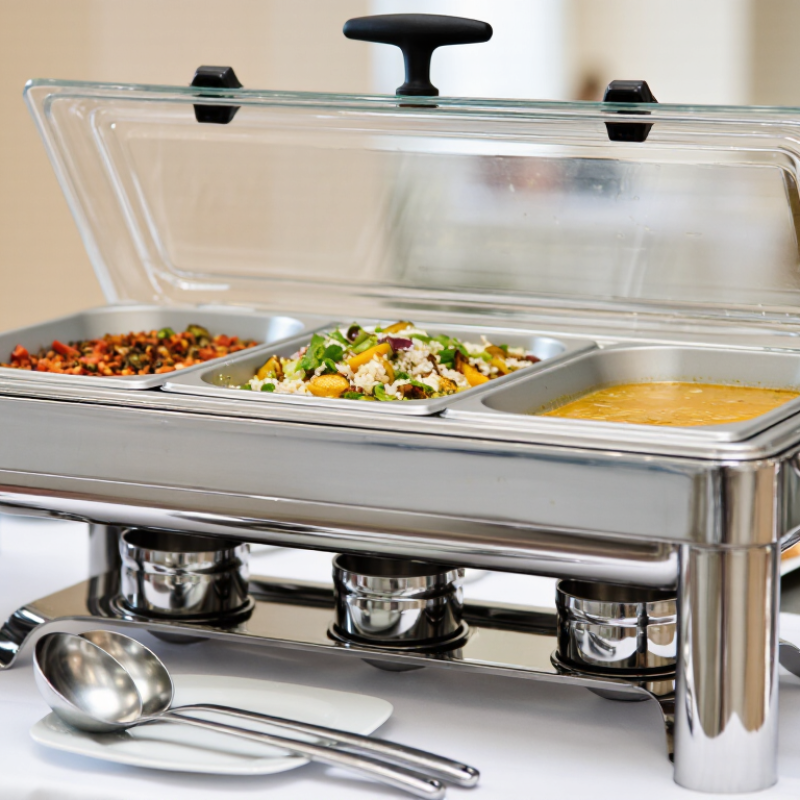
| Fuel-heated models | Chafing fuel warms the water pan and is often useful at venues without convenient electrical access. | Fuel type and burn time vary. Follow the fuel and chafer instructions, keep flames away from combustible materials, and never leave a lit unit unattended. |
| Electric models | An electric heating element provides heat without an open chafing-fuel flame. | Confirm that the venue has suitable outlets and that the circuit can support the equipment. Keep cords secured and away from walkways and hot surfaces. |
| Food pan compatibility | The food pan holds the dish for service; dimensions and compatible pan formats depend on the chafer model. | Check the manufacturer’s stated pan size and depth before purchasing. For buffets, smaller pans can make it easier to replenish food in manageable batches. |
| Service capacity | The amount a chafer can serve depends on pan dimensions, food type, portion size, and replenishment frequency. | Estimate capacity from the actual pan and menu rather than the exterior size of the chafer. Plan enough units to avoid overcrowding the buffet. |
| Lid and access | A lid helps cover food between servings; lid designs may be lift-off, hinged, or roll-top. | Choose a design that suits the service line and staff workflow. Keep the lid closed when practical and use utensils that fit the food and pan. |
| Temperature monitoring | A chafer’s heat setting or fuel flame does not confirm that food is at a safe holding temperature. | Check food temperature with a clean, suitable food thermometer at regular intervals and record checks if required by the food-safety plan. |
| Outdoor and mobile catering | Wind, cold weather, and frequent lid opening can affect heat retention and service conditions. | Use the unit only in locations permitted by its instructions. Protect the setup from wind without blocking ventilation or creating a fire hazard. |
| Cleaning and durability | Food-contact surfaces and removable parts need cleaning after use; material and finish affect care requirements. | Check that pans and parts are removable and follow the cleaning instructions. Inspect hinges, handles, fuel holders, and electrical components before each event. |
| Best-fit selection | The most suitable chafer depends on the menu, venue, service duration, power access, and staffing. | Compare compatible pan dimensions, heat source, lid style, setup requirements, cleaning needs, and local safety rules before buying. |



 © Copyright 2020 Tianjin Tanghaidongyang Valve Co., Ltd. All Rights Reserved.