2026 Top 2 Cylinder Diesel Generator Price and Specs?
Choosing a 2 Cylinder Diesel Generator in 2026 involves more than comparing advertised prices. The right model depends on its intended workload, operating hours, and installation conditions. A small workshop, remote property, and backup system may need very different output and features. This guide introduces the specifications that matter, including rated and standby power, fuel consumption, engine speed, cooling method, and noise level. Check whether published figures use the same testing conditions. They may not. A lower price can also reflect a simpler control panel, smaller fuel tank, or limited warranty coverage.
Prices vary by market, brand, emissions configuration, and included equipment, so a single figure can be misleading. Treat online listings as starting points, then request a dated quotation that spells out delivery, taxes, accessories, and service support. Compare the generator’s continuous rating with your actual loads, including motor-starting demand. A unit that looks adequate on paper may struggle when pumps or compressors start together. That detail matters. Ask about parts availability, maintenance intervals, and the dealer’s response time before buying. Specifications help narrow the field, but they do not predict every operating condition. Even careful comparisons leave some uncertainty. The sections ahead explain how to read common ratings, assess value, and spot trade-offs without assuming that the most powerful or cheapest option is automatically best.
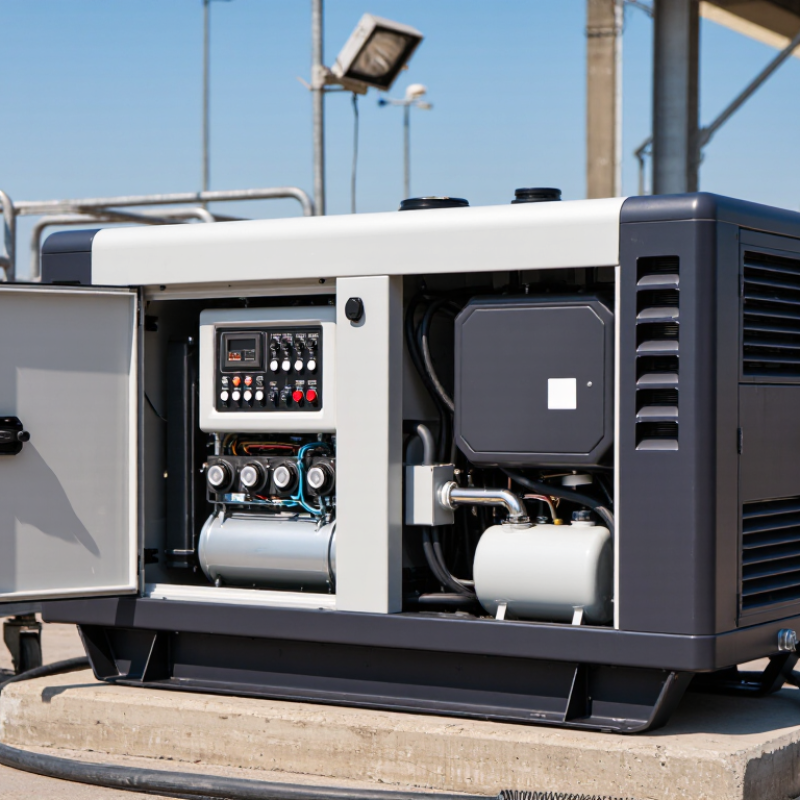
What Is a Two-Cylinder Diesel Generator?
A two-cylinder diesel generator uses an engine with two pistons moving inside separate cylinders. Combustion pushes each piston, turning a crankshaft connected to an electrical alternator. The alternator converts rotation into usable power. That is the basic idea.
Compared with a single-cylinder engine, two cylinders can produce smoother running and share the workload. The difference is easy to notice when the set is operating under a steady load: vibration may feel less sharp, though the machine still needs a firm, level base. Sound levels vary by enclosure, engine speed, and installation. Two cylinders do not automatically mean quiet operation.
Power output depends on engine size, rated speed, cooling design, and alternator capacity. Check both continuous and standby ratings, rather than relying on a headline figure. A practical inspection should also cover oil access, fuel-filter placement, cooling airflow, and service intervals. Small details matter. If the unit will run tools or a pump, compare its starting demand with the generator’s capacity; motors can draw extra current at startup. I would not treat cylinder count as a quality score. It describes the engine layout, not the whole machine, and published specifications still need to match the intended load and operating conditions.
2026 Top 2 Cylinder Diesel Generator Price and Specs? - What Is a Two-Cylinder Diesel Generator?
A two-cylinder diesel generator uses a diesel engine with two cylinders to drive an electrical alternator. Compared with many small single-cylinder sets, it can offer smoother operation and support higher output, depending on engine design and generator configuration. The examples below are generic specification ranges, not specifications for particular models.
| Specification | Compact Two-Cylinder Set | Higher-Output Two-Cylinder Set |
| Typical rated output | Approximately 5–8 kW | Approximately 8–12 kW |
| Typical engine displacement | Approximately 0.6–0.9 L | Approximately 0.8–1.2 L |
| Operating speed | Commonly 1,800 rpm at 60 Hz or 1,500 rpm at 50 Hz | Commonly 1,800 rpm at 60 Hz or 1,500 rpm at 50 Hz |
| Common voltage options | 120/240 V single-phase; other configurations vary | 120/240 V single-phase; some configurations offer three-phase output |
| Cooling and starting | Air- or liquid-cooled; electric starting is common | Air- or liquid-cooled; electric starting is common |
| Typical configuration | Portable or stationary; open-frame or enclosed | Usually stationary; open-frame or sound-attenuated enclosure |
| Indicative 2026 price (USD) | About $2,000–$5,000 | About $3,500–$8,000 |
| Potential price factors | Enclosure, alternator, controls, emissions compliance, and included accessories | Output rating, cooling system, enclosure, transfer-switch compatibility, and installation requirements |
Price figures are broad, indicative USD estimates for generator equipment in 2026, not verified quotations. Actual prices and specifications vary by country, frequency, voltage, emissions rules, supplier, and whether installation or a transfer switch is included. Check the rated and standby output separately when comparing units.
How Two-Cylinder Diesel Generators Work
2026 Top 2 Cylinder Diesel Generator Price and Specs?
How Two-Cylinder Diesel Generators Work
A two-cylinder diesel generator turns fuel energy into electricity through a coordinated engine and alternator. During each four-stroke cycle, a cylinder draws in air, compresses it, receives injected fuel, and pushes exhaust out. The compressed air becomes hot enough to ignite the fuel. No spark plug is needed. The two cylinders share a crankshaft, but their firing timing depends on the engine design. Their alternating power strokes help keep the shaft turning smoothly, though vibration is still noticeable on some compact sets. The alternator then converts rotation into electrical output. A governor adjusts engine speed as the load changes, helping maintain a stable frequency.
Tips: Check rated output, voltage, cooling type, and fuel consumption at your expected load. Ask for sound and vibration readings if the unit will run near people. Compare prices only when specifications and included equipment match.
A two-cylinder model may suit a workshop, farm pump, or backup circuit, depending on its rated capacity. Small details matter: a loose mount can amplify rattling, and a blocked air filter can reduce performance. Service access matters too. If oil drains onto a crowded frame, routine maintenance becomes harder than expected. Published specifications are useful, but real fuel use varies with load, temperature, and upkeep. Price also changes with enclosure, controls, and installation needs. Don’t assume the lowest listed figure covers everything.
Key Specifications to Compare in 2026 Models
In 2026, compare two-cylinder diesel generators by usable output, not the largest number on the sales sheet. Check rated and standby kW, then confirm whether the rating applies at your required voltage and frequency. Record fuel consumption at 50%, 75%, and full load; a small difference matters when the unit runs for hours. Also compare starting method, cooling type, tank capacity, noise level, weight, and service intervals. The U.S. Department of Energy’s Reciprocating Engines fact sheet reports electrical efficiencies of roughly 27–41% across engine types and applications. That range is a broad benchmark, not a promise for every compact two-cylinder model.
Price comparisons need the same care. Ask whether the quoted price includes the control panel, battery, enclosure, and delivery. A cheaper unit may have a smaller alternator or less convenient maintenance access. Look for clear continuous-duty ratings and published fuel-use figures. Some specification sheets still leave gaps; request written clarification before comparing costs.
Tip: Match the generator to measured starting loads, not just average running watts. Check pump or compressor startup current, and leave practical headroom. A little extra capacity can help; too much can mean inefficient light-load operation. That trade-off is easy to overlook.
Typical 2026 Prices and Factors That Affect Cost
In 2026, a compact two-cylinder diesel generator rated around 5–10 kW may cost roughly US$1,500–$4,500 before delivery and installation. Treat this as a planning range, not a firm quote: enclosure, alternator quality, control panel, and emissions equipment can shift the price substantially. A bare, open-frame unit may cost less, while a weatherproof canopy, electric start, and automatic transfer switch add expense. Check the rated output, not just the advertised peak; a 7 kW continuous rating is more useful than a brief starting figure.
Fuel costs also matter. The U.S. Energy Information Administration reported an average on-highway diesel price of about US$3.76 per gallon in 2024, illustrating why local fuel prices can change the cost of ownership. Your actual use will depend on load, maintenance, and operating hours. Noise treatment and delivery can also add several hundred dollars. Small details count. Ask sellers for written quotes that separate the generator, freight, commissioning, and warranty. Compare fuel consumption at 50% and 75% load, since a single no-load figure tells little. These estimates remain imperfect: taxes, exchange rates, and supply conditions vary by location, so confirm current pricing before budgeting.
How to Choose a Model for Your Power Requirements
A two-cylinder diesel generator is not defined by cylinder count alone. Output depends on engine displacement, rated speed, alternator design, and cooling. Compare prime and standby ratings, then check voltage, phase, and frequency against your equipment. The U.S. Energy Information Administration’s 2022 Electric Power Annual reports average U.S. residential electricity use of about 10,800 kWh per customer. That annual figure gives context, not a sizing answer: your peak load matters more.
List the devices that must run together, including pumps, refrigeration, and lighting. Motors can draw several times their running current during startup, so allow for the largest starting load. Check the nameplate, then ask the supplier to confirm the generator’s starting capacity. Also account for hot weather, altitude, and future loads; each may reduce usable output. Compare prices only after matching those specs and confirming what the quote includes, such as enclosure, controls, and delivery.
Tips: Measure real demand if possible. Leave sensible headroom, but avoid buying far beyond your needs. A load schedule is useful, though it can miss short startup surges. Ask for a written load test and fuel-consumption figures at 50%, 75%, and full load before choosing a model.



 © Copyright 2020 Tianjin Tanghaidongyang Valve Co., Ltd. All Rights Reserved.