2026 Top 316L Stainless Steel Seamless Tube Why Choose It?
The 316l Stainless Steel Seamless Tube stands as a benchmark for durability and reliability in various industries. According to a report by the Global Stainless Steel Market, the demand for seamless tubes has surged by approximately 8% annually over the past five years. This growth underscores the essential role of 316L stainless steel, known for its excellent corrosion resistance and strength. Many industries, including aerospace and chemical, rely heavily on this material due to its performance in extreme environments.
Manufacturers appreciate that 316L stainless steel seamless tube not only meets stringent standards but also exceeds expectations in terms of longevity. A study by the International Stainless Steel Forum indicates that tubes make up around 15% of total stainless steel consumption globally. However, despite its advantages, some users may overlook meticulous quality control during production, which can lead to inconsistencies.
Selecting the right materials is crucial. The choice of 316L stainless steel seamless tube requires careful consideration of both performance and application. While it excels in many areas, the potential for misapplication remains a challenge. Understanding these facets will empower businesses to make informed decisions in their projects.
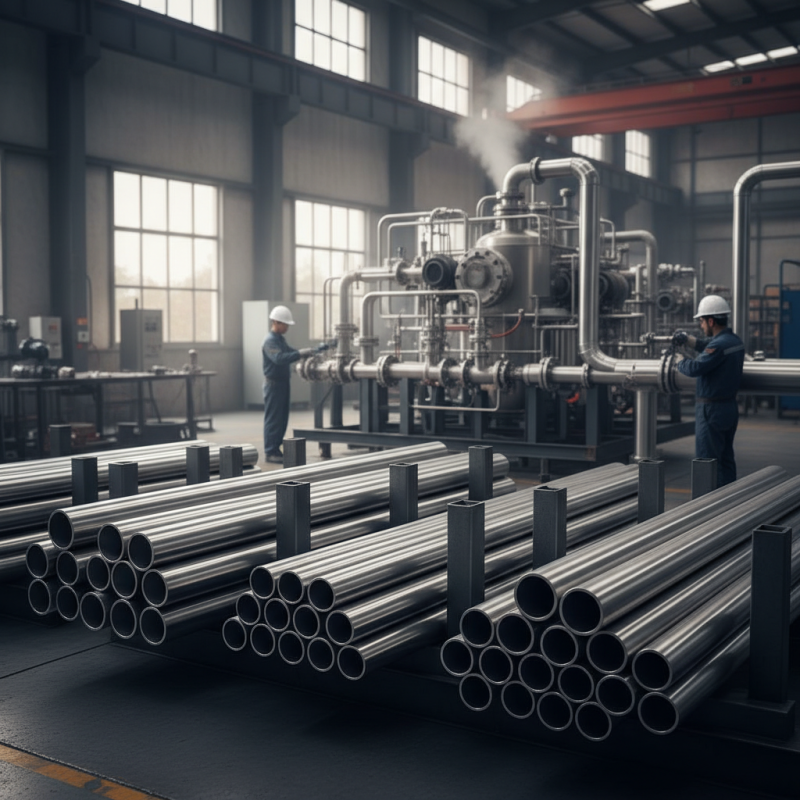
Advantages of 316L Stainless Steel Seamless Tubes in 2026
In 2026, 316L stainless steel seamless tubes maintain their reputation for versatility and reliability. Their inherent resistance to corrosion makes them suitable for various environments. From chemical processing to marine applications, these tubes excel where durability is crucial. The low carbon content enhances their weldability, which is particularly beneficial in construction projects.
These tubes boast exceptional strength and toughness. Even in extreme temperatures, they retain their structural integrity, making them a reliable choice in demanding conditions. However, it is important to recognize that not all manufacturers prioritize quality. Potential buyers should conduct thorough research, ensuring that the tubes meet industry standards and specifications.
Another aspect worth noting is maintenance. While 316L stainless steel is low-maintenance, neglect can lead to issues like pitting over time. Proper care is needed to maintain performance. The risks involved remind us that even the best materials require attention to detail and vigilance.
Key Applications of 316L Stainless Steel Seamless Tubes
316L stainless steel seamless tubes are renowned for their versatility and strength. They find extensive applications across various industries, especially in environments requiring high corrosion resistance. One of the most significant uses is in the chemical processing industry. Here, the tubes handle aggressive chemicals and extreme temperatures. Their durability ensures long-term performance, reducing the need for frequent replacements.
Another key application is in the medical field. These tubes are essential in manufacturing surgical instruments and implants. Their biocompatibility makes them ideal for use within the human body. Furthermore, the smooth internal surface reduces the risk of infection, which is crucial for patient safety. In the oil and gas industry, 316L tubes withstand harsh environments. They resist pitting and crevice corrosion, crucial for maintaining pipeline integrity.
Yet, despite these advantages, challenges exist. The manufacturing process can sometimes introduce impurities. This affects the overall quality of the product. Regular checks and stringent quality control measures are essential to ensure reliability. While 316L stainless steel seamless tubes offer numerous benefits, careful consideration in selection and application is vital.
Comparison of 316L Stainless Steel with Other Materials
When comparing 316L stainless steel to other materials, several factors come into play. 316L is highly resistant to corrosion, which makes it suitable for harsh environments. It can withstand saline and acidic conditions. This quality is superior to carbon steel and many aluminum alloys.
Another aspect to consider is strength. 316L maintains structural integrity even at high temperatures. Many plastics and lower-grade metals lose strength when exposed to heat. This resilience is crucial for industries like aerospace and marine applications.
Cost is an important factor, too. 316L may have a higher initial cost compared to other materials. However, its longevity and lower maintenance needs can lead to cost savings over time. While it’s an investment, the savings from reduced failures and replacements should not be overlooked. These nuances highlight the need for careful material selection based on specific project requirements.
Manufacturing Process of 316L Stainless Steel Seamless Tubes
The manufacturing process of 316L stainless steel seamless tubes is crucial for their quality and performance. These tubes start from high-quality raw materials. The key ingredient, 316L stainless steel, contains molybdenum, enhancing its corrosion resistance. At the outset, the steel is melted and formed into a billet.
Heating comes next. The billet is heated to a specific temperature and then pierced to create a hollow tube. This step requires precision. Not all heating methods yield desirable results. It's essential to monitor temperature closely to prevent defects. Following this, the tube undergoes elongation and reduction, creating a seamless finish. Continuous rolling and stretching refine its dimensions, ensuring uniform thickness.
Tip: Always inspect the temperature during the heating phase. An uncontrolled temperature can lead to weak spots in the final product.
After forming, the tubes are usually annealed. Annealing reduces hardness and enhances ductility. This process is vital for applications requiring bendable pipes. However, not every batch meets standards. Quality control checks are necessary at every stage.
Tip: Consider using NDT (Non-Destructive Testing) methods to assess tube integrity. This approach prevents future failures.
In the end, packaging follows. Proper packaging ensures the tubes remain intact during transportation. Yet, mistakes happen. Attention to detail is critical throughout the entire manufacturing journey.
Future Trends in 316L Stainless Steel Seamless Tube Industry
The 316L stainless steel seamless tube industry is on the brink of transformation. Innovations in manufacturing techniques are creating stronger and more durable materials. These advancements enable the production of seamless tubes that resist corrosion better than their predecessors. As industries evolve, so does the demand for high-quality materials that can withstand harsh environments.
One significant trend is the growing use of 316L stainless steel in construction and automotive sectors. With its excellent mechanical properties, it offers enhanced performance and longevity. However, while 316L proves reliable, the market still faces challenges. Cost fluctuations in raw materials affect pricing and availability, demanding careful consideration from manufacturers.
Tips: When choosing a supplier, look for those who prioritize quality control. They should provide transparency in their materials sourcing. Understanding your project's specific requirements ensures you select the proper tubing for optimal performance. Remember, not all suppliers uphold the same standards, so thorough research is key. As the industry moves forward, staying informed is essential for making sound decisions.



 © Copyright 2020 Tianjin Tanghaidongyang Valve Co., Ltd. All Rights Reserved.