2026 Top 35kV Power Transformer Types for Global Buyers
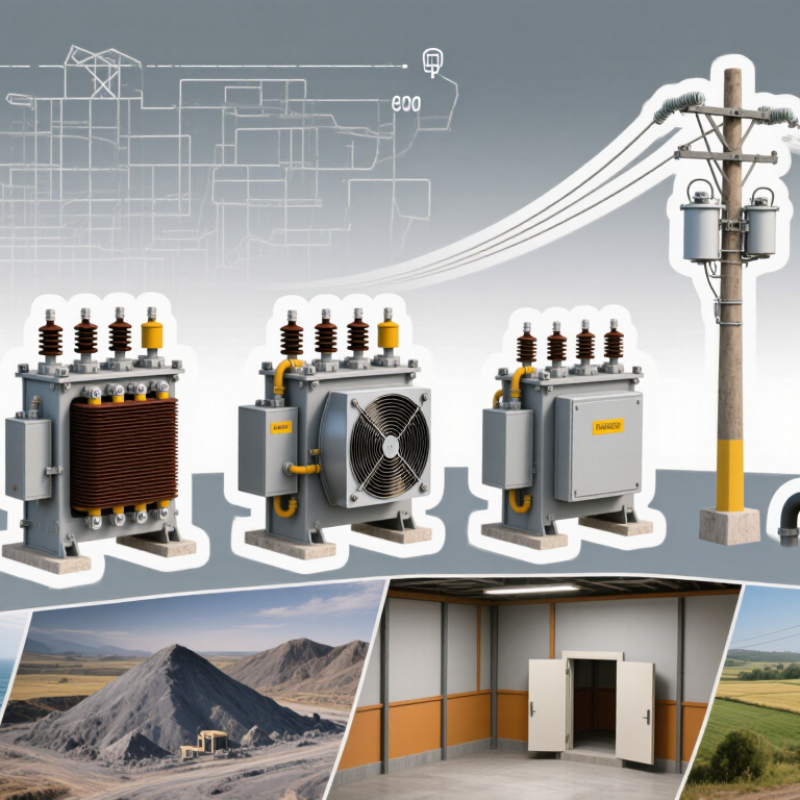
Choosing the right 35kv Power Transformer requires more than comparing rated capacity and purchase price. Global buyers must examine grid conditions, installation space, climate, maintenance access, and long-term operating costs. A 2026 market review should cover oil-immersed, dry-type, hermetically sealed, pad-mounted, pole-mounted, and special-purpose transformer designs.
Field experience shows that small details often affect reliability. For example, a coastal substation may need stronger corrosion protection and sealed fittings. A mining site may require reinforced enclosures, higher short-circuit strength, and easier inspection access. Indoor facilities usually favor dry-type units because they reduce fire-related concerns and simplify placement. Rural distribution projects may prioritize compact dimensions, low losses, and dependable outdoor performance.
Not every “top” model fits every network. That matters.
This guide compares leading 35kV transformer types through practical selection factors, including efficiency, insulation systems, cooling methods, noise, safety, transport, and service support. It also considers widely recognized technical practices, such as IEC 60076 requirements, while acknowledging that local standards and utility specifications may differ. Buyers should verify test reports, factory quality controls, warranty terms, spare-part availability, and after-sales response before signing contracts.
Some product comparisons remain imperfect. Supplier data may use different loss calculations, temperature assumptions, or testing conditions. Therefore, a lower quoted loss does not always guarantee lower lifecycle cost. Careful technical clarification is essential. The following overview aims to help engineers, distributors, and procurement teams make more transparent, defensible decisions in the evolving 2026 global transformer market.
35kV Power Transformer Fundamentals and Core Applications
2026 Top 35kV Power Transformer Types for Global Buyers
35kV Power Transformer Fundamentals and Core Applications
A 35kV power transformer receives medium-voltage electricity and changes it into a safer, usable level for distribution. In field projects, rated voltage is only one selection point. Engineers also check frequency, load profile, short-circuit withstand, insulation coordination, and altitude. The core uses laminated electrical steel to reduce losses, while windings carry current through controlled magnetic flux. Oil-immersed designs remain common in utility substations. Dry-type units often suit indoor facilities requiring improved fire control and easier maintenance. Keep clearances realistic.
Core applications include industrial plants, renewable-energy collection systems, mining sites, and regional distribution substations. A 35kV transformer may connect a wind or solar collector network to a higher-voltage grid. It may also supply a local 10kV system through a secondary winding. Tap changers help manage voltage variation on long feeders. Protection commonly includes differential relays, temperature monitoring, pressure relief, and surge arresters. These devices do not replace sound grounding.
Practical specification starts with measured data, not copied catalog information. Record peak demand, ambient temperature, harmonics, fault level, and installation conditions. I have seen projects underestimate harmonic heating from variable-speed drives. The transformer survived, but efficiency and service life suffered. Noise, oil containment, transport limits, and future capacity also deserve attention. Sometimes a larger unit is not wiser. Poor loading can increase losses and cost. Independent testing, certified materials, and clear factory records make acceptance more reliable.
2026 Top 35kV Power Transformer Types for Global Buyers
35kV Power Transformer Fundamentals and Core Applications
The chart shows representative IEC-preferred rated power levels commonly used when specifying 35kV-class transformers for different applications. Actual selection depends on load demand, short-circuit conditions, cooling method, installation environment, voltage ratio, and required system expansion capacity.
Technical Specifications Global Buyers Should Compare
2026 Top 35kV Power Transformer Types for Global Buyers
Technical Specifications Global Buyers Should Compare
A 35kV transformer may be oil-immersed, dry-type, or cast-resin. Each design suits different operating conditions. Oil-immersed units usually support higher capacities and outdoor substations. Dry-type transformers reduce fire concerns in buildings, tunnels, and compact industrial rooms. Buyers should compare rated power, primary and secondary voltage, frequency, insulation level, and cooling method. Do not compare price alone.
Impedance affects fault current, voltage regulation, and parallel operation. Vector group selection must match the existing network. Tap changers also deserve careful review. Off-circuit taps suit stable systems, while on-load tap changers support changing voltage demand. Check no-load loss, load loss, temperature rise, sound level, and short-circuit withstand strength. Small differences become expensive over twenty years.
Site conditions can change the correct specification. High altitude, coastal salt, dust, humidity, and extreme temperatures require suitable insulation and enclosure protection. Testing should cover winding resistance, ratio accuracy, insulation performance, partial discharge, and routine factory inspection. Applicable IEC or IEEE requirements should be stated clearly in the purchase contract. A clean datasheet can still hide missing assumptions. One overlooked detail is often the installation environment. Fit matters.
Standards, Safety Requirements, and Regional Compatibility
2026 Top 35kV Power Transformer Types for Global Buyers
Selecting a 35kV transformer requires more than comparing capacity and purchase price. Buyers should verify IEC 60076 or applicable IEEE requirements before reviewing technical offers. These standards address design, insulation, temperature rise, routine testing, and performance verification. Oil-immersed units suit many substations, while dry-type transformers can reduce indoor fire concerns. The correct choice depends on load profile, installation space, and maintenance capability.
Safety details deserve direct attention. Specify pressure relief devices, oil-level indicators, grounding terminals, and suitable enclosure protection. A transformer near buildings may require fire separation, bunded oil containment, and clear access around radiators. Insulation coordination must match the local lightning environment and switching conditions. Factory tests should include winding resistance, ratio checks, insulation tests, and leak inspection. Site acceptance testing remains important, even when factory documents appear complete.
Tips: Confirm system frequency, primary and secondary voltages, short-circuit impedance, altitude, ambient temperature, and humidity. Coastal projects need stronger corrosion protection. High-altitude sites may require derating or improved cooling. Regional grid codes can change connection requirements, so consult a qualified engineer and the local utility. I have seen projects delayed because a technically sound transformer used the wrong frequency or terminal arrangement. Specifications are never perfect. Review them with the installer before manufacturing.



 © Copyright 2020 Tianjin Tanghaidongyang Valve Co., Ltd. All Rights Reserved.