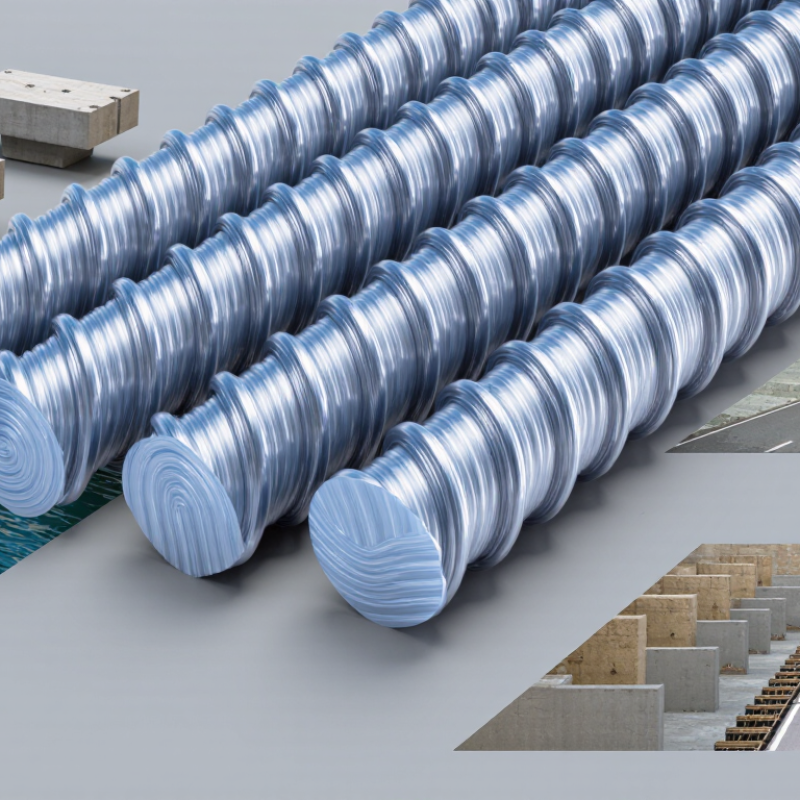
| Standard ribbed GFRP bars | Concrete slabs, bridge decks, parking structures, seawalls, marine structures and general non-magnetic reinforcement. | Glass-fiber-reinforced polymer; typical tensile strength approximately 600–1,200 MPa; typical tensile modulus approximately 40–60 GPa; density approximately 1.8–2.1 g/cm³. | High corrosion resistance, low density, electrical non-conductivity and good resistance to chloride exposure. | Lower elastic modulus than steel; brittle tensile failure; cannot normally be bent on site; long-term durability must be verified for the intended environment. | ASTM D7957/D7957M product test data; lot traceability; certified tensile strength, modulus, dimensions, surface profile and glass-fiber content. |
| High-strength GFRP bars | Long-span decks, lightweight bridge components, precast panels and projects where reduced reinforcement weight or handling time is important. | Commercial products may provide tensile strength near or above 1,000 MPa; modulus is commonly about 45–60 GPa. Values vary with bar diameter, fiber content and test method. | High strength-to-weight ratio and reduced lifting, transport and installation loads. | A high tensile-strength value alone does not prove adequate bond, creep-rupture resistance, freeze–thaw durability or code acceptance. | Independent laboratory reports, guaranteed design values, creep-rupture data, coefficient of thermal expansion and design calculations prepared to the governing code. |
| Sand-coated or deformed-surface GFRP bars | Applications requiring reliable bond transfer, including slabs, beams, walls, foundations and precast concrete. | Surface configuration is designed to improve mechanical interlock or bond with concrete. Bond performance must be reported using the applicable test procedure rather than inferred from appearance. | Improved load transfer and anchorage compared with a smooth pultruded surface. | Coating quality, rib geometry and surface consistency can vary; excessive deformation may affect nominal diameter or concrete cover calculations. | Bond or development-length test results, dimensional inspection records, surface-profile documentation and production quality-control records. |
| GFRP bars for marine and chloride exposure | Marine piers, coastal structures, desalination facilities, wastewater plants and bridge decks exposed to deicing salts. | Non-metallic reinforcement with no conventional steel corrosion mechanism; service performance depends on resin chemistry, moisture, temperature, alkalinity and sustained stress. | Eliminates steel rusting and may reduce concrete cover requirements where the design code permits it. | GFRP remains sensitive to elevated temperature, alkaline moisture and long-term sustained loading; project-specific durability verification is necessary. | Alkaline resistance, moisture conditioning, freeze–thaw, accelerated aging and creep-rupture test results; documented resin and fiber system. |
| Non-magnetic and electrically non-conductive GFRP bars | MRI rooms, sensitive electronic facilities, railway electrification zones, power infrastructure and electromagnetic-shielding-sensitive structures. | GFRP is generally non-ferromagnetic and electrically non-conductive, subject to the resin, additives, connectors and surrounding reinforcement system. | Avoids magnetic interference and reduces the risk of conductive reinforcement creating unwanted electrical paths. | Metallic couplers, tie wire, chairs or adjacent reinforcement may compromise the intended electromagnetic or electrical performance. | Electrical resistivity or conductivity test data, magnetic permeability information and a complete non-metallic reinforcement installation plan. |
| GFRP stirrups and bent shapes | Beams, columns, pile caps and prefabricated reinforcement cages requiring closed ties or factory-made bends. | Bent portions generally have lower tensile capacity than straight portions; allowable values must be supplied specifically for the bend diameter and bend configuration. | Factory-controlled geometry and corrosion resistance in congested reinforcement zones. | Field bending is normally prohibited; tight bends, heat exposure and improper handling can damage fibers and reduce capacity. | Manufacturer’s approved bend-radius data, bent-bar tensile tests, dimensional tolerances and installation instructions reviewed by the structural designer. |



 © Copyright 2020 Tianjin Tanghaidongyang Valve Co., Ltd. All Rights Reserved.