| Compact Electric Jetter | Often around 1,000–2,000 psi and 1–2.5 gpm; specifications vary by model. | Lightweight, relatively quiet, and convenient for indoor work where a suitable electrical supply is available. | Lower water volume can mean slower cleaning on long or heavily obstructed lines; depends on electrical access. | Routine residential drain cleaning and smaller service jobs. | Choose for portability and indoor convenience rather than maximum cleaning capacity. |
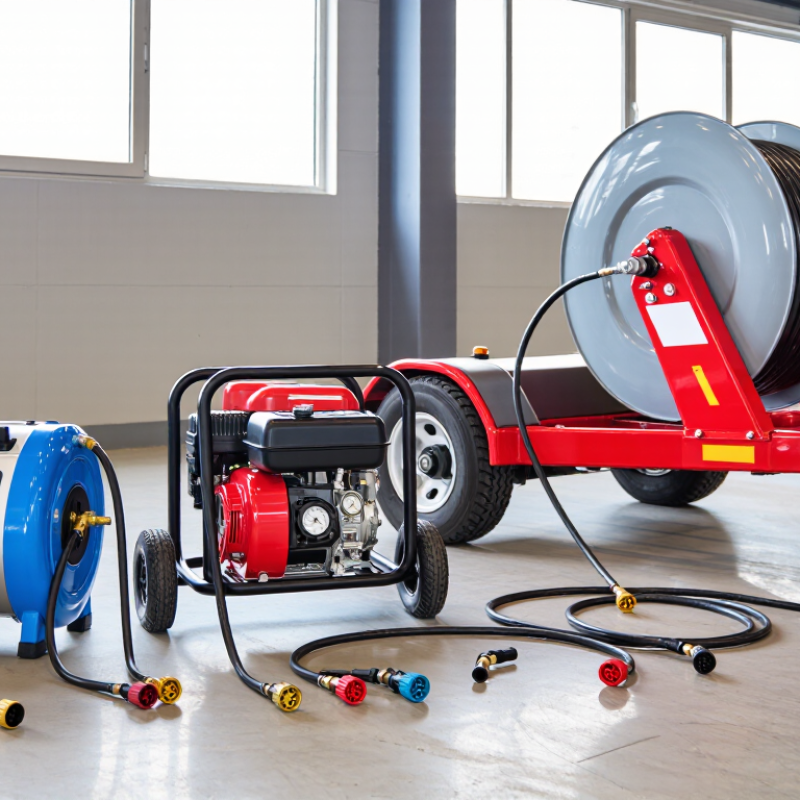
| Portable Gas-Powered Jetter | Common configurations are roughly 2,000–4,000 psi and 2–5 gpm. | More independent of building power and generally offers greater output than compact electric units. | Produces engine noise and exhaust; requires fuel, ventilation, and regular engine maintenance. | Residential service work and contractors needing a portable outdoor unit. | Check the complete pressure-and-flow rating, not pressure alone. |
| Cart-Mounted Jetter | Often configured around 2,000–4,000 psi and 3–8 gpm, depending on pump and engine. | Wheels and a larger frame can make it easier to move between job areas while supporting higher output. | Bulkier than compact units and may be difficult to carry over stairs or rough access routes. | Frequent service calls where equipment must be moved across a site. | Compare overall weight, wheel design, hose capacity, and access to the work area. |
| Trailer-Mounted Jetter | Many configurations fall around 3,000–4,000 psi and 5–15 gpm; larger systems may differ. | Can support higher flow, longer hose runs, and extended work; some units include an onboard water tank. | Requires a suitable tow vehicle, parking space, and room to position the trailer near the work. | Commercial drain maintenance, municipal work, and recurring jobs on larger lines. | Confirm towing capacity, tank capacity, hose length, and the pump’s continuous-duty rating. |
| Truck-Mounted Jetter | System ratings vary widely; commercial setups may provide several thousand psi with substantially higher flow than compact units. | High capacity and onboard equipment can support demanding, high-volume, or large-scale maintenance work. | Higher purchase and operating costs, greater vehicle requirements, and limited access in tight locations. | Municipal fleets and contractors handling frequent, large-scale sewer cleaning. | Best considered when utilization and job size justify a dedicated vehicle and its operating costs. |


 © Copyright 2020 Tianjin Tanghaidongyang Valve Co., Ltd. All Rights Reserved.