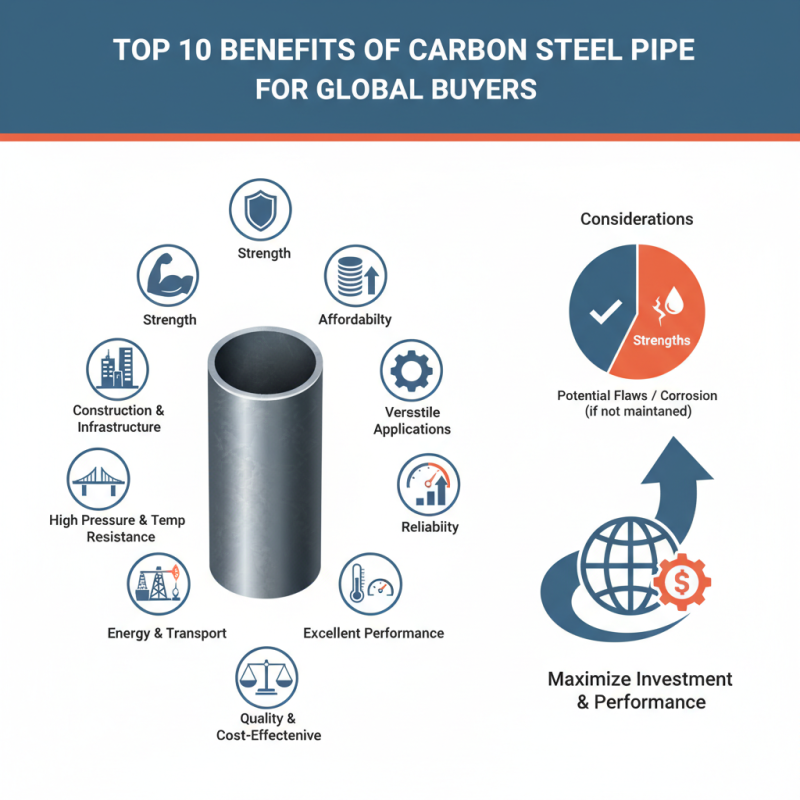
| 1. High Strength | Carbon steel pipes have a high tensile strength, making them suitable for various applications. | Cost-effective for construction and industrial use. | Resistant to wear and tear. | Used in a variety of sectors from plumbing to structural. |
| 2. Corrosion Resistance | Coatings can be applied to enhance resistance against corrosion. | Less frequent replacements lead to savings. | Increases lifespan of the piping system. | Applicable in various environments, including marine. |
| 3. Easy Fabrication | Can be easily welded, cut, and manipulated for custom designs. | Saves costs on installation and modifications. | Allows for complex installations with fewer joints. | Wide range of applications based on customized requirements. |
| 4. Lightweight | Lighter than many other materials, making transport easier. | Reduced transportation costs. | Easier handling and installation. | Versatile for residential and commercial applications. |
| 5. Energy Efficiency | Good thermal conductivity, which can be beneficial in heat transfer applications. | Leads to lower energy costs in heating and cooling systems. | Enhanced operation for HVAC systems. | Widely used in steam and hot water systems. |
| 6. Affordable | Generally lower costs compared to other materials like stainless steel. | Allows for budget-friendly projects. | Long-term savings on maintenance. | Flexible for projects with different budgets. |
| 7. Availability | Readily available in various sizes and specifications worldwide. | Reduces lead time for projects. | Quick sourcing for emergency repairs. | Highly demanded in multiple industries. |
| 8. Temperature Resistance | Can withstand high temperatures without losing strength. | Minimum loss of properties under operational stress. | Suitable for various conditions. | Used in industrial processes requiring heat management. |
| 9. Environmentally Friendly | Recyclable material contributes to sustainability. | Lower environmental impact compared to plastics. | Can be reused in new products. | Valued in green building practices. |
| 10. Safety | Non-combustible properties make them safer under fire conditions. | Enhances safety in project design. | Less risk during operation. | Reliable for critical infrastructure. |



 © Copyright 2020 Tianjin Tanghaidongyang Valve Co., Ltd. All Rights Reserved.