| Mobile robots and automated guided vehicles | High starting torque helps move a loaded vehicle from rest and maintain motion on ramps or uneven floors. | BLDC motor paired with a gearbox, or an integrated wheel-drive unit. | Payload, wheel diameter, required speed, incline, duty cycle, braking, and available battery power. |
| Electric bicycles and light electric vehicles | Low-speed torque supports acceleration and climbing, especially when the vehicle is carrying a rider or cargo. | Hub motor in a wheel or a centrally mounted motor driving the wheel through a transmission. | Vehicle regulations, wheel size, terrain, cooling, battery voltage, and the balance between range and performance. |
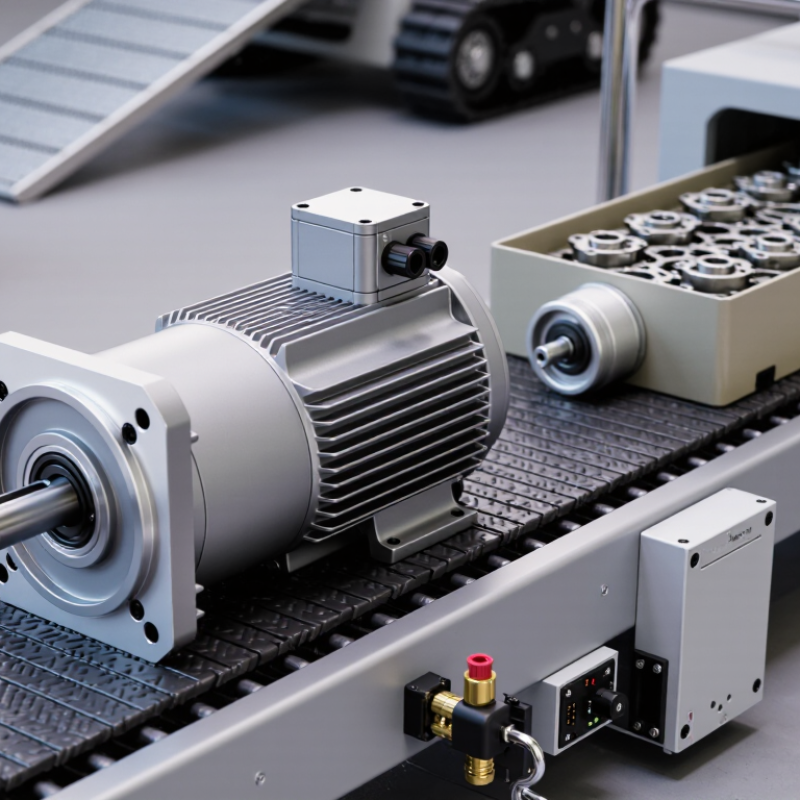
| Industrial automation and conveyors | Torque is needed to start moving belts, rollers, and other loads, and to maintain motion as the load changes. | BLDC motor with a gearbox or an integrated drive and controller. | Load inertia, starting frequency, continuous duty, speed control, ambient conditions, and required positioning accuracy. |
| Collaborative and service robots | Joint motors need sufficient torque to move robot links and handle changing loads without relying on excessive motor speed. | Compact BLDC servo motor, often combined with a reduction gearbox and position feedback. | Torque across the operating range, joint speed, backlash, thermal limits, feedback type, and safe motion requirements. |
| Electric power tools | High torque helps drive fasteners, turn cutting or grinding attachments, and cope with changing material resistance. | Compact BLDC motor connected to the tool output through gearing or a direct drive. | Peak and continuous load, tool speed, cooling, battery capacity, control response, and expected operating time. |
| Direct-drive rotary equipment | A high-torque motor can drive a load at low speed, potentially reducing or eliminating a gearbox. | Large-diameter, low-speed BLDC motor coupled directly to the load. | Required output torque and speed, rotor size, heat dissipation, bearing loads, and installation space. |
| Pumps, fans, and compressors | Torque supports startup and stable operation as the driven equipment encounters changing fluid or air loads. | BLDC motor directly coupled to the impeller or connected through a suitable drive arrangement. | Load profile, operating speed, fluid conditions, efficiency, enclosure protection, and control method. |
| Automotive auxiliary systems | Electric actuators and pumps may need substantial torque from a compact motor, sometimes under variable loads. | BLDC motor with an integrated controller, gearbox, or actuator mechanism. | Supply voltage, temperature range, vibration, environmental protection, duty cycle, and system-level safety requirements. |



 © Copyright 2020 Tianjin Tanghaidongyang Valve Co., Ltd. All Rights Reserved.