| Flexible build plate | Spring steel sheet with a PEI-coated or textured PEI surface | Check that the sheet lies flat, the coating is even, and the edges are free of burrs. A magnetic base should hold the sheet securely. | Match the bed’s length and width; confirm whether the printer has a compatible magnetic base. Check the surface’s temperature limits before use. | Convenient print removal and a reusable build surface for many common filament types. |
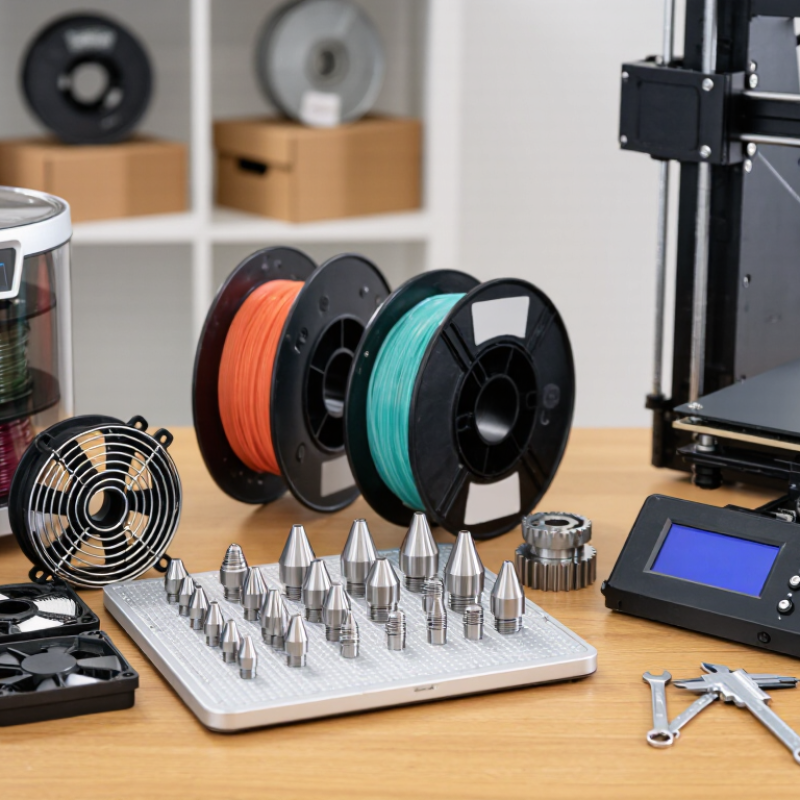
| Brass nozzle | Brass, commonly supplied with a 0.4 mm orifice | Look for a clean, round orifice, smooth threads, and a consistent opening. Avoid visible burrs or damaged threads. | Confirm thread type, nozzle length, and seating style for the specific hotend. Match the orifice size to the desired detail and flow rate. | General-purpose printing with standard, non-abrasive filaments such as PLA, PETG, and ABS. |
| Hardened-steel nozzle | Hardened steel; some versions use a wear-resistant surface treatment | Check for a smooth internal path, clean machining, and undamaged threads. Confirm the material and any stated wear-resistance details. | Verify the same hotend dimensions and thread requirements as for any replacement nozzle. Review the printer’s temperature capability, as steel can transfer heat differently from brass. | Filaments containing abrasive particles, such as carbon-fiber, glass-fiber, or glow-in-the-dark formulations. |
| PTFE Bowden tube | PTFE tubing; 4 mm outer diameter and 2 mm inner diameter are common, but not universal | Check that the tube has a consistent inner diameter, a clean cut, and a smooth, undamaged surface. A square end helps it seat properly. | Measure the required inner and outer diameters and length. Confirm the printer’s fitting type and hotend design; temperature suitability depends on the system and tube specification. | Replacing worn filament-feed tubing in compatible Bowden-style setups. |
| Replacement extruder gear | Hardened steel or stainless steel, depending on the design | Check tooth definition, gear alignment, shaft fit, and surface finish. The gear should rotate smoothly without noticeable wobble. | Match the gear’s bore, tooth profile, diameter, and mounting method to the extruder. Single- and dual-gear systems may require different parts. | Restoring reliable filament grip when an existing drive gear is worn or damaged. |
| Hotend silicone sock | Heat-resistant silicone elastomer | Check for a consistent shape, clean openings, and a snug fit without tearing or stretching. | Match the sock to the hotend block’s shape and dimensions. Ensure it does not obstruct the nozzle, heater, or temperature sensor. | Reducing heat loss and helping keep stray filament from sticking to the heater block. |



 © Copyright 2020 Tianjin Tanghaidongyang Valve Co., Ltd. All Rights Reserved.