Designing a brass terminal connector starts with its job: carrying current, securing a wire, or both. Engineers confirm conductor size, expected load, operating temperature, and installation space before setting dimensions. Small details matter. Thread depth, entry chamfers, and clamping-face width affect assembly and contact quality. Brass alloy selection balances conductivity, strength, corrosion behavior, and machinability. No single grade suits every environment. That trade-off deserves attention.
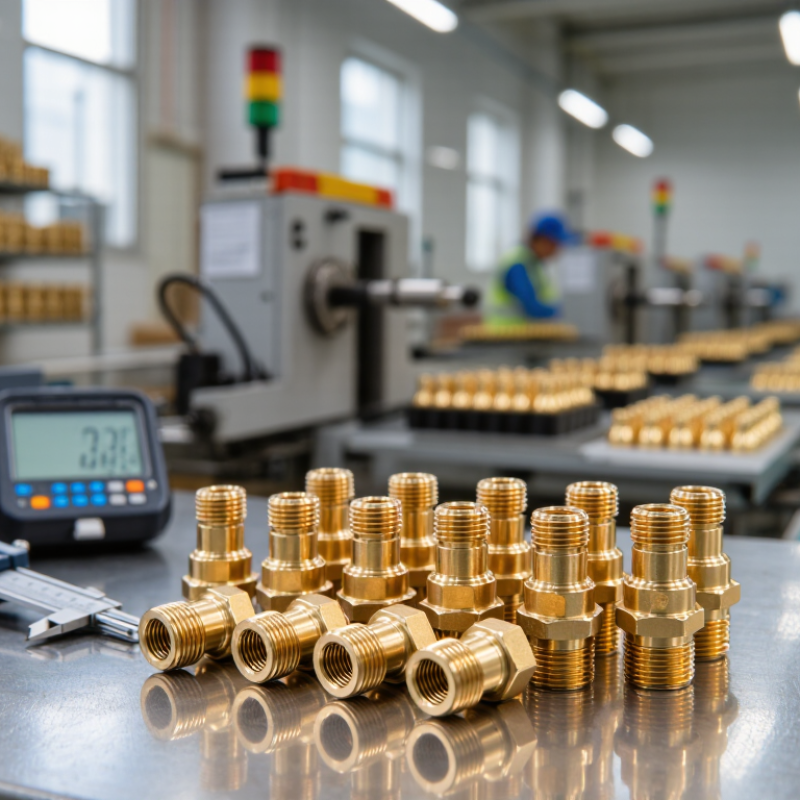
Production may use precision turning, stamping, or forming, depending on connector geometry and order volume. On a machined part, a controlled tool path creates the bore, threads, and flat contact surfaces. Operators remove burrs, then inspect critical dimensions with gauges or optical equipment. Where specified, surface plating can improve corrosion resistance or solderability, but it must match the application. Not every connector needs plating. Overprocessing adds cost.
Quality checks should include thread fit, visual finish, and electrical resistance. Sample assemblies can reveal loose clamping or uneven contact. Torque and pull tests may also be appropriate, especially when vibration or frequent servicing is expected. Measurements should be recorded against the drawing, not judged by appearance alone. A clean-looking connector can still fail. Design reviews are imperfect, too: a bench test may not reproduce years of heat, moisture, and handling. Field feedback helps refine tolerances and inspection plans.



 © Copyright 2020 Tianjin Tanghaidongyang Valve Co., Ltd. All Rights Reserved.