| 1. Relevant CAB experience | Experience with the parts, base alloys, filler metals, joint designs, and production volumes relevant to your application. | Anonymized case studies, representative part references, process history, and examples of comparable production work. | The manufacturer explains how it controls joint clearance, filler placement, cleanliness, and distortion for the proposed assembly. |
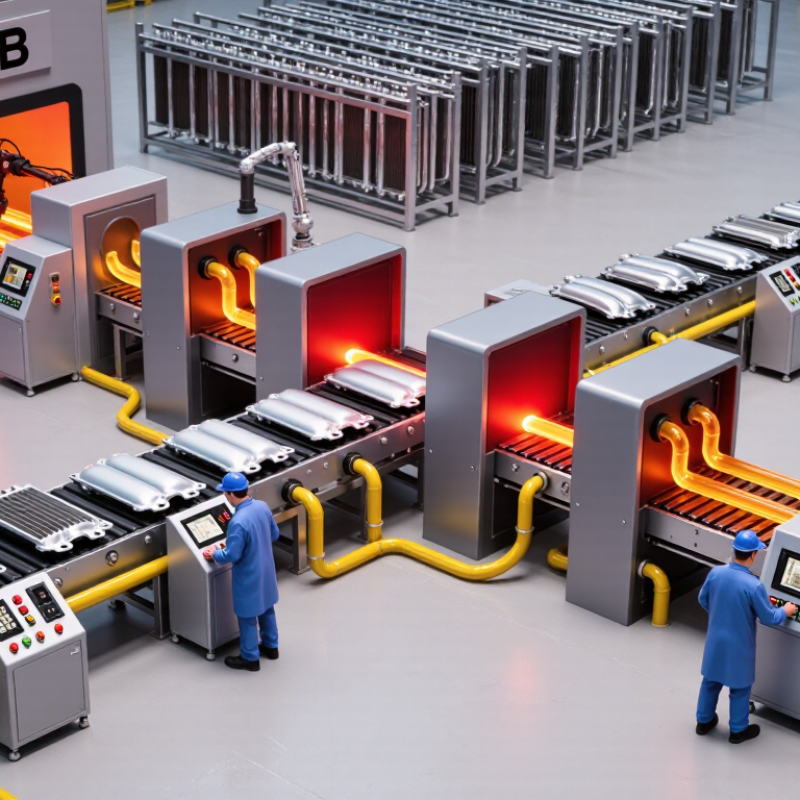
| 2. Furnace and part capability | Usable work-zone dimensions, load arrangement, temperature uniformity, throughput, and compatibility with the component geometry. | Furnace specifications, work-zone qualification records, sample loading plans, and documented capacity limits. | Capacity claims are supported by records and a proposed loading plan rather than by furnace size alone. |
| 3. Atmosphere and process control | Control and monitoring of atmosphere composition and relevant process variables. Nitrogen-based atmospheres are commonly used in aluminum CAB; the suitable atmosphere depends on the materials and process. | Process-control plans, atmosphere monitoring records, alarm limits, calibration records, and responses to out-of-limit conditions. | The manufacturer defines measurable control limits for the specific process instead of relying on generic atmosphere claims. |
| 4. Quality system and traceability | Control of material identity, process records, nonconformances, inspection results, and lot or batch traceability. | Quality-system certificate and scope, sample traveler or batch record, document-retention policy, and corrective-action process. | Records link incoming materials and production batches to process parameters and inspection results. Certification alone is not proof of process capability. |
| 5. Qualification and standards alignment | Whether the manufacturer can qualify and document the process to the customer’s drawing, industry, and contractual requirements. | Procedure qualification records, inspection plans, and a standards compliance matrix. AWS C3.6M is a furnace-brazing specification; AMS 2750 pyrometry requirements apply when specified by the contract or applicable program. | The supplier identifies which requirements apply, how compliance is demonstrated, and any exclusions before production begins. |
| 6. Inspection and defect management | Inspection methods matched to the joint and product risks, such as visual examination, dimensional checks, leak testing, or destructive testing where appropriate. | Inspection procedures, acceptance criteria, sample reports, test capability details, and examples of nonconformance handling. | Acceptance criteria and inspection frequency are agreed in advance and are appropriate to the component’s function. |
| 7. Delivery, engineering, and support | Engineering support, prototype-to-production planning, lead-time communication, logistics, and responsiveness to process or quality issues. | A written quotation, capacity and lead-time assumptions, escalation contacts, packaging and shipping plan, and change-control process. | The proposal clearly states responsibilities, deliverables, assumptions, and how changes or delays will be communicated. |


 © Copyright 2020 Tianjin Tanghaidongyang Valve Co., Ltd. All Rights Reserved.