| Countertop single-vat | One compact oil tank; electrical supply and vat capacity are model-specific. | Small kitchens, snack stations, or lower-volume service with limited floor space. | Keep food within the basket’s recommended load. Lower baskets carefully, and allow the oil to return to set temperature between batches. | After the unit is switched off and safely cooled, remove crumbs and wipe accessible surfaces. Filter or replace oil according to its condition and the equipment instructions. | Check the cord, plug, controls, basket, and heating element for damage or residue. Keep ventilation openings clear. |
| Floor-standing single-vat | One larger vat, often with a cabinet or built-in oil filtration; exact features vary by model. | Busy service stations that need greater batch capacity than a countertop unit. | Use a dedicated basket for each food type where practical. Shake excess ice or loose coating from frozen products before frying, following the product instructions. | Filter oil on the schedule recommended by the manufacturer and kitchen procedure. Clean the vat, baskets, cabinet, and floor around the fryer without splashing water into electrical components. | Inspect filtration connections, drain valve, thermostat, high-limit safety control, and power connection as directed by qualified personnel. |
| Floor-standing split-vat | One tank divided into separate cooking zones; capacity and control arrangement differ by model. | Kitchens that prepare different foods or need to run smaller batches at separate settings. | Observe each zone’s oil level and temperature separately. Avoid moving baskets between zones if this could transfer allergens or food particles. | Clean each zone and its accessories separately where required. Confirm that oil is cool enough for the prescribed draining or filtration procedure. | Check that each zone’s controls respond correctly. Arrange prompt inspection if a zone heats unevenly or its safety control trips repeatedly. |
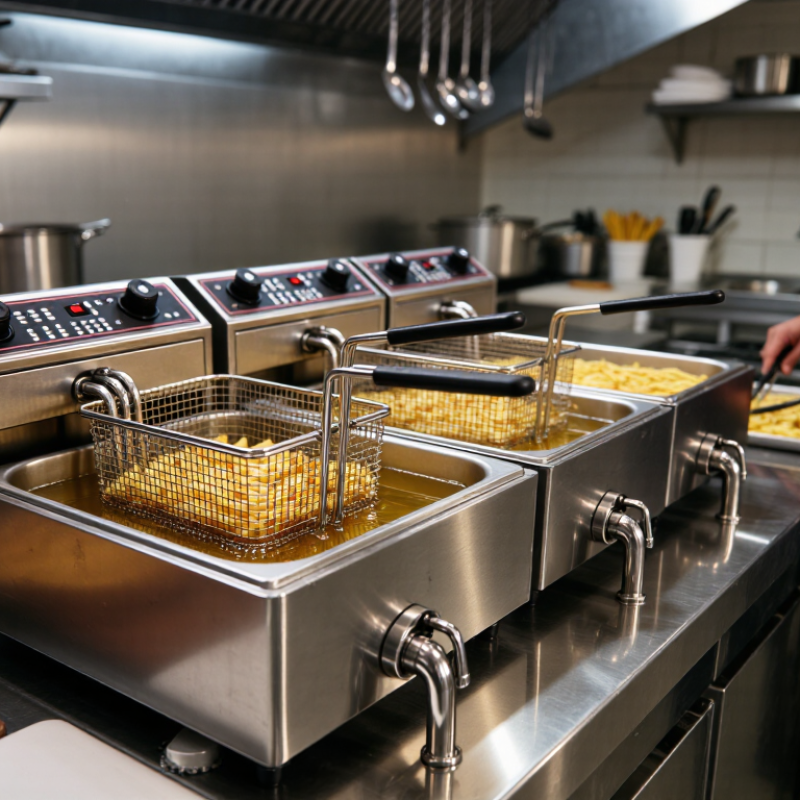
| Floor-standing twin-vat | Two independent vats, typically with separate controls; total electrical demand depends on the model and installation. | High-volume kitchens that benefit from parallel cooking or separating menu items. | Plan batches across vats to avoid overloading either one. Confirm the electrical circuit is suitable for the unit’s nameplate rating before installation. | Treat each vat as a separate cleaning area. Securely close drain valves after cleaning and check for leaks before refilling. | Inspect both control sets, baskets, drains, and filtration parts. Have electrical and safety-control checks performed by qualified service personnel. |
| All commercial electric fryers | Heating elements may be immersed or arranged differently by design; follow the specific operating manual. | Any professional kitchen selecting equipment for its menu, service volume, available power, and cleaning procedures. | Keep oil within the marked minimum and maximum levels. Never heat an empty vat, overfill the basket, or leave hot oil unattended. Keep water away from hot oil. | Switch off and isolate power as instructed. Let oil cool before handling; use suitable protective equipment and approved tools. Never pour water onto burning oil. | Record cleaning and service checks. Stop using the fryer if wiring is damaged, oil leaks, or controls behave abnormally; seek qualified service. |



 © Copyright 2020 Tianjin Tanghaidongyang Valve Co., Ltd. All Rights Reserved.