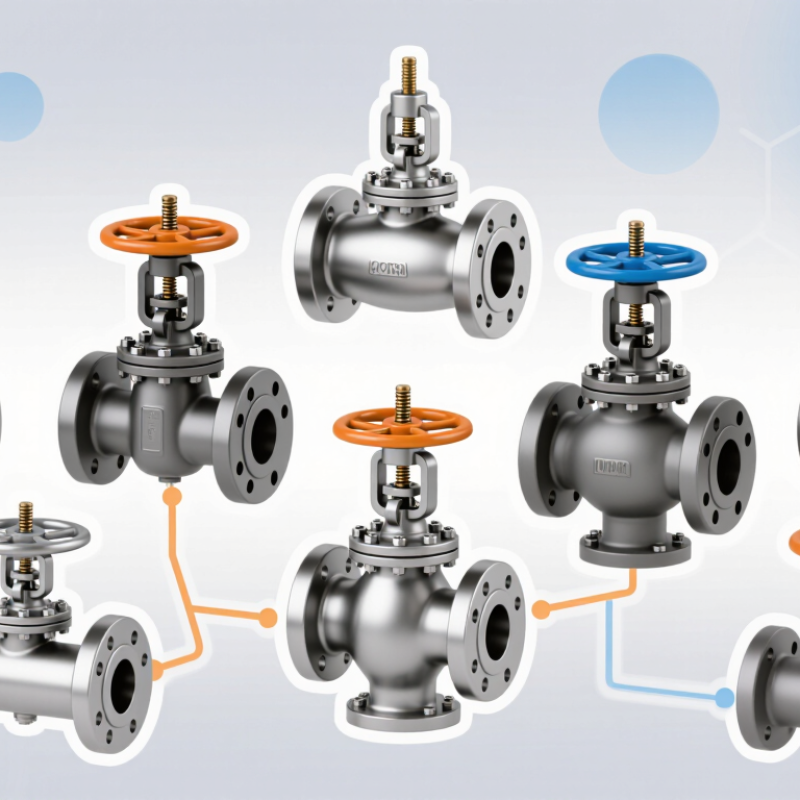
| 1. Standard Outside-Screw-and-Yoke Globe Valve | Bolted bonnet, rising stem, outside screw and yoke, straight-through body | ASME Class 150–600 | DN15–DN300 (NPS ½–12) | General isolation and throttling in water, steam, air, and non-corrosive process lines | Carbon steel, stainless steel, or alloy steel body; stainless trim; graphite or PTFE packing | Reliable flow regulation, easy visual stem-position indication, and broad maintenance familiarity | Confirm the flange standard, pressure-temperature rating, and allowable pressure drop before ordering |
| 2. Angle-Pattern Flanged Globe Valve | Inlet and outlet passages arranged approximately 90 degrees apart | ASME Class 150–600 | DN15–DN300 (NPS ½–12) | Boiler drains, vessel outlets, piping direction changes, and services where an elbow can be eliminated | Carbon steel, stainless steel, or alloy steel; corrosion-resistant stem and trim options | Can reduce fittings, lower installation space requirements, and handle flashing or erosive flow more effectively in some drain services | Verify flow direction and ensure the layout provides sufficient access for handwheel operation and maintenance |
| 3. Y-Pattern Flanged Globe Valve | Stem and seat arranged at an inclined angle to create a straighter flow path | ASME Class 150–1500 | DN25–DN400 (NPS 1–16) | High-pressure steam, hot oil, gas, and process systems where lower pressure loss is important | Forged or cast carbon steel, stainless steel, and low-alloy steel; hard-faced seating available | Lower flow resistance than many conventional globe-valve body patterns while retaining throttling capability | Check actuator or handwheel clearance because the inclined stem can require more installation space |
| 4. Bellows-Sealed Flanged Globe Valve | Metal bellows provide a secondary stem seal above the pressure boundary | ASME Class 150–600 | DN15–DN300 (NPS ½–12) | Toxic, hazardous, volatile, vacuum, and high-purity services where fugitive emissions must be minimized | Stainless steel or alloy-steel pressure parts; welded stainless bellows; graphite packing as a backup seal | Reduced stem-emission risk and improved containment compared with conventional packing-only designs | Specify bellows cycle life, test requirements, operating temperature, and compatibility with the process fluid |
| 5. Cryogenic Extended-Bonnet Globe Valve | Extended bonnet and long stem column keep the packing area away from cryogenic fluid | ASME Class 150–600 | DN15–DN300 (NPS ½–12) | Liquid nitrogen, oxygen, argon, LNG, and other low-temperature fluid systems | Austenitic stainless steel body and trim; low-temperature-tested gaskets and packing | Protects stem seals from extreme cold and supports safer operation in low-temperature services | Require suitable oxygen-cleaning where applicable and confirm the minimum design temperature and bonnet orientation |
| 6. Jacketed Flanged Globe Valve | Heating or cooling jacket surrounds the body to control fluid temperature | Usually ASME Class 150–300 | DN25–DN200 (NPS 1–8) | Molten sulfur, asphalt, polymers, resins, waxes, and other fluids that may solidify or become highly viscous | Carbon steel or stainless steel body; jacket materials selected for steam, hot water, or thermal-oil service | Helps maintain process temperature and reduces the risk of blockage caused by solidification | Define jacket pressure, heating medium, connection location, heat-up rate, and thermal expansion requirements |
| 7. Control-Ready Flanged Globe Valve | Globe body with characterized plug, balanced trim, and pneumatic or electric actuator capability | ASME Class 150–600 | DN25–DN400 (NPS 1–16) | Continuous flow control for steam, water, gas, chemical, and process applications | Carbon steel, stainless steel, or alloy steel; stainless, hardened, or carbide-coated trim options | Supports accurate throttling, positioner integration, and selectable flow characteristics such as equal-percentage or linear | Size the valve from flow coefficient, pressure drop, noise, cavitation, flashing, shutoff class, and actuator thrust |



 © Copyright 2020 Tianjin Tanghaidongyang Valve Co., Ltd. All Rights Reserved.