2026 Best Industrial Valves Guide for Optimal Performance and Reliability?
The demand for industrial valves continues to rise, driven by advancements in technology and growing industrial applications. According to a report by MarketsandMarkets, the global industrial valve market is projected to reach USD 88.4 billion by 2025, reflecting a CAGR of 6.6% from 2020. This growth highlights the critical role that industrial valves play in various sectors, including oil and gas, water and wastewater management, and power generation.
Industrial valves are essential in regulating flow and pressure in processes that require precision. A reliable valve can significantly enhance system performance. However, not all valves are created equal. Factors such as materials, design, and maintenance impact their reliability and efficiency. The wrong choice can lead to costly downtimes and safety hazards.
Industry experts emphasize the need for ongoing education on the latest technologies in valve manufacturing. A lack of understanding can lead to misapplication and operational failures. This guide aims to provide valuable insights into selecting the best industrial valves for optimal performance and reliability. Our focus will be on data-driven recommendations and practical considerations, ensuring informed decision-making for industries reliant on these critical components.

Understanding the Types of Industrial Valves and Their Applications
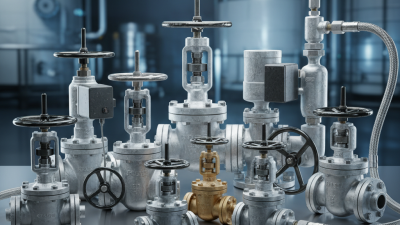
Industrial valves play a crucial role in controlling the flow of fluids and gases in various applications. They come in different types, including gate, globe, ball, and butterfly valves. Each type has unique features tailored for specific operational needs. For instance, gate valves are best for on/off control, while globe valves are suited for throttling applications. According to a report by MarketsandMarkets, the global industrial valve market is projected to reach USD 82.9 billion by 2026, highlighting their significance in various industries.
The choice of valve greatly impacts efficiency and reliability. In chemical manufacturing, for example, using the right valve can prevent leaks and maintain process integrity. Additionally, the American Society of Mechanical Engineers (ASME) emphasizes that proper valve selection improves overall system performance. However, many companies overlook maintenance best practices. Regular inspections can identify wear and tear, preventing costly downtime.
Moreover, adapting to emerging technologies is essential. Smart valves integrated with IoT can provide real-time data, enabling better decision-making. Yet, the initial investment can be daunting for some businesses. Balancing traditional methods with innovations remains a challenge for industry professionals. Understanding these factors can lead to more effective uses of industrial valves, promoting both performance and reliability.
2026 Industrial Valves Performance Comparison
This chart displays the performance ratings of various types of industrial valves based on criteria such as flow capacity, pressure resistance, and ease of maintenance. Each valve type offers distinct advantages suitable for different industrial applications.
Key Factors Influencing Valve Performance and Reliability
When considering valve performance, several key factors come into play. Material composition is crucial. Different materials react uniquely under varying pressures and temperatures. For instance, stainless steel offers corrosion resistance but might not perform well at extreme heat. Some valves may deform over time, affecting reliability. Regular inspection is important to identify wear and tear.
Another significant factor is design. The flow path, seat configuration, and actuator type all influence how efficiently a valve functions. A poorly designed valve can lead to reduced flow rates or increased energy consumption. Regular maintenance and use of best practices can often mitigate these issues. However, many overlook routine checks, leading to suboptimal performance over time.
Environmental conditions should not be ignored. Factors like humidity and temperature variations can impact valve functionalities. Seasonal changes may introduce unforeseen stresses. It's essential to consider these environmental influences when selecting valves for specific applications. This can prevent unexpected failures and enhance overall system reliability.
Industry Standards and Certifications for Industrial Valves
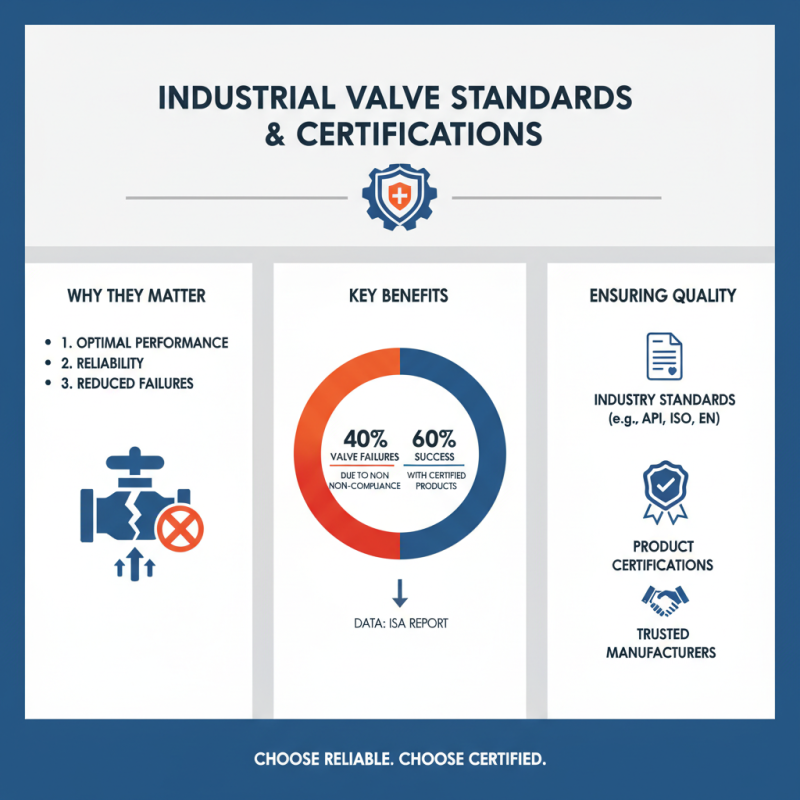
In the realm of industrial valves, industry standards and certifications play a crucial role in ensuring optimal performance and reliability. Knowing the correct standards helps organizations choose reliable products. According to a report by the International Society of Automation, nearly 40% of valve failures stem from non-compliance with regulations. This highlights the necessity of adhering to established norms.
Critical certifications such as ISO 9001 or API 6D are essential for valve manufacturers. They demonstrate a commitment to quality management standards. Furthermore, valves designed for different applications must meet specific requirements. For instance, the American National Standards Institute (ANSI) mandates certain pressure ratings and material specifications. Valves that fall short of these can lead to operational inefficiencies.
However, navigating these certifications can be complex. Some companies may overlook the importance of routine audits and compliance checks. Inadequate understanding of evolving industry standards can result in costly mistakes. Regularly updating knowledge about certifications can prevent unexpected challenges in valve performance. Keeping informed helps maintain the reliability that industries depend on.
Best Practices for Selecting and Maintaining Industrial Valves
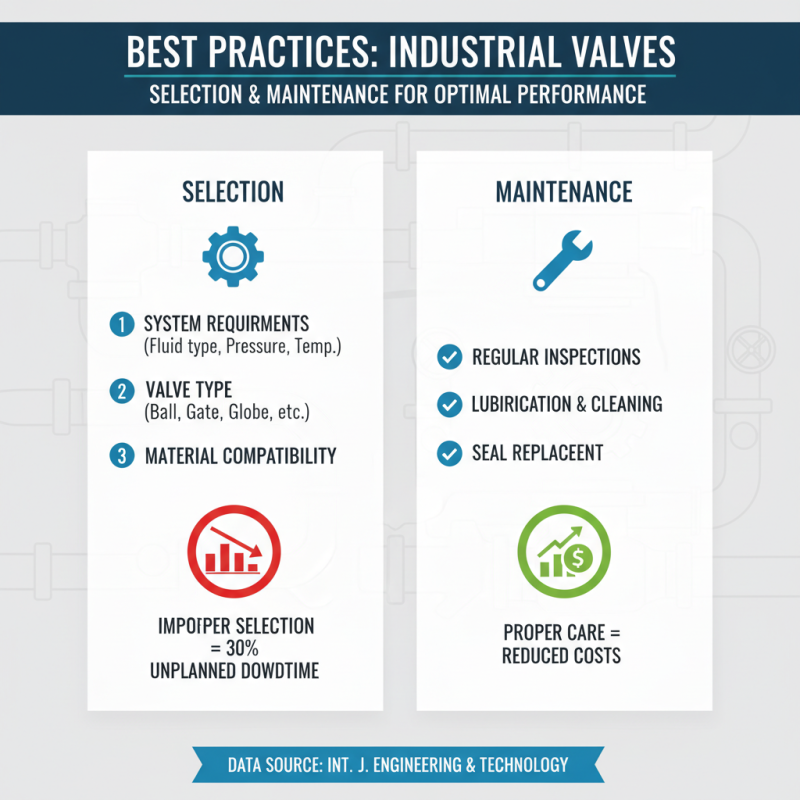
Selecting and maintaining industrial valves is crucial for optimal performance. A recent report from the International Journal of Engineering and Technology indicates that improper valve selection can lead to operational inefficiencies, costing industries significant time and money. Valve failures account for up to 30% of unplanned downtime in many manufacturing operations. Understanding the specific requirements of your system can help mitigate these issues.
When selecting valves, consider the media being handled. Different fluids and gases exert unique pressures and temperatures. A study highlighted that temperature fluctuations can cause joint stress, affecting material integrity. Proper compatibility and material selection are essential.
**Tips:** Always consult material data sheets. Invest time in understanding different valve types and their applications.
Maintenance practices are equally important. Regular inspections can significantly extend valve lifespan. The American Society of Mechanical Engineers (ASME) recommends a thorough evaluation at least twice a year. Dust, corrosion, and wear can lead to failures if neglected. Incorporating predictive maintenance strategies can be beneficial.
**Tips:** Create a maintenance schedule. Utilize advanced diagnostic tools to identify potential issues before they escalate.
Maintaining valves can sometimes feel routine. However, reflection on processes can uncover areas for improvement. Continuous learning and adaptation are vital to ensure efficiency and reliability in valve performance.
Future Trends in Industrial Valve Technology and Innovation
The future of industrial valve technology is evolving rapidly. Recent reports indicate a projected
7% annual growth in the sector by 2026. This growth is driven by innovation and the demand for higher
efficiency. Manufacturers are increasingly focusing on smart valve systems that integrate IoT technologies.
These systems offer real-time monitoring, enhancing performance and reliability.
Advancements in materials also play a critical role. New composite materials provide greater resistance to corrosion and wear. As regulations tighten,
valves that comply with stricter environmental standards are crucial. According to industry analysis,
45% of organizations are prioritizing sustainability in their valve selection. However, the transition to these
advanced materials can be challenging. Many companies face difficulties in trialing new technologies effectively.
The trend towards automation is reshaping how valves are used in processes. Automated control systems reduce human error
and improve operational efficiency. Yet, this automation can create complexities. Integration with existing systems often presents hurdles.
Companies must learn to navigate these challenges to maximize the benefits of innovation. The future holds promise enriched by
technological improvements and sustainability controls, but it is not without its obstacles.




 © Copyright 2020 Tianjin Tanghaidongyang Valve Co., Ltd. All Rights Reserved.