| Recessed Downlights | Kitchens, hallways, bathrooms, and general room lighting | About 600–1,100 lumens per light; commonly 7–15 watts | 2700–3000 K for a warm feel; 3000–4000 K for task-focused spaces | Check ceiling clearance, insulation-contact rating where relevant, beam angle, glare control, and whether the light is dimmable. |
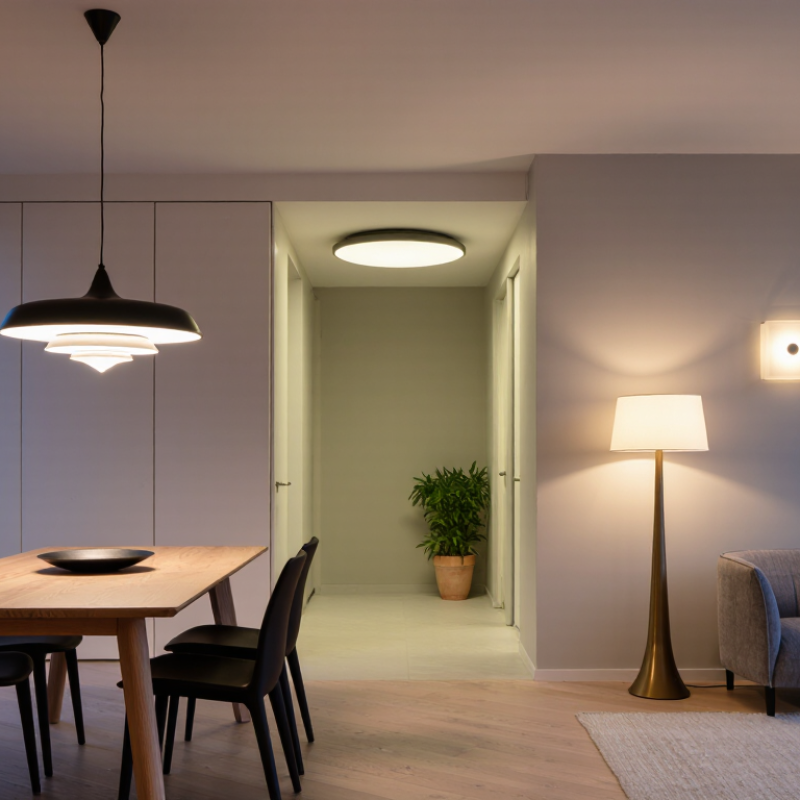
| Flush-Mount Ceiling Lights | Bedrooms, entryways, closets, and rooms with lower ceilings | About 1,000–2,500 lumens; commonly 12–30 watts | 2700–3000 K for comfortable ambient lighting | Choose a size suited to the room, and check fixture depth, light diffusion, and access for cleaning or maintenance. |
| Semi-Flush Ceiling Lights | Living rooms, bedrooms, and dining areas with moderate ceiling height | About 1,000–2,500 lumens; commonly 12–30 watts | 2700–3000 K for warm, everyday use | Allow adequate head clearance and consider whether the fixture directs light upward, downward, or both. |
| Single Pendant Lights | Kitchen islands, breakfast bars, bedside areas, and entryways | About 400–1,200 lumens; commonly 5–15 watts | 2700–3000 K for dining and living; 3000–3500 K for food-preparation areas | Check hanging height, shade glare, and whether one pendant provides enough coverage or needs to be paired with other lighting. |
| Linear Pendant Lights | Kitchen islands, dining tables, and long work surfaces | About 1,500–4,000 lumens; commonly 20–50 watts | 3000–3500 K for clear task lighting; 2700–3000 K for a warmer dining atmosphere | Match the fixture length to the surface, confirm even light distribution, and verify that its suspension height suits the room. |
| Modern Chandeliers | Dining rooms, living rooms, stairwells, and larger entryways | About 1,500–4,000 lumens combined; output depends on the number and type of light sources | 2700–3000 K for a warm, welcoming effect | Consider room scale, ceiling height, total light output, dimming compatibility, and whether supplemental lighting is needed. |
| Wall Sconces | Hallways, bedrooms, bathrooms, and living-room accent lighting | About 300–800 lumens per fixture; commonly 4–10 watts | 2700–3000 K for ambient or accent lighting | Check mounting position, light direction, and whether the shade shields the source from direct eye contact. Use damp- or wet-rated fixtures where required. |
| Floor Lamps | Living-room reading corners, bedrooms, and flexible task lighting | About 800–1,800 lumens; commonly 9–20 watts | 2700–3000 K for relaxing; 3000–4000 K for focused reading | Look for a stable base, suitable reach, adjustable direction for reading, and a switch that is easy to access. |
| Under-Cabinet Lights | Kitchen counters, pantry shelves, and work areas | About 100–300 lumens per 12 inches of fixture; output varies by product | 3000–4000 K for clear countertop visibility | Check for even coverage, low glare, color consistency between sections, and accessible controls or a compatible dimmer. |
| Track Lighting | Living rooms, kitchens, galleries, and flexible accent lighting | About 500–1,000 lumens per head; commonly 5–12 watts per head | 2700–3000 K for warm accents; 3000–4000 K for clearer task lighting | Confirm track and head compatibility, aiming range, beam spread, and whether the system can be dimmed as installed. |



 © Copyright 2020 Tianjin Tanghaidongyang Valve Co., Ltd. All Rights Reserved.