Best Three Way Valve Options for Global Buyers?
In the world of fluid control systems, the "three way valve" plays a crucial role. Industry expert Dr. Emily Chen emphasizes, "Choosing the right three way valve can significantly enhance system efficiency." This statement resonates with global buyers looking for quality and reliability in their products. The market presents a variety of options, but selecting the best involves understanding specific applications and requirements.
Many buyers often overlook the complexities in valve selection. A three way valve must handle diverse fluids and pressures efficiently. The challenges include addressing compatibility, size, and operational life. While many manufacturers boast superior products, not all deliver on their promises. Reliability is essential, and buyers need to conduct thorough research.
It's crucial for potential buyers to recognize that not every "three way valve" will suit their needs. Reflecting on specific use cases, such as HVAC systems or industrial processes, can guide better decisions. A thoughtful approach, coupled with insights from industry professionals, will lead to optimal choices in the competitive landscape of three way valves.
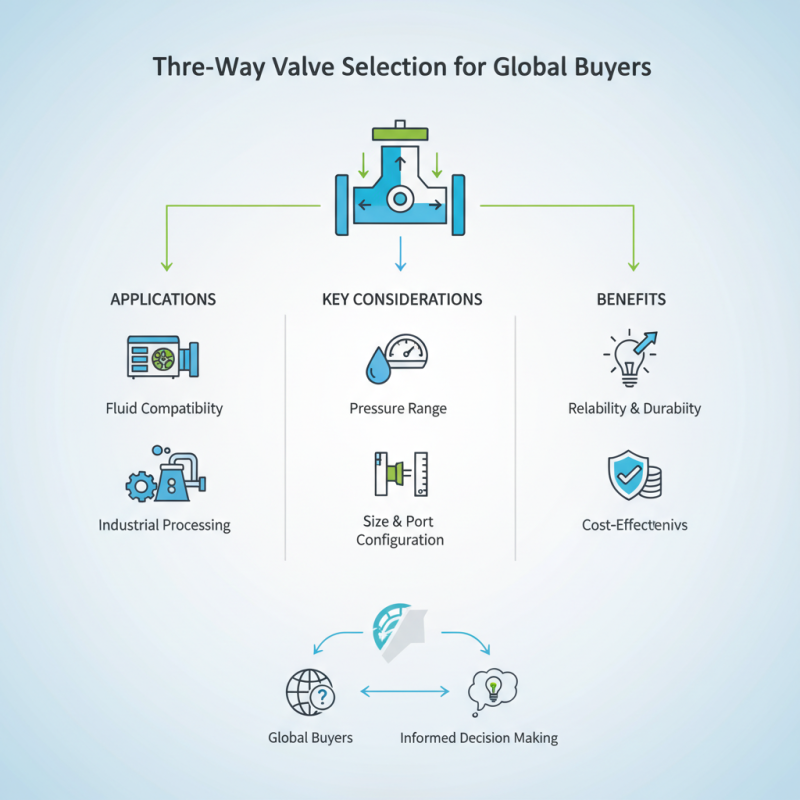
Key Features to Consider in Three Way Valves
When selecting the best three-way valves, several key features demand attention. One critical aspect is the valve's material. The choice between brass, stainless steel, or plastic can significantly impact performance and durability. According to industry reports, stainless steel valves offer a longer lifespan—up to 20 years—when handling corrosive fluids.
Another important consideration is valve type. There are various configurations like L-port and T-port options. Each serves different flow patterns. The design you choose can influence efficiency. A study by the International Society of Automation noted that improper valve selection could reduce system efficiency by 20%.
Flow rate is also essential. It determines how well the system performs under various conditions. A valve's Cv value provides insight into its flow capacity. Typically, valves with higher Cv values allow for greater flow rates. Regularly checking and verifying performance metrics can help prevent costly maintenance issues in the long run. Small changes in pressure can lead to unexpected results; monitoring is key.
Types of Three Way Valves and Their Applications
Three-way valves are essential in various industries. They allow for the diversion or mixing of fluids efficiently. These valves are versatile and come in different types, each suited for specific applications. The three main types are ball, globe, and check valves.
Ball valves are highly efficient for on-off applications. They have a spherical disc that allows or blocks flow. This type is known for its durability and reliability. Globe valves, on the other hand, are ideal for regulating flow. They create significant resistance, making them suitable for throttling. This can be a drawback in some applications. Lastly, check valves prevent backflow. These are crucial in systems where flow direction matters.
Each type has its own strengths and weaknesses. Choosing the right valve involves considering the application's unique requirements. A detailed understanding of system dynamics can lead to better decision-making. While three-way valves are generally reliable, they require regular maintenance to ensure optimal function. Neglecting this can lead to failures, impacting system efficiency.
Best Three Way Valve Options for Global Buyers
Comparative Analysis of Three Way Valve Materials
Three-way valves are essential in various industrial processes. Selecting the right material is crucial for optimal performance. Common materials include stainless steel, brass, and plastic. Each has unique properties that affect durability, flow rate, and temperature resistance.
Stainless steel valves are known for their strength and corrosion resistance. They excel in high-pressure settings and harsh environments. However, they can be costly. Brass offers good anti-corrosive properties and is typically more affordable. It suits moderate temperature applications but may degrade in certain chemical environments.
Plastic valves are lightweight and resistant to many chemicals. They are ideal for lower pressures and temperatures. However, they do not hold up well under extreme conditions. Choosing the right material depends on specific application needs. Factors like temperature, pressure, and fluid type must be carefully considered. There's no one-size-fits-all solution; understanding these differences is key in making informed decisions.
Challenges in Sourcing Three Way Valves Internationally
Sourcing three-way valves presents challenges for global buyers. Variability in manufacturing standards can lead to inconsistencies in quality. Buyers must carefully investigate suppliers to ensure they meet necessary specifications. Technical knowledge of valve designs is crucial for making informed decisions.
Language barriers can complicate communication with international suppliers. Misunderstandings may arise during negotiations. Buyers should work with local agents to help bridge gaps. Additionally, differing regulations across countries can pose obstacles. Researching compliance requirements is essential when importing these valves.
Logistics also play a significant role in sourcing. Shipping costs and timelines can impact project schedules. Unexpected delays can derail operations, generating frustration. Establishing strong relationships with reliable shipping partners may mitigate some of these issues. Despite these challenges, thoughtful strategy can lead to successful sourcing experiences.
Best Three Way Valve Options for Global Buyers? - Challenges in Sourcing Three Way Valves Internationally
| Valve Type |
Material |
Pressure Rating (psi) |
Operating Temperature (°C) |
Applications |
| Brass Three Way Valve |
Brass |
150 |
-20 to 85 |
Water Supply, HVAC |
| PVC Three Way Valve |
PVC |
50 |
0 to 60 |
Chemical Processing, Irrigation |
| Stainless Steel Three Way Valve |
Stainless Steel |
300 |
-50 to 200 |
Food & Beverage, Pharmaceutical |
| Cast Iron Three Way Valve |
Cast Iron |
250 |
-20 to 120 |
Steam Systems, Oil & Gas |
| Ductile Iron Three Way Valve |
Ductile Iron |
200 |
-10 to 80 |
Municipal Water, Wastewater |




 © Copyright 2020 Tianjin Tanghaidongyang Valve Co., Ltd. All Rights Reserved.