| Low-Voltage Path Lights | Outdoor transformer and buried low-voltage cable | About 100–300 lumens per fixture | Usually 2700–3000 K | Frequently used walkways and larger gardens | Check transformer capacity, cable layout, fixture spacing, and whether the fixture is rated for outdoor use. | Requires cable installation and a compatible transformer; installation takes more planning than solar lighting. |
| Solar Stake Lights | Small solar panel with rechargeable battery | About 5–50 lumens per fixture | Often 2700–5000 K | Decorative edging and paths that receive direct sunlight | Look for replaceable batteries, a panel suited to the available sun, and an outdoor ingress-protection rating. | Light output and runtime can decrease after cloudy days, in shade, or as the battery ages. |
| Higher-Output Solar Path Lights | Larger solar panel and rechargeable battery | About 50–200 lumens per fixture | Commonly 2700–5000 K | Paths needing more visible illumination without wiring | Compare measured lumen output, battery capacity, charging time, and performance in the intended season. | Typically needs a sunny installation spot; advertised brightness alone does not indicate how long it will stay bright. |
| Replaceable-Battery Path Lights | Replaceable alkaline or rechargeable batteries | About 10–100 lumens per fixture | Often 2700–4000 K | Small paths or locations without convenient wiring or strong sunlight | Check battery type, expected runtime, battery-compartment sealing, and how easily batteries can be changed. | Requires periodic battery replacement or recharging, and runtime varies with temperature and use. |
| Line-Voltage Path Lights | Outdoor mains-powered wiring | Varies widely; commonly about 100–500 lumens per fixture | Commonly 2700–4000 K | Permanent installations where a licensed installation is appropriate | Confirm the fixture’s voltage, outdoor rating, wiring requirements, and suitability for the local electrical code. | Installation involves mains voltage and should be planned and completed according to applicable electrical codes. |
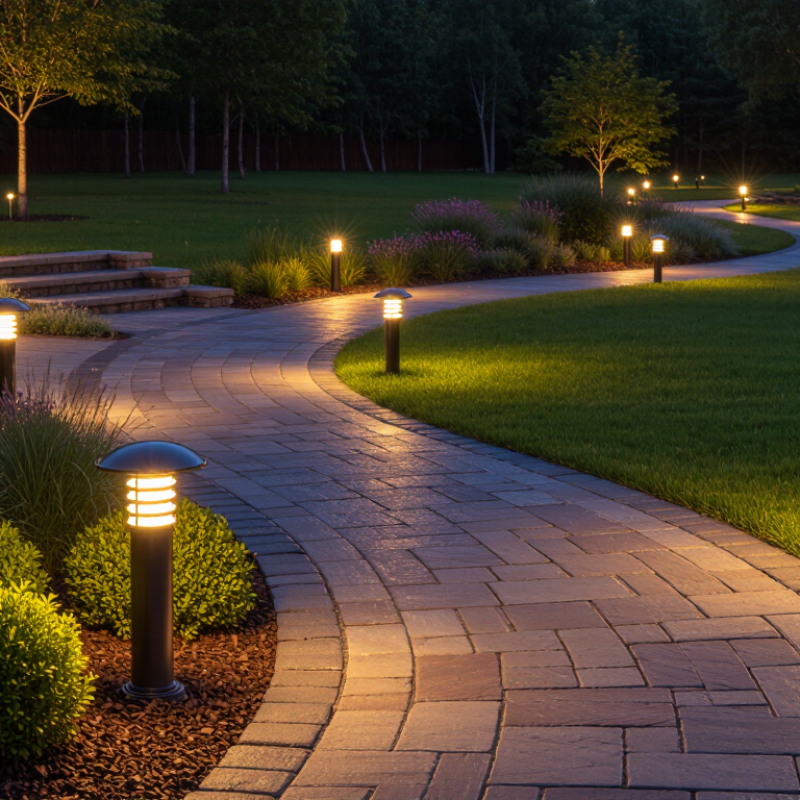
| Bollard Path Lights | Solar, low-voltage, or line voltage, depending on model | About 100–500 lumens per fixture | Commonly 2700–4000 K | Wide paths, driveways, and open landscape areas | Consider fixture height, beam distribution, glare control, material, and resistance to weather and impact. | Taller fixtures are more visible but can obstruct views or be more exposed to accidental knocks. |
| Recessed In-Ground Lights | Usually low voltage; some models use line voltage | About 10–100 lumens per fixture | Commonly 2700–4000 K | Flush, low-profile lighting along paving or steps | Check load rating for the installation location, drainage needs, glare shielding, and the specified wet-location rating. | Requires suitable installation and drainage; a poorly aimed or unshielded light can cause glare. |
| Motion-Sensor Path Lights | Solar, battery, or wired power, depending on model | Often about 50–300 lumens when activated | Commonly 2700–5000 K | Occasionally used entrances and paths where light is needed on demand | Review sensor range, detection angle, adjustable timer, sensitivity, and whether the light has a low-level standby mode. | Movement, placement, or obstructions can affect activation; frequent triggering can shorten battery runtime. |
| Smart-Controlled Path Lights | Usually wired or solar, with a compatible controller or wireless connection | Varies by fixture; check the stated lumen output | Fixed or adjustable, depending on model | Installations needing schedules, grouped control, or adjustable settings | Check connection requirements, control-system compatibility, outdoor rating, and whether basic operation works without an internet connection. | Some features depend on a hub, network connection, or compatible control system. |
| Directional Shielded Path Lights | Usually low voltage; solar options are also available | About 20–200 lumens per fixture | Commonly 2700–3000 K | Guiding walkers while limiting light directed toward nearby homes or the sky | Look for a shielded or downward-facing beam, adjustable aiming, appropriate spacing, and a warm color temperature. | Focused beams illuminate a smaller area, so fixture position and spacing matter. |
| Selection note: Light-output ranges are general examples, not specifications for every fixture. Choose output and spacing based on path width, surrounding darkness, glare control, and the manufacturer’s photometric information. For exposed outdoor locations, check the product’s stated ingress-protection rating; IP65 means dust-tight with protection against water jets, while IP67 indicates protection against temporary immersion under specified test conditions. |



 © Copyright 2020 Tianjin Tanghaidongyang Valve Co., Ltd. All Rights Reserved.