| 1 | Product-standard compliance | Confirm that the offered tube is made to the standard and grade required for its application. Examples include ASTM A500 for structural tubing, ASTM A53 for pipe, API 5L for line pipe, and EN 10219 for cold-formed welded structural hollow sections. | Current certificates, product-specific declarations, and sample inspection documents. Check the precise edition and grade required by the purchase specification. | 15% |
| 2 | Quality management and traceability | Assess documented controls for incoming material, production, inspection, nonconforming product, and batch identification. ISO 9001 certification indicates a quality management system; it does not by itself certify a particular tube product. | Valid certification within its stated scope, traceability examples, and a redacted quality-control plan. | 12% |
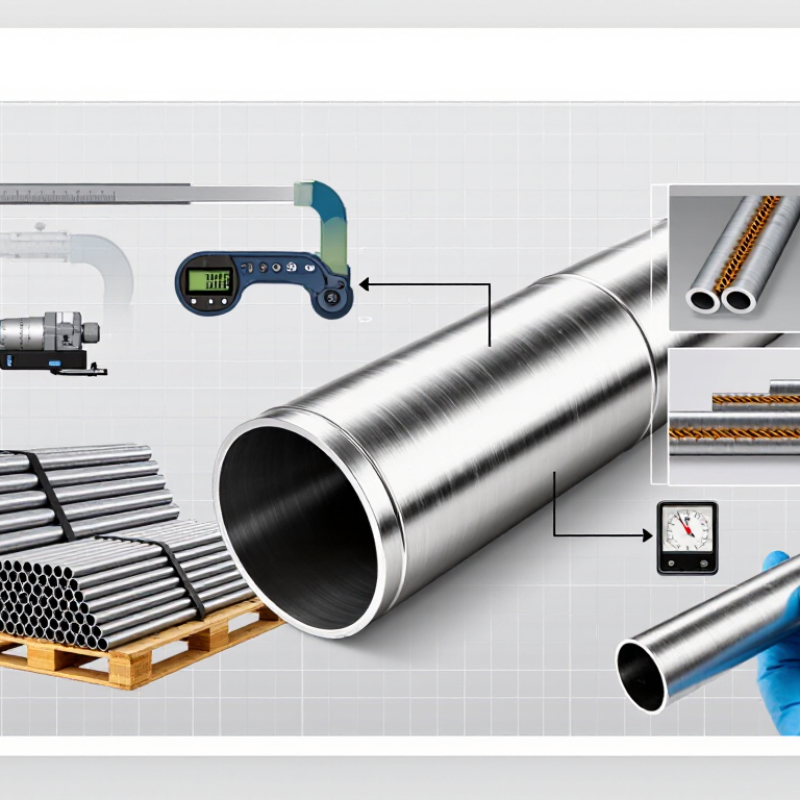
| 3 | Weld integrity and inspection | Compare the welding route and inspection plan with the product specification. ERW/HFW and SAW are distinct processes; required testing and acceptance criteria depend on the product standard and order. | Welding procedure information, inspection records, and details of applicable visual, dimensional, or nondestructive testing. | 15% |
| 4 | Dimensional consistency | Check the available outside dimensions, wall thicknesses, lengths, and tolerance requirements against the specified product standard and drawings. Do not assume one tolerance applies to all tube types. | Inspection results for a comparable production lot and the measuring methods used for critical dimensions. | 10% |
| 5 | Material and test documentation | Confirm that material grade, heat or batch identification, and required test results can be linked to the delivered tubes. EN 10204 Type 3.1 is one commonly specified inspection-document type; confirm whether it is required for the order. | A sample certificate matched to the ordered grade, plus the manufacturer’s procedure for retaining and linking records. | 10% |
| 6 | Production capacity and product range | Compare verified capacity for the specific diameter, wall thickness, steel grade, finish, and quantity you need. A headline annual capacity may cover a broader product mix and may not represent available capacity for your order. | Applicable production-line range, current schedule, minimum order quantity, and a capacity confirmation for the requested specification. | 10% |
| 7 | Lead time and delivery reliability | Compare quoted production and dispatch timelines, how delivery dates are confirmed, and how delays are communicated. Lead times vary with specification, order size, raw-material availability, and shipping arrangements. | A written schedule covering production, inspection, packing, and dispatch, with assumptions and any delivery milestones. | 8% |
| 8 | Customization and finishing | Check whether the manufacturer can meet the required cut length, end preparation, surface condition, coating, or other drawing requirements for the intended application. | Written confirmation against the drawing or specification, available options, tolerances, and any associated minimum quantities. | 7% |
| 9 | Export packaging and logistics support | Evaluate whether packaging, marking, loading, and shipping-document arrangements suit the destination and transport mode. Confirm any destination-specific import or regulatory requirements separately. | Packing specification, shipment-marking sample, document list, and a quotation stating the delivery term and named place. | 7% |
| 10 | Communication and after-sales service | Compare response clarity, technical support, order-update frequency, complaint handling, and willingness to resolve documented quality issues. | Named contact roles, a written claim-handling process, sample order updates, and agreed response expectations. | 6% |



 © Copyright 2020 Tianjin Tanghaidongyang Valve Co., Ltd. All Rights Reserved.