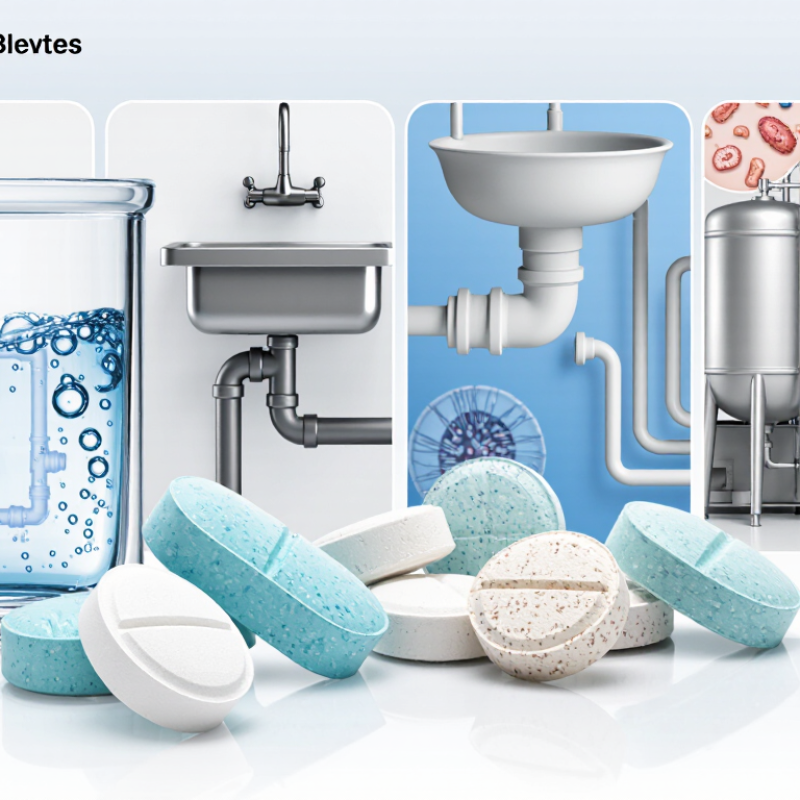
| What the tablets are | Water-soluble tablets designed to dissolve and release an antimicrobial ingredient into a measured volume of water. Formulations and intended uses vary. | The active ingredient and its concentration determine which organisms and uses are covered. | “Bio sanitizer” is not a single standardized chemical or performance category. Check the product label for the active ingredient and approved use. |
| Active ingredient | Sanitizer tablets may use different antimicrobial chemistries, such as chlorine-releasing compounds. The specific formulation determines how the solution acts. | Different ingredients have different effective concentration ranges, contact times, material compatibility, and organism claims. | Do not assume that results or instructions for one tablet formulation apply to another. Follow the product label. |
| Tablet dose and water volume | Dissolve the labeled number of tablets in the specified volume of water, using the stated preparation method. | Too little product can leave the solution below its effective concentration; too much may damage surfaces or create exposure risks. | Do not estimate by tablet size or use a concentration intended for a different application. |
| Contact time | The treated surface or item generally needs to remain visibly wet for the contact time stated on the label. | Insufficient wet time can reduce microbial inactivation even when the solution is correctly prepared. | Allowing a surface to dry early, wiping it too soon, or using the solution outside its labeled conditions can undermine the claimed result. |
| Soil and organic matter | Food residue, grease, dirt, and other organic material can shield microorganisms or consume some antimicrobial ingredients. | Cleaning first usually improves sanitizer contact with the surface. | Sanitizing is not a substitute for cleaning. Follow label directions on whether rinsing or pre-cleaning is required. |
| Water quality and temperature | Water chemistry, hardness, and temperature can affect dissolution or the performance and stability of some formulations. | Use the water conditions specified by the manufacturer; these requirements can differ by product. | Do not assume warmer or harder water improves performance. Use only the labeled temperature range. |
| Solution age and storage | After dissolving, some active ingredients gradually lose strength, especially when exposed to heat, light, or contamination. | Freshly prepared solution, used within the label’s stated period, is more likely to meet its intended concentration. | Do not store or reuse prepared solution beyond the product’s directions. Keep tablets dry and in their original packaging. |
| Surface coverage | The solution must reach the area being treated, including relevant crevices and contact surfaces. | Uneven application, inaccessible areas, or rapid runoff can leave untreated spots. | Use only on surfaces and items listed on the label. Some materials may corrode, discolor, or otherwise be damaged. |
| Target organisms and claims | Effectiveness is specific to the organisms, application method, concentration, and conditions tested for the product. | A sanitizer claim does not automatically establish effectiveness against every bacterium, virus, fungus, or spore. | Read the label for the exact claims. Sanitizing and disinfecting are distinct claims, and neither should be treated as universal sterilization. |
| Safety and handling | Use the prescribed protective measures and ventilation, and follow label instructions for storage and disposal. | Correct handling helps limit skin, eye, inhalation, and accidental-ingestion exposure. | Never mix sanitizer solutions or tablets with other cleaners or chemicals unless the label explicitly directs it; mixing can cause hazardous reactions. |



 © Copyright 2020 Tianjin Tanghaidongyang Valve Co., Ltd. All Rights Reserved.