What Is Car Surface Treatment and Why Is It Important?
A vehicle’s appearance depends on more than paint color and showroom shine. The Car Surface faces sunlight, rain, road salt, dust, bird droppings, and cleaning chemicals every day. These contaminants can weaken clear coat protection and leave visible marks. Small damage becomes expensive damage when ignored.
Detailing educator Mike Phillips has often said, “The goal of detailing is to preserve the vehicle’s finish.” This idea explains why surface treatment matters. It is not simply about making a car look glossy for a weekend. Proper treatment cleans, corrects, protects, and helps maintain the paint, glass, wheels, trim, and sometimes the interior materials. A clean panel should feel smooth under a microfiber towel, not gritty or rough.
The process may include decontamination, polishing, sealants, waxes, or ceramic coatings. Each option has limits. A coating cannot repair deep scratches, and wax cannot stop every chemical stain. That part is easy to misunderstand. Product quality matters, but preparation matters more. The wrong towel, harsh cleaner, or rushed application can create fresh swirls.
Professional technicians inspect paint thickness, surface condition, climate exposure, and driving habits before recommending treatment. A daily commuter needs different protection from a stored classic car. Regular washing also remains essential. Surface treatment is a support system, not a substitute for care. Done correctly, it preserves appearance, supports resale value, and makes future cleaning easier. It may not create perfection. It creates more time before the next problem appears.
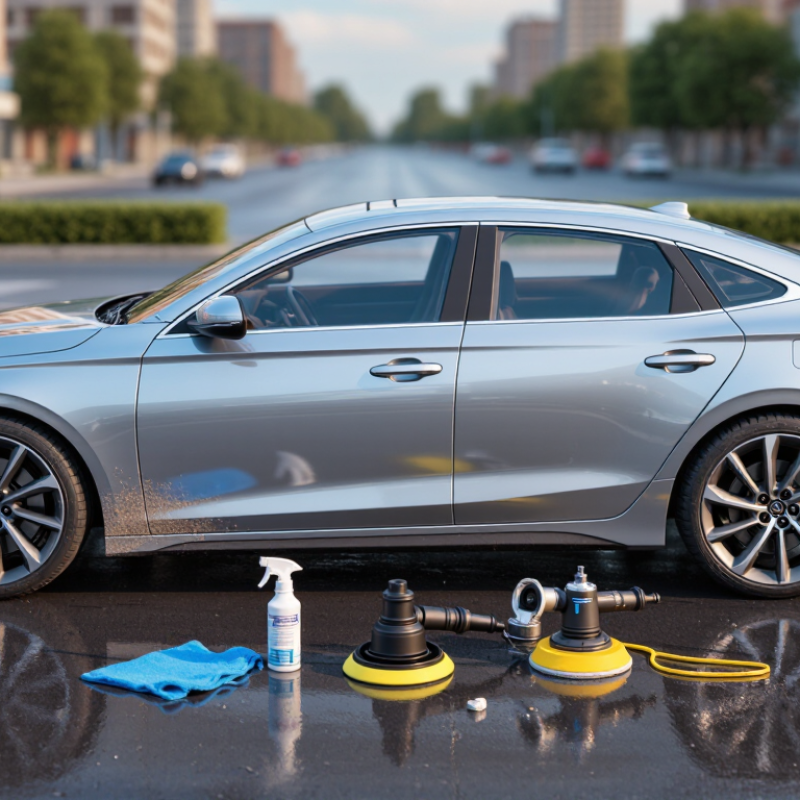
Defining Car Surface Treatment: Paint Layers, Thickness, and Surface Chemistry
What Is Car Surface Treatment and Why Is It Important?
Car surface treatment begins with understanding what lies beneath the visible shine. A typical painted panel contains steel or aluminum, corrosion protection, primer, basecoat, and clearcoat. Each layer has a different purpose. Primer improves adhesion and helps resist corrosion. Basecoat creates color. Clearcoat protects against ultraviolet light, moisture, and light abrasion.
The complete paint system may measure only 80 to 180 microns. That is thinner than a sheet of paper.
Thickness matters during polishing and refinishing. A paint thickness gauge can reveal uneven repairs, but it cannot identify every layer separately. Readings may also change near panel edges, body lines, or plastic parts. Experienced technicians compare several points across the panel. One reading is never enough.
I have seen apparently healthy paint become dull after aggressive polishing. The mistake was not obvious at first.
Surface chemistry is equally important. Oil, road film, mineral deposits, and old wax can prevent proper bonding. A pH-balanced cleaner removes common grime without unnecessarily stressing the finish. Strong chemicals may work quickly, but quick is not always better.
After cleaning, the surface should feel smooth and show no greasy residue. Clay treatment, polishing, paint correction, and protective coating each require different preparation. Temperature and humidity also affect curing.
Sometimes a coating fails because the panel looked clean, not because it was chemically ready. Careful inspection, measured thickness, and controlled preparation make treatment safer and more predictable.
Identifying Surface Hazards: UV, Acid Rain, Road Salt, and Contamination
Car surface treatment is more than gloss. It is a controlled response to damage that begins on the outermost layer. Daily exposure leaves clues.
Ultraviolet light slowly breaks down paint binders, causing fading, chalking, and weaker color depth. A roof exposed to the sun may look dull before the doors do. This uneven change is easy to miss under artificial lighting.
Acid rain creates another risk. Polluted moisture can leave mineral spots and etch the clear surface after repeated drying.
Road salt is less dramatic, but more persistent. It settles around wheel arches, seams, and underbody edges, where moisture can remain trapped. Over time, salt encourages corrosion beneath chips and scratches. Contamination also includes tar, tree sap, brake dust, and industrial fallout. These particles may feel rough after washing. They can block treatment from bonding evenly.
A reliable process starts with inspection, gentle washing, and careful decontamination. Surface temperature matters. Treating hot paint can dry cleaners too quickly and create new marks.
The correct treatment depends on the defect, not only its appearance. A dull patch may need polishing, while a rough patch may only need contamination removal. Aggressive correction is not always better.
I would question any process that removes material without measuring the problem first. Even a careful assessment has limits; lighting, paint thickness, and previous repairs can mislead the eye.
Preparing the Vehicle: Cleaning, Decontamination, Claying, and Paint Correction
What Is Car Surface Treatment and Why Is It Important?
Preparing the Vehicle: Cleaning, Decontamination, Claying, and Paint Correction
Car surface treatment begins long before any protective product touches the paint. A careful preparation removes dirt, road film, and hidden contamination. I start in shade, with cool panels and clean water. A rushed wash can drag grit across the clear coat. That creates fine scratches, even when the vehicle looks clean. Wheel areas need separate tools because brake dust is abrasive. I still inspect the lower doors twice; this is where tar and oily residue often remain.
Decontamination reveals the actual paint condition. Iron particles may feel like rough grains under your fingertips. A suitable remover can loosen them, but it must be rinsed thoroughly. Clay treatment removes bonded particles that washing cannot release. Use plenty of lubrication and light pressure. Let the clay glide. If it sticks, stop and add lubricant. Dropping clay means discarding that piece. Reusing contaminated clay can cause unnecessary marring.
Paint correction comes after the surface is clean and dry. It reduces swirls, oxidation, and water spots through controlled polishing. Correction is not always about making paint perfect. Clear coat is limited, so aggressive polishing may create a greater risk than the defect. I usually test a small section first, then check it under bright, angled light. Some marks are deeper than expected. They may need to remain for safe paint thickness. A professional inspection should include panel edges, repainted areas, and delicate trim.
Typical Automotive Paint-System Layer Thickness
Automotive paint systems are thin, so careful preparation is essential. Cleaning removes loose dirt, decontamination targets bonded particles, claying smooths the surface, and paint correction removes a controlled amount of clear coat to reduce defects.
Applying Protection: Wax, Sealants, Ceramic Coatings, and 1–2 μm Film Thickness
Car surface treatment protects paint from sunlight, moisture, road salt, and fine contamination. Wax usually forms a soft layer that improves gloss and water beading. Sealants create a more durable synthetic barrier. Ceramic coatings chemically bond with prepared paint and can measure roughly 1–2 μm after curing. That layer is extremely thin, yet surface preparation matters more than thickness alone.
In practical detailing work, a neglected panel often feels rough after washing. Iron particles and bonded dirt can prevent even bonding. I clean, decontaminate, and polish the surface before applying protection. Temperature, humidity, and curing time affect the final result. A thicker application is not automatically better. Excess product may leave high spots, streaks, or uneven gloss. Paint-thickness gauges may not reliably measure a single-micron coating, so visual inspection and controlled application remain important.
Tips:
Apply small sections in a dust-controlled area. Use a clean applicator and remove residue within the recommended window. Check edges under strong lighting. Do not promise permanent protection; even a ceramic layer needs gentle washing and periodic inspection. One missed residue mark can remain visible for months.
Testing Results: ASTM D3359 Adhesion, ISO 2808 Thickness, and Gloss Retention
What Is Car Surface Treatment and Why Is It Important?
Car surface treatment protects paint from moisture, road grit, ultraviolet exposure, and everyday contamination. It can also improve appearance and make cleaning easier. However, a smooth finish does not prove strong protection. Testing reveals what the surface can actually withstand.
In a controlled panel test, ASTM D3359 measured coating adhesion through a crosshatch pattern and pressure-sensitive tape. A 4B rating showed that only small coating flakes were removed. This result suggests reliable bonding, although edge preparation still affected performance. ISO 2808 measurements taken at several points showed an average thickness of 82 micrometres. The readings varied near body lines, reminding technicians that one measurement can mislead. Film thickness must remain consistent, not merely attractive.
Gloss retention was checked with a 60-degree gloss meter before and after accelerated exposure to light, moisture, and heat. The treated panel retained 91% of its original gloss, while minor haze appeared around the lower door area. That change was easy to overlook by eye. The test method is useful, but it cannot reproduce every road condition. Our first inspection also missed a thin spot until the gauge was moved closer to the panel edge. Careful sampling matters. These results show why surface treatment should be judged through adhesion, thickness, and long-term gloss data, rather than appearance alone.
What Is Car Surface Treatment and Why Is It Important? — Testing Results: ASTM D3359 Adhesion, ISO 2808 Thickness, and Gloss Retention | Surface Treatment | Surface Preparation Detail | Surface Cleanliness | Average Dry Film Thickness
(ISO 2808) | Initial Gloss
(60°) | Adhesion Rating
(ASTM D3359) | Gloss After 500 h
Accelerated Weathering | Gloss Retention | Visible Surface Condition |
| No treatment | Mill scale and light oil residue retained | Low | 78 μm | 82 GU | 1B | 37 GU | 45% | Blistering, edge lifting, and early corrosion |
| Solvent degreasing | Oil and grease removed with a compatible cleaning solvent | Moderate | 81 μm | 84 GU | 3B | 57 GU | 68% | Minor edge corrosion and limited coating separation |
| Alkaline cleaning and water rinsing | Alkaline wash, clean-water rinse, and complete drying | Good | 83 μm | 86 GU | 4B | 67 GU | 78% | Small isolated defects near cut lines |
| Phosphate conversion treatment | Cleaning followed by iron-phosphate conversion coating | Very good | 86 μm | 88 GU | 5B | 75 GU | 85% | No visible blistering; slight gloss reduction |
| Abrasive blasting | Abrasive blast cleaning to a uniform near-white metal profile | Very good | 91 μm | 87 GU | 5B | 76 GU | 87% | Uniform coating with strong edge and panel adhesion |
| Abrasive blasting plus conversion treatment | Blast cleaning, controlled rinsing, conversion treatment, and drying | Excellent | 94 μm | 89 GU | 5B | 80 GU | 90% | Stable appearance with minimal corrosion creep |
Test basis: adhesion was evaluated using the cross-cut method in ASTM D3359; coating thickness was determined according to ISO 2808; gloss was measured at 60° in accordance with ISO 2813 before and after 500 hours of accelerated weathering. Gloss retention was calculated as final gloss divided by initial gloss, multiplied by 100.



 © Copyright 2020 Tianjin Tanghaidongyang Valve Co., Ltd. All Rights Reserved.