| 1. Full carbon-fiber laminate card | Carbon-fiber fabric or sheet consolidated with a resin matrix; card edges may expose the laminate layers. | Premium business cards, membership cards, and presentation pieces. | Stiffness, surface finish, edge quality, and laminate consistency affect the look and feel. Carbon-fiber composites are electrically conductive. | Fiber and resin description, surface-finish sample, edge treatment, thickness tolerance, and resistance to delamination. |
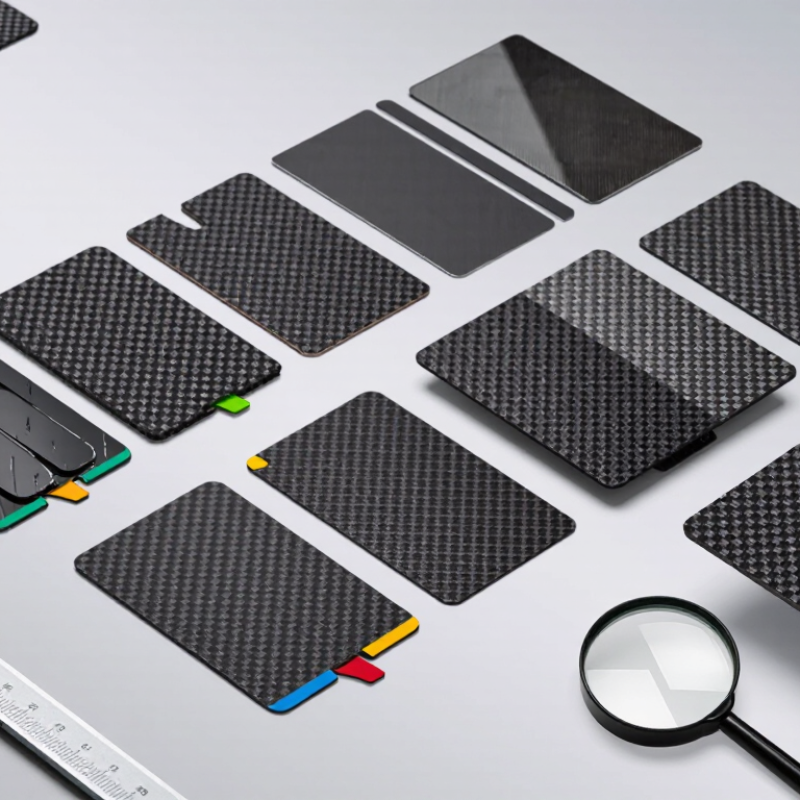
| 2. Woven-pattern carbon-fiber face | A visible woven carbon-fiber layer bonded to a supporting card substrate. | Business cards and branded identification cards where a recognizable weave is desired. | Weave direction and pattern alignment can vary. A printed imitation pattern is not the same as a real carbon-fiber face. | Whether the face is genuine woven fiber or printed, the weave specification, bonding method, and approved pre-production sample. |
| 3. Twill-weave finish card | Carbon-fiber face with a diagonal twill weave, commonly finished with a clear or colored coating. | Premium business cards, product credentials, and decorative cards. | Glossy and matte coatings change appearance and can affect scratch visibility. Printed colors may look different over dark fiber. | Finish options, color-proofing process, coating durability, and performance of small text or fine graphics on the dark surface. |
| 4. Carbon-fiber and polymer hybrid | Carbon-fiber decorative layer bonded to a polymer card body, such as PVC or PETG. | Cards needing a carbon-fiber appearance with a more conventional, flexible card body. | Polymer choice affects flexibility, heat response, and compatibility with printing or card-personalization processes. | Layer structure, bonding strength, total thickness, material documentation, and compatibility with the intended card printer or encoder. |
| 5. Thin carbon-fiber veneer card | A thin carbon-fiber face layer applied to a lightweight substrate rather than a card made entirely from carbon-fiber laminate. | Lightweight promotional, business, or event cards. | The substrate determines much of the card’s flexibility and durability. The face layer may be vulnerable at exposed edges if bonding is poor. | Face-layer thickness, substrate material, adhesion testing, edge-sealing method, and a sample that matches the proposed production build. |
| 6. Carbon-fiber NFC card | Carbon-fiber exterior combined with an NFC chip and antenna, often with an antenna area designed to reduce interference. | Tap-to-open digital profiles, product information, and contact-sharing cards. | Conductive carbon fiber can interfere with radio-frequency performance or detune an antenna. Read range depends on the complete card design and reader or phone. | Chip type, antenna layout, tested read performance on common devices, encoding options, and whether the sample uses the same materials as production. |
| 7. Carbon-fiber RFID access card | Composite card incorporating an RFID chip and antenna, with the antenna position and surrounding materials selected for reliable operation. | Access-control credentials and identification programs requiring contactless reading. | System compatibility depends on the card’s frequency and protocol. The carbon-fiber layer may affect antenna tuning and read performance. | Supported frequency and protocol, compatibility with the buyer’s access system, sample testing on the actual reader, and chip security requirements. |
| 8. Carbon-fiber-faced metal-core card | A metal core or insert covered partly or fully with carbon-fiber laminate. | Premium presentation cards and specialty membership cards where added rigidity or a distinctive feel is wanted. | Metal can add weight and may interfere with contactless signals. Core material and edge construction influence durability and handling. | Core material, finished weight and thickness, edge safety, corrosion protection where relevant, and contactless testing if a chip is included. |
| 9. Reclaimed-fiber composite card | Card made using reclaimed or recycled carbon-fiber material blended or combined with a suitable matrix or substrate. | Projects with material-reuse goals or a preference for a distinctive recycled-material appearance. | Reclaimed fibers may differ in length, orientation, and surface appearance from continuous woven fabric. Environmental claims depend on documented sourcing. | Recycled-content evidence, material traceability, batch-to-batch appearance tolerances, and any environmental documentation required for the destination market. |
| 10. Personalized engraved or printed card | A carbon-fiber or carbon-fiber-faced card customized with laser marking, printing, or a combination of processes. | Named business cards, staff credentials, limited-edition cards, and serialized cards. | Dark, textured surfaces can limit contrast and fine-detail reproduction. Laser marking results depend on the coating and laminate. | Marking method, legibility of small text, artwork file requirements, personalization accuracy, and a production-equivalent proof. |



 © Copyright 2020 Tianjin Tanghaidongyang Valve Co., Ltd. All Rights Reserved.