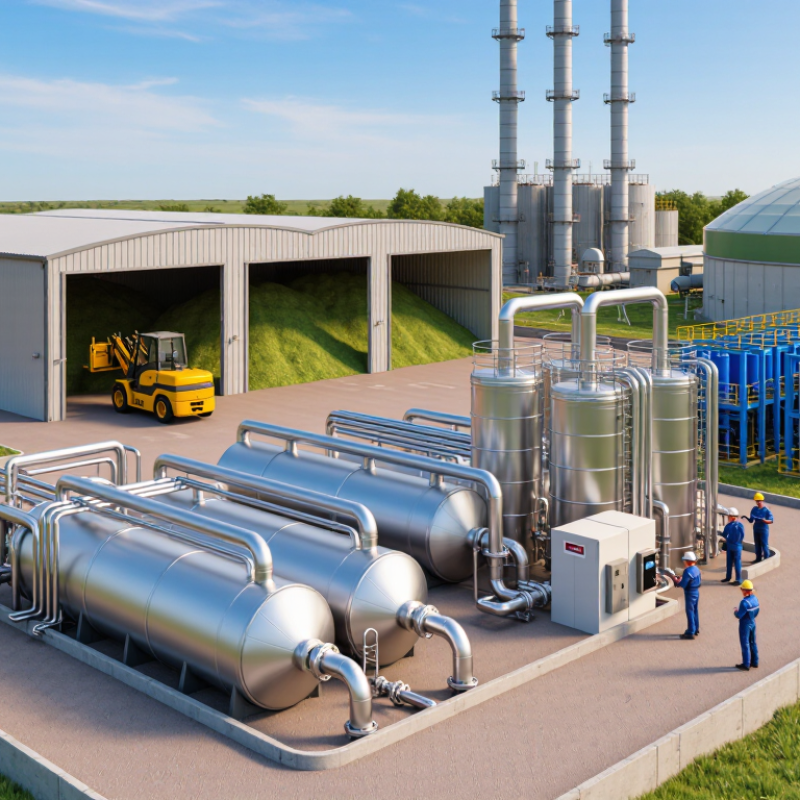
For a “China Top 10 Biogas Treatment Engineering Companies” review, compare technical capability, not just equipment lists. Raw biogas often carries hydrogen sulfide, moisture, and carbon dioxide. H₂S removal protects downstream equipment from corrosion and helps meet gas-quality targets. Common methods include iron-based media, activated carbon, and biological scrubbing. Each has different demands for replacement, chemical use, and process control. Small details matter. A damp filter bed can behave differently from a dry one.
CO₂ separation raises methane concentration for biomethane applications. Water scrubbing, membrane separation, and pressure swing adsorption are established options, but none fits every site. Feed-gas variation, energy consumption, methane slip, and maintenance access should all be assessed. A supplier’s design should explain how performance changes when gas flow or composition shifts. Ask for operating data from comparable projects, not only a peak efficiency figure. That distinction is easy to miss.
Upgrading also depends on pretreatment and reliable monitoring. Moisture removal, oxygen control, and final gas analysis can affect stable operation and product consistency. Engineering proposals should show process flow, expected utility use, residual-gas handling, and a realistic maintenance plan. There is no perfect treatment train. Even a sound design may need adjustment after commissioning, especially when feedstock quality changes with the season. A little uncertainty belongs in the plan.



 © Copyright 2020 Tianjin Tanghaidongyang Valve Co., Ltd. All Rights Reserved.