| 1 | Core nail families | Common long-bone intramedullary nail families include femoral, tibial, and humeral nails. | A broad portfolio may require different nail lengths, diameters, curvature profiles, and insertion instruments. |
| 2 | Fracture fixation applications | Intramedullary nails are used to stabilize selected fractures of long bones. The appropriate design depends on the bone, fracture pattern, and clinical plan. | Product specifications and labeling need to define the intended anatomical site and use. |
| 3 | Implant materials | Implant-grade titanium alloys and stainless steels are used in orthopaedic implants. Relevant material specifications include parts of the ISO 5832 series. | Material selection affects mechanical properties, machining requirements, and the applicable verification plan. |
| 4 | Locking architecture | Many nail systems use proximal and distal locking screws. Some designs provide static and dynamic locking options. | Hole location, screw compatibility, and targeting accuracy are important design and production controls. |
| 5 | Proximal femoral designs | Cephalomedullary nail designs include a proximal fixation element intended to extend into the femoral head or neck. | Designs must specify compatible fixation components and the intended surgical technique. |
| 6 | Instrumentation systems | Associated instruments can include insertion handles, targeting guides, drill sleeves, depth gauges, and extraction tools. | Instrument-to-implant compatibility and repeatable targeting are key system-level considerations. |
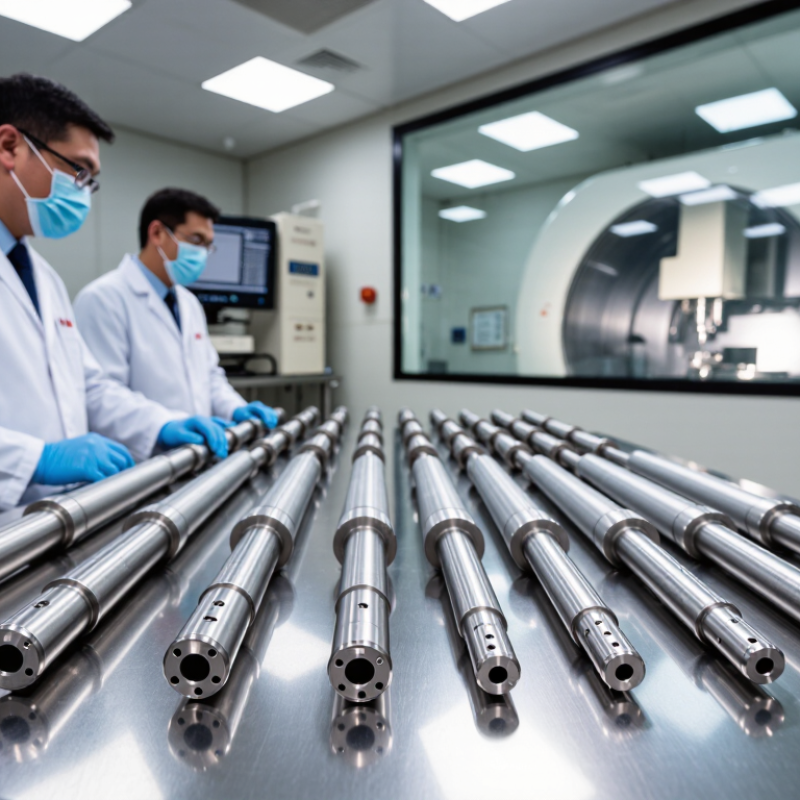
| 7 | Precision manufacturing | Production commonly involves controlled machining operations, such as turning, milling, and drilling, followed by finishing and inspection. | Critical dimensions, locking-hole geometry, surface condition, and process traceability require documented controls. |
| 8 | Cleaning, finishing, and packaging | Implants require controlled cleaning and finishing. Packaging design must protect the device through handling and distribution; ISO 11607 applies to packaging for terminally sterilized medical devices where applicable. | Validated processes help maintain cleanliness, packaging integrity, and product identification. |
| 9 | Quality and risk management | ISO 13485 specifies quality management system requirements for medical-device organizations. ISO 14971 provides a framework for medical-device risk management. | These standards support documented design, production, supplier, corrective-action, and risk-management processes. |
| 10 | Biological evaluation and sterilization | Biological evaluation is addressed by the ISO 10993 series. If supplied sterile, a device’s sterilization method and packaging require appropriate validation; ISO 11135 covers ethylene oxide sterilization and ISO 11137 covers radiation sterilization. | Applicable evaluations and validations depend on the device, materials, intended use, and chosen supply configuration. |



 © Copyright 2020 Tianjin Tanghaidongyang Valve Co., Ltd. All Rights Reserved.