| 01 | Heavy-Duty Polyurethane Solid Wheel | Cast polyurethane
High-hardness elastomer | Machined steel or cast-iron core | Flat tread; roller-bearing or plain-bore options | 80–300 mm | 150–2,000 kg per wheel | Concrete, epoxy, tile, and smooth industrial floors | Material carts, platform trucks, warehouse equipment, and AGV units | High abrasion resistance, low rolling resistance, good resistance to oils and many chemicals, and reduced floor marking. |
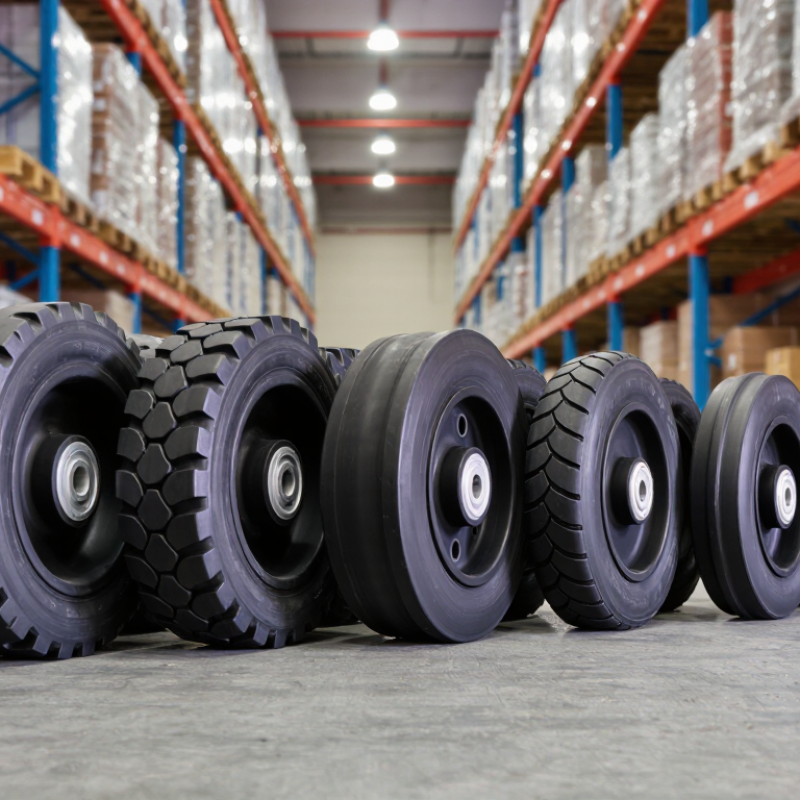
| 02 | Elastic Solid Rubber Wheel | Natural or synthetic rubber | Steel, aluminum, or reinforced polymer core | Rounded tread; shock-absorbing solid construction | 75–250 mm | 80–800 kg per wheel | Uneven concrete, ramps, outdoor paving, and mixed indoor surfaces | Industrial carts, service trolleys, equipment stands, and transport dollies | Good impact absorption and quiet movement; generally suitable where vibration control is more important than maximum load capacity. |
| 03 | Phenolic Resin High-Temperature Wheel | Phenolic resin
Compressed laminate construction | Integrated resin body or metal-reinforced hub | Rigid flat tread; heat-resistant bearing assembly | 80–200 mm | 100–700 kg per wheel | Hard, smooth, dry floors; not recommended for rough surfaces | Bakery ovens, food-processing lines, autoclaves, and industrial heat-transfer carts | Low water absorption and strong heat performance; commonly selected for intermittent high-temperature service. |
| 04 | Forged Steel Solid Wheel | Hardened steel | Forged or machined carbon-steel body | Flanged, crowned, or flat tread; heavy-duty axle bore | 100–500 mm | 1,000–10,000 kg per wheel | Steel rails, cast floors, concrete, and other hard surfaces | Rail-guided transfer carts, foundry equipment, coil handling, and heavy industrial machinery | Very high static capacity and resistance to cutting, crushing, and metal debris; produces more noise and floor impact than resilient materials. |
| 05 | Nylon Solid Wheel | Cast or molded nylon | Single-piece engineered polymer body | Flat or crowned tread; sealed or plain-bore design | 50–250 mm | 100–1,200 kg per wheel | Clean, smooth, moisture-resistant floors | Food plants, chemical facilities, warehouse carts, and cleanroom material handling | Resistant to water, many chemicals, and corrosion; hard tread can be noisy and may mark delicate floors under high point loads. |
| 06 | Polyurethane-on-Steel Wheel | Bonded polyurethane layer | Steel or ductile-iron center | Precision-machined tread; crowned or cylindrical profile | 100–400 mm | 500–5,000 kg per wheel | Concrete, coated floors, and steel plates | AGV systems, automated storage equipment, transfer carts, and powered material-handling vehicles | Combines a high-load metal core with resilient polyurethane contact; offers good traction, wear life, and lower noise than steel wheels. |
| 07 | Heat-Resistant Silicone Rubber Wheel | Silicone rubber | Aluminum or stainless-steel core | Solid resilient tread; sealed high-temperature bearing option | 60–200 mm | 50–500 kg per wheel | Smooth indoor floors and heat-exposed production areas | Ovens, drying tunnels, glass processing, textile machinery, and laboratory equipment | Maintains flexibility over a broad temperature range and resists aging; usually selected for moderate loads and clean environments. |
| 08 | Metal-Detectable Solid Polymer Wheel | Food-grade polyurethane or polymer compound | Stainless-steel or detectable polymer core | Hygienic smooth tread; sealed bearing and washdown-ready design | 80–200 mm | 100–800 kg per wheel | Epoxy, polyurethane, stainless-steel, and tiled floors | Food processing, beverage production, pharmaceutical, and hygienic logistics areas | Designed for frequent cleaning and contamination control; selected materials may be detectable by standard inspection systems. |
| 09 | Anti-Static Solid Wheel | Conductive or dissipative polyurethane | Steel, aluminum, or conductive polymer core | Low-resistance tread; sealed precision bearing | 75–250 mm | 100–1,000 kg per wheel | ESD flooring, epoxy, concrete, and smooth industrial floors | Electronics assembly, hospitals, laboratories, cleanrooms, and automated handling systems | Helps dissipate electrostatic charge while providing improved abrasion resistance and quieter operation than metal wheels. |
| 10 | Heavy-Duty Molded Composite Wheel | Glass-fiber-reinforced nylon or composite resin | Reinforced one-piece composite body | Wide tread; corrosion-resistant plain bore or roller bearing | 100–300 mm | 300–2,500 kg per wheel | Wet concrete, chemical-resistant coatings, and general industrial floors | Corrosive environments, wastewater facilities, chemical plants, warehouses, and outdoor equipment | Low maintenance and corrosion resistance with a favorable strength-to-weight ratio; performance depends on humidity, temperature, and chemical exposure. |



 © Copyright 2020 Tianjin Tanghaidongyang Valve Co., Ltd. All Rights Reserved.