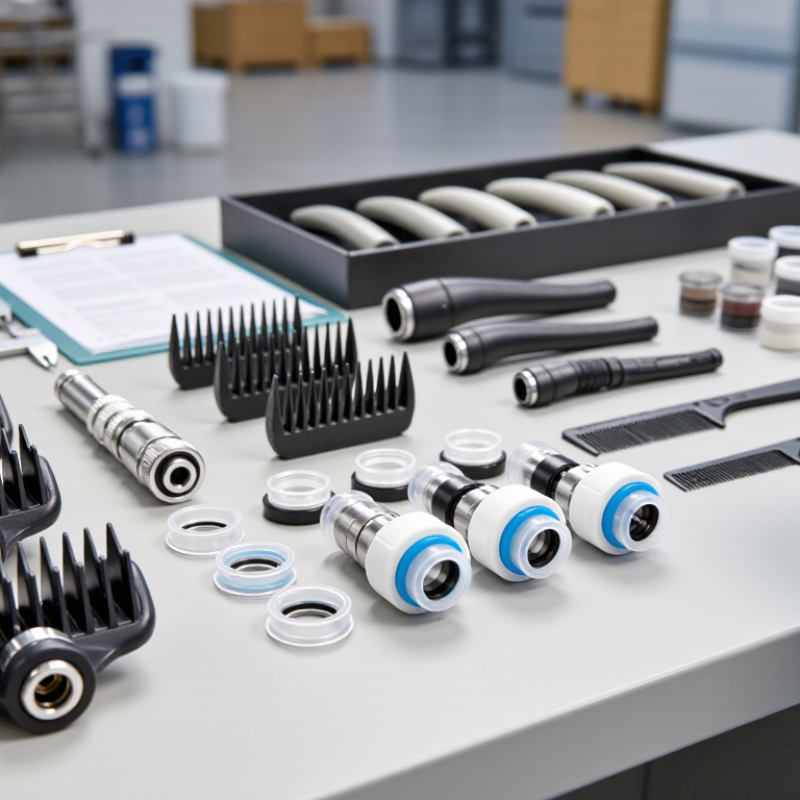
China’s manufacturing base brings molding, metalwork, and electronics close together. For personal care appliance accessories, that can shorten communication between suppliers. A molded comb attachment, for example, may need a precise fit around a metal pin and a small electronic contact. Nearby workshops can review samples together and adjust dimensions before production scales.
Injection molding suppliers handle housings, guards, and clips, while metalworking shops produce stamped brackets or turned components. Electronics facilities can assemble compact circuit boards, switches, and wiring. Buyers should still check material specifications, sample records, and inspection methods.
A short drive between factories is useful, but it is not a quality system. Not always.
The practical details matter. Ask how a supplier controls mold wear, checks burrs on metal edges, and tests connector fit. Request sample measurements and confirm that the production version matches the approved sample. Small defects can disrupt assembly.
The clusters also have limits: schedules may differ, and a change from one supplier can affect another. Even experienced teams can miss a handoff detail, so written drawings and clear revision records remain essential. A factory’s location is a starting point, not proof of reliable output.



 © Copyright 2020 Tianjin Tanghaidongyang Valve Co., Ltd. All Rights Reserved.