| Wire Rope Material | Common options include carbon-steel wire rope, galvanized carbon-steel rope, and stainless-steel rope. | Select material for the environment and application. Galvanizing can improve corrosion resistance, while stainless steel may be suitable for some corrosive environments. Material choice alone does not establish the assembly’s rated capacity. |
| Rope Grade | Steel wire rope strength grades are expressed in N/mm². Available grades and properties depend on rope construction and the applicable product specification. | Use the rope grade and construction specified on the product documentation. Do not estimate a lifting loop’s Working Load Limit (WLL) from rope grade alone. |
| Rope Construction | Stranded rope constructions include designs such as 6×19 and 6×36 families; the actual strand and wire arrangement varies by rope type. | Construction affects flexibility, abrasion behaviour, and suitability for bending around a connection. Confirm the exact construction with the manufacturer’s technical data. |
| Core Type | Typical core options include a fibre core and an independent wire rope core (IWRC). | Core selection affects rope behaviour, including flexibility and resistance to crushing. The appropriate option depends on the design and intended service conditions. |
| Threaded End Connection | A threaded end or fitting must be designed for the specific rope assembly and mating connection. Thread diameter, pitch, engagement, and fitting design are application-specific. | Verify thread compatibility and the fitting’s rated capacity from its documentation. Do not mix components based only on a matching nominal thread size. |
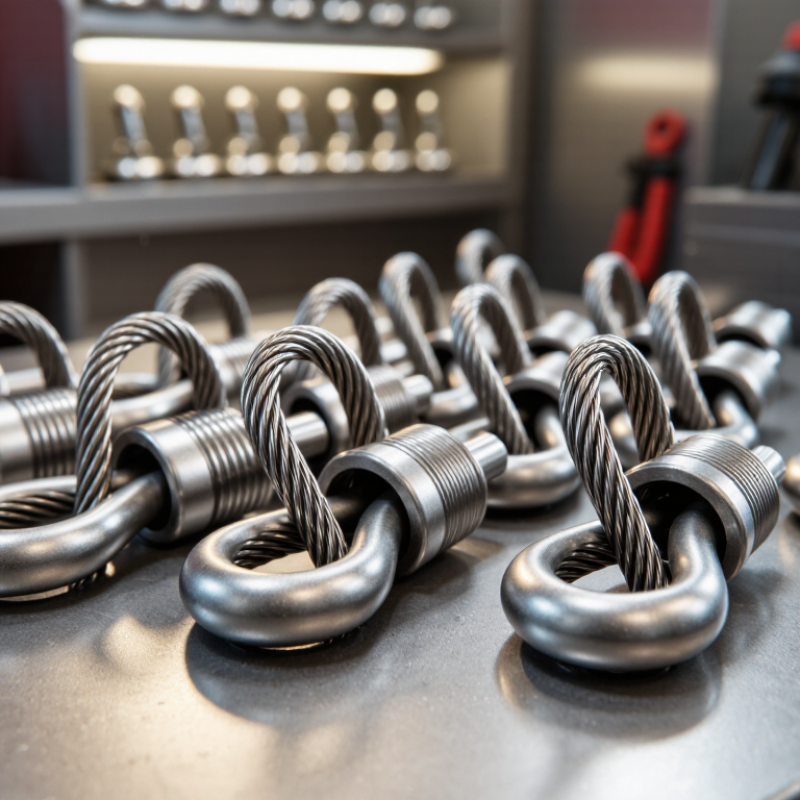
| Loop and Eye Design | A wire rope loop may use a formed eye, a thimble, or a purpose-designed end fitting, depending on the assembly. | Check that the loop geometry and connection suit the pin, hook, or other attachment. Small bend radii and unsuitable contact surfaces can damage rope and affect capacity. |
| Working Load Limit (WLL) | The WLL is the rated maximum load for a specified, complete assembly and its stated conditions of use. | There is no universal WLL for a wire rope threaded lifting loop. Use the marked rating and product documentation for the exact assembly; do not calculate capacity from rope diameter alone. |
| Load Configuration | Capacity can depend on the number of legs, sling angle, loading direction, hitch type, and how the load is shared. | Follow the manufacturer’s rating chart for the exact configuration. Avoid side loading or out-of-plane loading unless the product is specifically rated for it. |
| Manufacturing Standard | EN 13414-1 specifies requirements for steel wire rope slings for general lifting service. EN 12385-4 covers stranded steel wire ropes for general lifting applications. | Check that the standard cited applies to the product being purchased. A rope standard and a sling standard address different product scopes. |
| Inspection and Use | Inspection requirements depend on the applicable regulations, standards, product instructions, and service conditions. ISO 4309 provides guidance on care, maintenance, inspection, and discard of wire ropes used on cranes and hoists. | Inspect before use and remove assemblies from service when damage, deformation, corrosion, or other rejection criteria in the applicable instructions or rules are present. Inspection does not replace required competent-person examinations. |
| Product Documentation | Relevant records may include the assembly identification, WLL, rope and fitting specifications, applicable standard, and inspection or test documentation where required. | Match the identification on the product to its documentation. Confirm traceability and the stated operating limits before lifting. |



 © Copyright 2020 Tianjin Tanghaidongyang Valve Co., Ltd. All Rights Reserved.