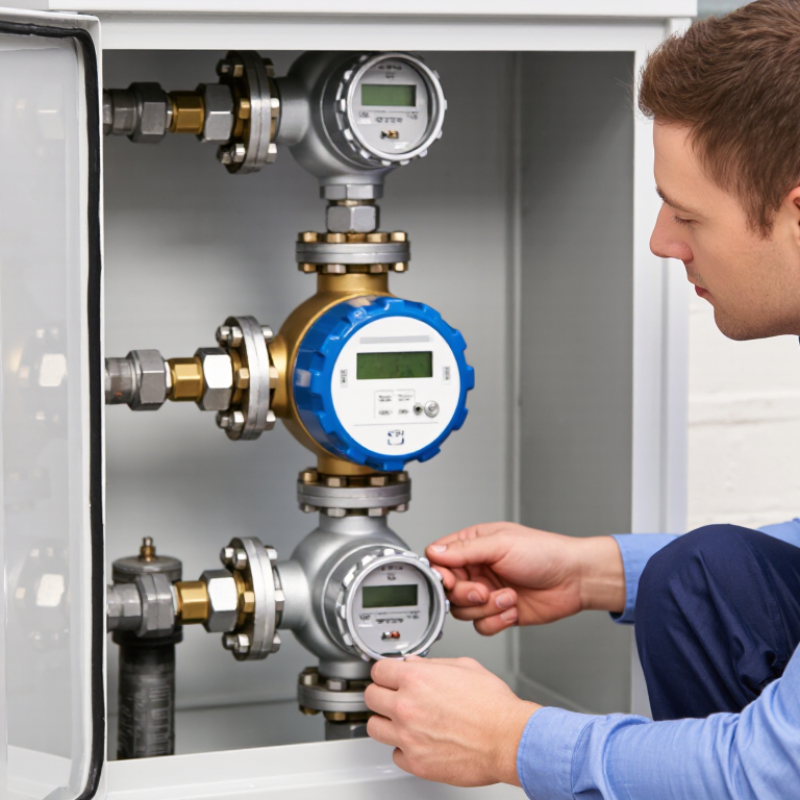
| Definition | A valve water meter is a water meter supplied with an integrated shutoff valve or a meter-and-valve assembly. The meter measures water volume; the valve controls or isolates the flow. | Combines flow measurement and a local isolation point in one installation area. | Confirm whether the valve is built into the meter body or supplied as a separate component in the assembly. |
| Metering function | The meter records the volume of water passing through it. Depending on the design, it may use a mechanical measuring element or electronic sensing. | Provides consumption data for billing, monitoring, or resource management. | Choose a meter type and accuracy class suitable for the intended use and applicable local requirements. |
| Shutoff and maintenance | The valve can be closed to stop flow through the meter assembly, subject to the product design and installation. | Can simplify local isolation during meter replacement or downstream maintenance. | Check valve accessibility, operating method, pressure rating, and whether additional upstream or downstream isolation is required. |
| Common applications | May be used in building service connections, apartment or unit submetering, and other water distribution installations where a meter and shutoff point are needed. | Supports measurement at a defined service or branch location. | Verify that the meter is approved for the intended water service and installation environment. |
| Installation layout | Like other water meters, the assembly must be installed in the orientation and configuration specified by its manufacturer. | Correct installation helps maintain reliable operation and access for reading and servicing. | Allow for pipe connections, meter reading, valve operation, and any required straight pipe lengths or installation clearances. |
| Water conditions | Meter performance and service life can be affected by flow conditions, debris, pressure, temperature, and water quality. | Matching the meter to operating conditions helps reduce measurement problems and premature wear. | Compare the operating range and materials with the project’s expected flow, pressure, temperature, and water characteristics. |
| Smart-reading options | Some meter assemblies can be paired with remote-reading or communication features; availability depends on the meter design. | Can reduce manual reading effort and support centralized consumption monitoring. | Check compatibility with the project’s data collection system, communication method, and power requirements. |
| Best fit | A valve water meter is useful when a project needs both water measurement and a nearby means of flow isolation. | It can make the installation more compact than arranging separate components, depending on the assembly. | Compare total installed space, service access, connection type, compliance needs, and lifecycle maintenance—not just purchase cost. |



 © Copyright 2020 Tianjin Tanghaidongyang Valve Co., Ltd. All Rights Reserved.