How to Choose the Best Electric Concrete Mixer for Your Needs?
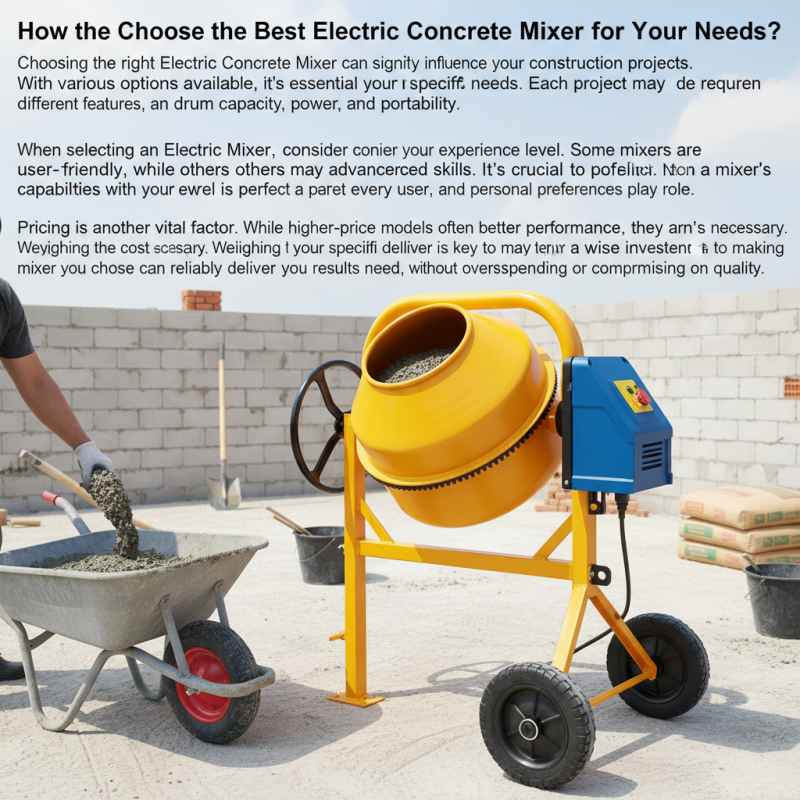
Choosing the right Electric Concrete Mixer can significantly influence your construction projects. With various options available, it’s essential to understand your specific needs. Each project may require different features, such as drum capacity, power, and portability.
When selecting an Electric Concrete Mixer, consider your experience level. Some mixers are user-friendly, while others may require more advanced skills. It's crucial to match the mixer’s capabilities with your proficiency. Not every model is perfect for every user, and personal preferences play a role.
Pricing is another vital factor. While higher-price models often come with better performance, they aren't always necessary. Weighing the cost against your specific requirements is key to making a wise investment. Ensure the mixer you choose can reliably deliver the results you need, without overspending or compromising on quality.
Understanding the Types of Electric Concrete Mixers Available
Choosing the right electric concrete mixer for your project requires understanding the types available. Electric concrete mixers generally fall into two categories: portable and stationary. Portable mixers are smaller and easy to move. They work well for small to medium projects, such as home renovations or small sidewalks.
Stationary mixers, on the other hand, are larger and typically found at construction sites. They have a higher capacity and can mix larger batches more efficiently. According to industry reports, stationary mixers can handle up to 2 cubic yards of concrete per batch, compared to portable ones, which usually max out at around half a cubic yard. This efficiency is critical for larger construction tasks.
When selecting a mixer, consider your project's scale and location. Ensure the mixer meets your concrete volume needs, and think about how often you'll need to move it. Some users find that smaller mixers may not meet their expectations for durability. It’s crucial to examine specifications closely. Each type has pros and cons, so understanding these details is vital for making an informed decision.
Key Features to Consider When Selecting an Electric Concrete Mixer
When selecting an electric concrete mixer, understanding key features is crucial. One significant consideration is the drum capacity. Mixers typically range from 2 cubic feet to 9 cubic feet. A larger drum can handle bigger projects but may be challenging to maneuver. Research indicates that a 4-cubic-foot mixer is suitable for most home projects, striking a balance between capacity and ease of use.
Another important aspect is the motor power. Generally, mixers with motors rated between 1/2 HP to 1 HP are common. A more powerful motor enhances mixing efficiency and can handle various materials. According to industry data, mixers with at least 3/4 HP are preferred for heavy-duty tasks. This ensures that the mixer can blend concrete consistently, reducing the risk of incomplete mixtures.
Durability is also vital in making a selection. Check the materials of the mixer’s frame and drum. Quality steel components increase longevity. However, some models may have plastic parts that aren’t as reliable. Reviewing consumer feedback often surfaces concerns about wear and tear in lower-quality mixers. Such insights can help refine your choices, ensuring that safety and performance standards are met in your final selection.
Assessing Your Project Size and Mixer Capacity Requirements
When assessing project size and mixer capacity, it's crucial to consider your specific needs. Smaller residential projects often require a mixer capacity of 3 to 5 cubic feet. This size can handle tasks such as small patios, garden paths, or DIY projects. A mixer within this range is easy to maneuver and store, making it suitable for tight spaces.
For larger jobs like constructing driveways or foundations, a capacity of 6 to 10 cubic feet is more appropriate. This allows for the mixing of larger batches of concrete, reducing the time spent on the job. However, larger mixers can be bulky, so reflect on your workspace. Do you have the room to operate a big mixer efficiently?
Understanding your project size also affects your choice. If your project scales up unexpectedly, consider a mixer with adjustable capacity features. Remember, the wrong size can lead to inefficiencies. A smaller mixer may require multiple loads, while an oversized one adds unnecessary weight and cost. Assess your needs carefully to ensure the best results.
Evaluating Durability and Materials of Concrete Mixers
When selecting an electric concrete mixer, evaluating its durability and materials is crucial. Concrete mixers are often subjected to heavy use, and the quality of their construction significantly affects longevity. Reports indicate that mixers made from high-grade steel tend to last longer than those built with plastic components. Steel frames resist impacts and wear better, which is vital for construction sites. A study from the American Concrete Institute revealed that properly maintained mixers can last over 10 years, while those with inferior materials may fail within a year.
Another important factor is the mixer’s design. A well-designed mixer enhances productivity and reduces the need for frequent repairs. Many contractors prefer models with corrosion-resistant coatings. These coatings help combat the harsh effects of cement slurry and prolonged exposure to water. According to a survey of industry professionals, about 78% reported that material quality directly impacts their choice of mixers. Also, regularly inspecting wear points can prevent costly breakdowns.
Choosing durable materials can be a game-changer. Keep an eye out for the mixer’s warranty. A longer warranty often indicates confidence in the product's durability. However, don’t solely rely on this; consider user reviews and expert insights. Be cautious, as not all high-priced models guarantee superior quality.
How to Choose the Best Electric Concrete Mixer for Your Needs? - Evaluating Durability and Materials of Concrete Mixers
| Model | Drum Capacity (cu ft) | Motor Power (HP) | Weight (lbs) | Durability Rating | Material |
| Electric Mixer A | 3.5 | 1.5 | 120 | High | Steel |
| Electric Mixer B | 6.0 | 2.0 | 150 | Medium | Plastic/Steel |
| Electric Mixer C | 5.0 | 1.75 | 130 | High | Aluminum |
| Electric Mixer D | 4.0 | 1.0 | 110 | Medium | Plastic |
| Electric Mixer E | 7.0 | 2.5 | 160 | Very High | Steel |
Comparing Prices and Warranty Options for Electric Mixers
When selecting an electric concrete mixer, price and warranty options are crucial factors. The price often reflects the quality and durability of the mixer. Budget models may seem appealing but might lack essential features. It's essential to balance cost and function. Sometimes, spending slightly more can yield better long-term results.
Warranty options vary significantly. Some mixers offer a standard year, while others provide extended coverage. A longer warranty often indicates manufacturer confidence in their product. A reliable warranty can be comforting, especially for frequent users. Check what the warranty covers. Some may exclude parts that are subject to wear and tear.
Consider researching user reviews and ratings as well. Insights from real users can highlight common issues. Make a list of necessary features. This clarity can help navigate through models effectively. Don't forget to think about support and repair services. A reputable retailer can make a significant difference. Approach every decision with a critical mind to ensure the mixer meets your unique needs.



 © Copyright 2020 Tianjin Tanghaidongyang Valve Co., Ltd. All Rights Reserved.