How to Choose the Right Silicone Automotive Hose
Choosing the right Silicone Automotive Hose starts with understanding the job it must do. A coolant hose in a daily driver faces different conditions from a turbocharger connection exposed to intense heat and vibration. The material may tolerate high temperatures, but that alone does not make every hose suitable. Pressure, fluid compatibility, engine-bay clearance, and expected movement all matter. Small details matter.
This guide outlines how to compare hose construction, temperature and pressure ratings, dimensions, and bend radius. It also explains why reinforced layers, secure clamps, and careful routing can affect reliability. Check the vehicle or component manufacturer’s specifications, then confirm that the hose supplier’s stated ratings match the actual application. Do not rely on appearance alone. A thick hose is not automatically the right hose.
Fit matters, too. Measure the connection points and inspect nearby parts for sharp edges, heat sources, or contact during engine movement. Even a well-chosen hose can fail if it is kinked, stretched, or poorly supported. There is no single option for every vehicle. When specifications are unclear, pause and verify them with a qualified technician or the manufacturer. A careful selection process reduces avoidable problems, though it cannot replace proper installation and regular inspection.
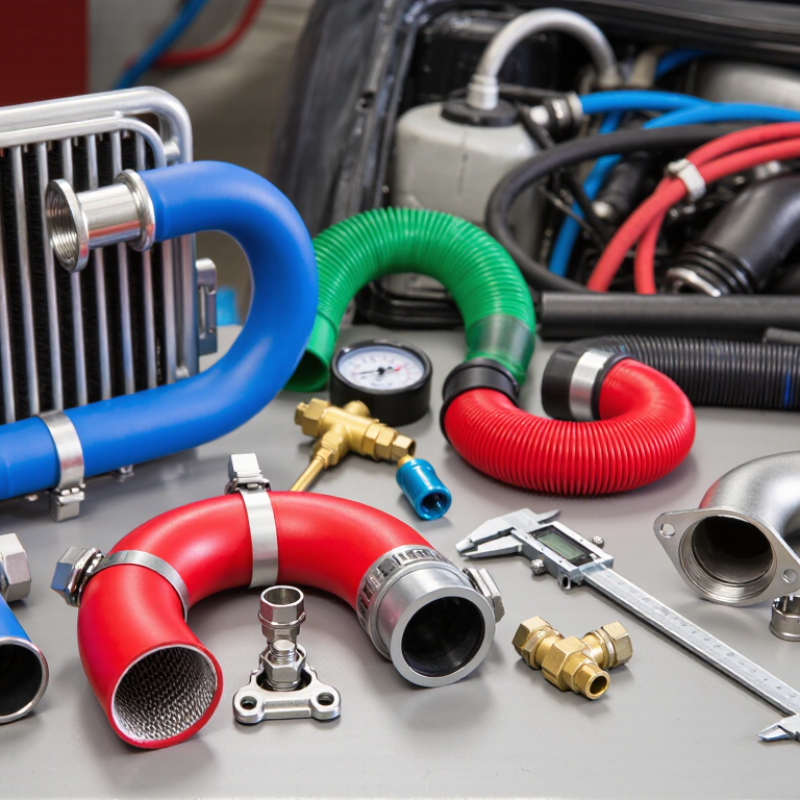
Define the Application: Coolant, Charge Air, or Another Automotive Circuit
Start with the circuit, not the hose color. Is the hose carrying engine coolant, pressurized charge air, or another fluid? Record the fluid, expected temperature range, pressure, and movement near the connection. Small details matter. A hose beside a turbocharger faces a different heat environment from one routed along a cool radiator support.
For a coolant circuit, check that the hose is rated for hot coolant and the system’s pressure. Measure the connection diameters and inspect the route for tight bends, abrasion, and nearby hot surfaces. A bend that looks gentle on a workbench may flatten once installed. That can restrict flow. Confirm clamp fit and leave enough clearance for engine movement.
Charge-air hoses must handle boost pressure, heat, and repeated pressure changes. Oil mist can also be present, and ordinary silicone may not tolerate oil exposure well. Check the hose’s inner construction and compatibility rather than judging by its outer appearance. For another automotive circuit, verify fluid compatibility and operating conditions before choosing silicone; it is not suitable for every application. One easy oversight is measuring a removed hose after it has softened or stretched. Compare measurements with the fitting specifications, and verify unclear ratings with reliable technical documentation.
Set Temperature Limits: Typical Silicone Ratings Span −50°C to 200°C
When selecting silicone automotive hose, treat −50°C to 200°C as a typical range, not a guarantee. Automotive hose technical data sheets commonly list limits in this span, but compounds and reinforcement vary. Check whether the rating means continuous service or brief exposure. A hose near a turbocharger may face radiant heat, while coolant inside it runs cooler. Measure the hose surface after sustained operation. Small details matter.
Temperature alone is not enough. SAE J20 sets performance requirements and tests for automotive coolant hose, while ASTM D573 evaluates rubber deterioration after heat exposure. These standards help assess durability; neither makes every silicone hose suitable for every vehicle or temperature. Ask for test results and confirm the stated limit applies under your pressure and coolant conditions. At elevated temperatures, pressure ratings may fall. That distinction is easy to miss.
Also inspect nearby parts. A hose touching a sharp bracket can wear through, even within its rated temperature range. Silicone is not automatically compatible with every oil or fuel; check the supplier’s compatibility data. For cold starts, verify flexibility near the expected minimum temperature, not just room temperature. I would leave a safety margin rather than design right at 200°C. Ratings are useful, but real engine bays are rarely tidy.
How to Choose the Right Silicone Automotive Hose: Temperature Limits
Typical silicone hose temperature ratings span approximately −50°C to 200°C. Actual limits depend on the hose construction, pressure, exposure time, and operating conditions; check the product specification for your application.
Match Pressure, Diameter, and Reinforcement to the System’s Requirements
Choosing the right silicone automotive hose means matching its limits to the actual system, not just picking a similar-looking tube. Check the system’s maximum working pressure, including brief pressure spikes, and compare it with the hose rating at operating temperature. Heat can reduce pressure capacity. A hose that handles cold workshop air may not perform the same beside a hot engine. Small differences matter.
Measure the connection’s inside diameter and account for the fitting bead, clamps, and routing. A hose that is too small can be difficult to install and may stress the joint; one that is too large can leak under the clamp. Reinforcement also matters. Multiple fabric layers support higher pressure, while a wire-reinforced design may help resist collapse in vacuum applications. Don’t guess from appearance. Verify the hose’s stated pressure, temperature, and application limits; silicone is not suitable for every fluid.
Tips: Measure twice, including bends and clearance near moving parts. Compare the rating at your expected temperature, not just the advertised maximum. If the specification is unclear, pause and confirm it before installation. I’ve found that rushing this check is easy—and worth reconsidering.
Check Coolant-Hose Compliance with SAE J20 and Product-Specific Ratings
A silicone automotive hose may look robust, yet appearance cannot confirm coolant-service performance. SAE J20 sets requirements and test methods for automotive coolant hoses; it does not mean every silicone hose complies. Check the product datasheet for an explicit SAE J20 claim and the applicable type or class. Look for supporting test reports or a declaration from the manufacturer, not just a sales-page phrase. Confirm the stated temperature and pressure limits, and compare them with the vehicle’s service conditions. Claims should be specific. Vague ratings are hard to verify.
Product-specific ratings matter because construction varies. Check the hose’s inner diameter, wall thickness, bend radius, and reinforcement. A hose that kinks behind the radiator can restrict flow, even if its material rating looks suitable. Verify coolant compatibility and the recommended clamp style; silicone can require different clamping care than conventional rubber. Looks can mislead. Fit matters. Keep the datasheet with the maintenance record, and inspect the hose after installation for seepage, soft spots, or contact with sharp edges. Documentation is not always complete, so confirm uncertain ratings with the supplier before fitting. That extra check is easy to skip, and worth reconsidering.



 © Copyright 2020 Tianjin Tanghaidongyang Valve Co., Ltd. All Rights Reserved.