Certificates

Certificates

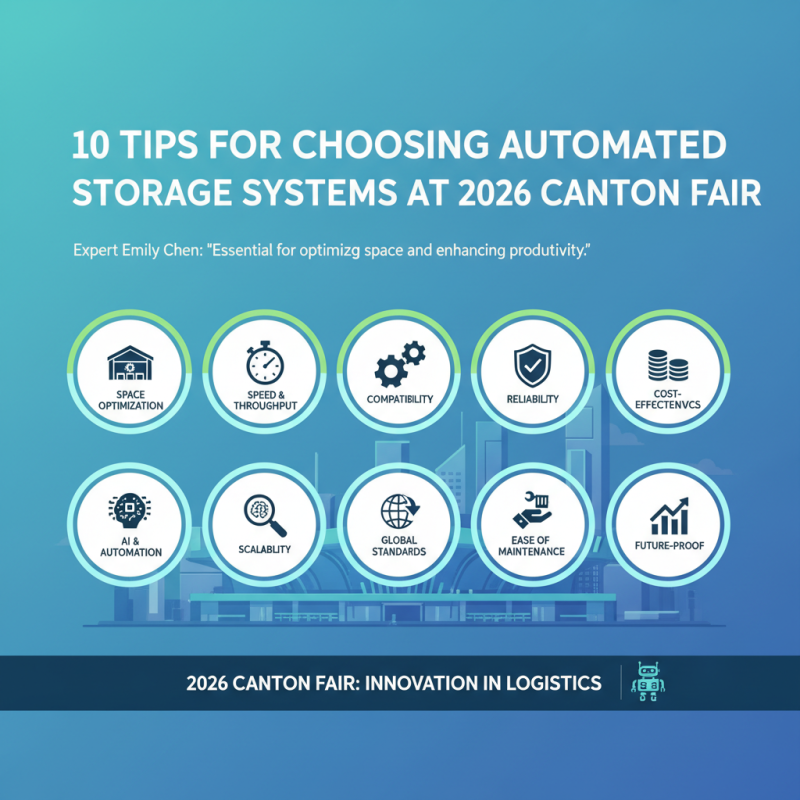
10 Tips for Choosing Automated Storage Systems at 2026 Canton Fair?

At the upcoming 2026 Canton Fair, Automated Storage Systems will play a pivotal role. With advances in technology, the demand for efficiency and precision in storage solutions is surging. Expert Emily Chen, a leader in logistics solutions, asserts, "Automated Storage Systems are essential for optimizing space and enhancing productivity." Her words resonate as businesses seek innovative ways to manage their inventory.

The fair will highlight cutting-edge advancements in manufacturing and electronics. AI-driven features will assist buyers in locating qualified suppliers, enhancing their purchasing experience. These systems promise to streamline operations, allowing users to navigate the vast exhibition area of 1.55 million square meters effortlessly. However, challenges remain. Not all automated storage systems are created equal, and selecting the wrong system could result in inefficiencies.

As businesses prepare for the fair, understanding the key elements of automated storage systems is crucial. Features like space optimization, speed, and compatibility must be carefully evaluated. Reflection on past purchases may reveal lessons learned. Embracing the future of storage requires thoughtful consideration and a desire for continuous improvement.

10 Tips for Choosing Automated Storage Systems at 2026 Canton Fair?

Understanding Automated Storage Systems: Key Trends for 2026

Automated storage systems are evolving rapidly. The trends for 2026 show significant advancements in efficiency and technology. A recent industry report indicates that the automated storage and retrieval systems market is projected to reach $14.7 billion by 2026, growing at a CAGR of 11.7%. This growth is fueled by increasing demand for efficiency in warehousing and supply chain management.

Smart technologies like AI and IoT are integral to these systems. They optimize inventory management and reduce operational costs. One reported statistic suggests that companies implementing automation can achieve up to a 30% reduction in storage costs. However, not all businesses adapt at the same pace. Many struggle with integration, facing challenges in retraining staff and upgrading legacy systems.

Additionally, environmental considerations are shaping automated storage solutions. Reports indicate that there is a 25% increase in demand for eco-friendly systems. Companies are exploring sustainable materials and energy-efficient designs. Nevertheless, the complexity of these systems can lead to unforeseen difficulties. A lack of clear guidelines often leaves firms questioning the best practices for deployment. Embracing these trends requires a balanced approach, weighing benefits against practical challenges.

Evaluating Space Efficiency: Maximizing Storage Density in Solutions

Choosing the right automated storage system is essential for maximizing space efficiency. At the 2026 Canton Fair, decision-makers can discover various solutions tailored to their needs. It's crucial to assess how each system utilizes vertical space. High-bay storage can significantly increase storage density. This approach allows more items in less ground area. However, some designs may limit accessibility. Balancing density and accessibility is key in storage design.

When evaluating storage options, consider modular designs. They adapt to changing inventory needs. Flexibility can greatly enhance efficiency. Moreover, analyze the layout of your facility. Systems should fit seamlessly into existing spaces. Poor integration can lead to wasted areas. Imagine a system that wraps around columns and utilizes corners. These details matter.

Don’t overlook ergonomics. User comfort impacts operational efficiency. A well-designed system minimizes physical strain. This is vital for long-term productivity. Watch out for overly complex systems. Complex designs can confuse users. Aim for balance in simplicity and functionality. A thoughtful approach leads to better decisions.

10 Tips for Choosing Automated Storage Systems at 2026 Canton Fair

Tip Number Tip Key Benefits Considerations
1 Assess Your Storage Needs Identifies appropriate system size and features Analyze current and projected inventory
2 Evaluate Space Efficiency Maximizes storage density, reduces footprint Consider vertical versus horizontal storage options
3 Consider Mobility and Flexibility Adapts to changing storage needs Check if the system can be easily reconfigured
4 Assess Technology Integration Enhances operational efficiency through automation Ensure compatibility with existing software
5 Analyze Total Cost of Ownership Helps in budgeting and ROI calculations Include installation, maintenance, and operational costs
6 Evaluate Safety Features Reduces risk of accidents and injuries Check for emergency stop functions and safety guards
7 Consider Maintenance Support Ensures long-term system performance Look for companies that offer strong support services
8 Review User Feedback and References Gains insights into real-world performance Seek feedback from similar businesses
9 Examine the Vendor’s Experience Ensures reliability and quality of service Consider the number of years in the industry
10 Request Demonstrations Experience the system before purchasing Evaluate usability and functionality in real-time

Assessing Technology Integration: AI and Robotics in Storage Systems

The growing integration of AI and robotics in automated storage systems is transforming logistics. While many systems now utilize these technologies, choosing the right one remains challenging. Look for systems that not only automate processes but also adapt quickly to changes. Assess how well they integrate with existing warehouse management software. Compatibility is crucial for seamless operations.

Consider the user interface as well. A complicated system can lead to errors. Training employees should be straightforward. Many systems claim ease of use, yet many users report steep learning curves. It’s vital to involve your team in the evaluation process. Their feedback can highlight potential drawbacks you might overlook.

Another aspect to reflect on is scalability. The system should grow with your business. Some solutions are too rigid, creating future obstacles. Think long-term and consider the investment involved. While advanced technology may seem attractive, it’s essential to analyze real-world performance. Not every cutting-edge feature proves useful in the day-to-day operations. Balance innovation with practicality to make a well-informed decision.

Cost Analysis: Budgeting for Long-Term ROI in Automated Storage

When considering automated storage systems, long-term ROI is crucial. Start with a clear budget. Analyze initial costs and future savings. Look into maintenance and operational expenses. These factors can significantly impact total costs over time. A lower price tag today might mean higher expenses later.

Evaluate the scalability of automation options. Will the system grow with your business? A flexible solution can save money down the road. Avoid systems that lock you in and limit your choices. Emphasize modular designs. These often allow for adjustments without a complete overhaul.

Seek out technology that integrates well with existing processes. A seamless transition reduces downtime and training needs. However, remember that every system has its flaws. Some may struggle with peak demands. Test the systems in real scenarios before committing. Consider how often you’ll require upgrades. The right choice should balance current needs with future growth.

Choosing Reliable Vendors: Quality and Support Criteria in Selection

Selecting reliable vendors for automated storage systems is crucial. Quality and support are key criteria in your decision-making process. A recent industry report indicates that nearly 70% of buyers prioritize vendor support when choosing automated systems. Quality assurance is equally important; 55%% of companies report issues after installation due to poor product quality.


When assessing a vendor, consider their reputation. Look for feedback from existing clients. Many vendors fail to provide transparent communication, which can lead to misunderstandings later on. A vendor that lacks commitment to customer support could leave you stranded. Evaluate their responsiveness and willingness to address concerns.


Product warranties also matter. Systems with robust warranties indicate vendor confidence and reliability. The 2023 Automated Systems Analysis notes that 30% of companies faced significant downtime due to warranty issues. This is a constant reminder of the potential downsides of poor vendor selection. Ensure you receive a comprehensive service agreement, outlining support and maintenance terms. A lack of clear support options can complicate your operations and lead to unexpected costs.