How to Choose the Best Pool Vacuum Robot for Your Needs?
In recent years, the demand for efficient Pool Vacuum Robots has surged. According to a report by Market Research Future, the global pool cleaning robot market is expected to grow by 12% annually through 2025. This statistic underscores the increasing reliance on technology for maintaining pool cleanliness.
Industry expert Dr. Emily Chen, a leading figure in pool automation, states, “Choosing the right Pool Vacuum Robot can transform your pool maintenance.” Her insight highlights the importance of matching the robot's features to specific needs. With numerous models available, finding the right fit can be daunting.
Many pool owners grapple with choosing the best option. They often overlook crucial factors such as cleaning efficiency, ease of use, and energy consumption. The ideal robot should not only offer superior performance but also be reliable and user-friendly. By understanding your unique requirements, you can make a more informed choice that enhances your pool care experience.
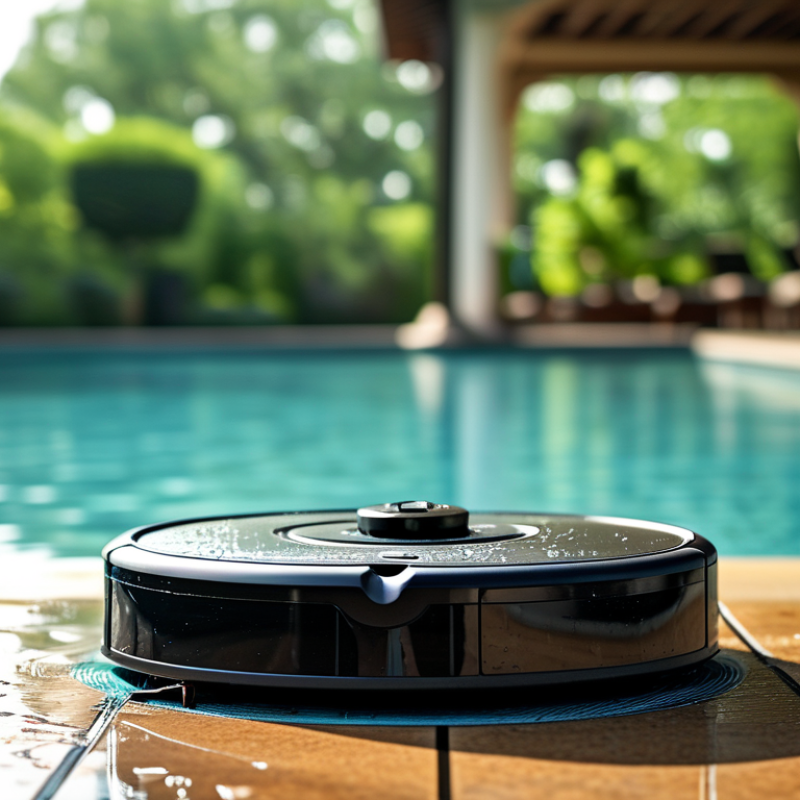
Understanding Your Pool Size and Shape for Vacuum Selection
When selecting a pool vacuum robot, it's essential to consider the size and shape of your pool. A large, irregularly shaped pool may require a more advanced model. If your pool has many curves or obstacles, look for a robot that specializes in navigation. Some models are designed specifically for complex pool shapes, ensuring thorough cleaning.
Think about the depth of your pool as well. Shallow pools may not need a high-powered vacuum, while deeper pools often benefit from stronger suction. It's crucial to match the vacuum's capabilities with your pool’s dimensions. After all, a unit that can’t reach all corners will leave dirt behind.
You should also reflect on usage. If you frequently host pool parties, invest in a robot that can handle heavy debris. Alternatively, if you maintain a serene, low-maintenance pool environment, a basic model might suffice. Balancing your pool’s unique features with the vacuum’s performance can be challenging but rewarding in finding the right fit.
Types of Pool Vacuum Robots: Suction, Pressure, and Robotic Options
When selecting a pool vacuum robot, understanding the types available is crucial. Suction, pressure, and robotic options all cater to different needs. Suction vacuums operate by drawing in debris. They connect directly to the pool's filtration system. This type often requires a bit more maintenance and can be less effective in larger pools. Reports indicate that suction cleaners cover 60% of the pool surface on average during a typical cleaning cycle. This makes them suitable for smaller pools or for light cleaning tasks.
Pressure vacuums, on the other hand, utilize water pressure from the pool's return jets. They are excellent for picking up larger debris like leaves and twigs. According to industry data, pressure cleaners can improve the efficiency of pool cleaning by up to 30%. These vacuums often require a dedicated pump, which may lead to increased operational costs. However, their ability to clean effectively in various pool conditions is noteworthy.
Robotic pool vacuum robots represent the latest technology in pool cleaning. These units are independent and use energy-efficient motors. They can navigate the pool without connections to the filtration system. Surveys indicate that robotic vacuums can clean up to 98% of the pool's surface area within a few hours. While the initial investment may be higher, they provide consistent and thorough cleaning. Maintenance is simpler too, though users need to regularly check for wear and tear. Each option has its advantages, and understanding their nuances is key to making the right choice.
How to Choose the Best Pool Vacuum Robot for Your Needs?
| Type | Features | Pros | Cons | Best For |
| Suction | Uses pool's filter and pump; simple setup | Cost-effective; low maintenance | Can be less effective in large debris | In-ground pools with smooth surfaces |
| Pressure | Connects to return line; includes a separate bag | Great for large debris; quick cleaning | Requires booster pump | Large in-ground pools |
| Robotic | Self-contained; programmable features | Efficient cleaning; does not rely on pool's system | Higher initial cost | All pool types; versatile use |
Key Features to Consider: Filters, Brush Types, and Navigation
When selecting a pool vacuum robot, understanding the key features is essential. Filters play a crucial role in maintaining clean water. Look for models with multi-layer filters to capture both fine debris and larger particles. High-efficiency filters make a noticeable difference in water clarity. However, keep in mind that these filters may require frequent cleaning or replacements, adding to maintenance time.
Brush types are another important consideration. Different brush materials, including rubber and nylon, can impact cleaning effectiveness. Rubber brushes often excel at scrubbing tough stains, while nylon brushes provide gentle cleaning for delicate surfaces. Think about the type of debris in your pool. If you have leaves and dirt, a robust brush may be necessary. It’s good to reflect on the surfaces of your pool and choose the brush type accordingly.
Navigation technology significantly influences how efficiently a robot cleans your pool. Advanced navigation systems ensure thorough coverage, avoiding missed spots. Some robots use smart mapping, while others rely on random patterns. Sometimes, basic models cover ground well but may take longer overall. Balancing efficiency and cost is crucial. Evaluate your pool size and shape to find a robot that meets your specific cleaning needs.
Comparison of Key Features in Pool Vacuum Robots
This chart displays the ratings of key features in pool vacuum robots, focusing on suction power, filter type, brush type, and navigation type. Ratings range from 0 to 10, highlighting the importance of these features in choosing the best robot for your needs.
Evaluating Ease of Use and Maintenance for Pool Vacuums
When selecting a pool vacuum robot, ease of use and maintenance should be top priorities. Many models offer user-friendly controls, allowing you to set schedules or adjust cleaning modes with minimal effort. Look for models equipped with intuitive interfaces. A vacuum that connects easily to your home Wi-Fi can streamline operation, making it more accessible.
Maintenance can often be a daunting task. Consider the accessibility of filters and brushes. Some models feature removable parts that simplify cleaning. Additionally, regular maintenance is crucial for long-term performance. A vacuum requires periodic checks to ensure optimal functionality. You may notice a decline in efficiency if neglected.
Evaluate the design of the vacuum. A compact and lightweight robot is easier to handle. If it cannot reach certain areas, it may not be effective. Examine how it maneuvers around obstacles and walls. A model that struggles in tight spaces often leads to frustration. Consider these factors carefully to find the best fit for your pool care needs.
Budget Considerations: Finding a Quality Vacuum That Fits Your Wallet
When considering a pool vacuum robot, budget is crucial. A higher price doesn’t always guarantee better performance. Many factors influence cost, including features, efficiency, and brand reputation. You might find that a mid-range model suits your needs perfectly while still being cost-effective. Higher-end models often include advanced navigation and filtration systems that can justify their price tag.
Evaluate what features are essential for your pool type. An automatic timer is great for busy schedules. A unit that handles various debris sizes can save you time. Assess your pool's size and shape as well; not all vacuums work effectively in every environment. Sometimes, cheaper models may lack important features, making your investment ineffective.
Consider long-term operating costs too. Maintenance and energy consumption can add to your expenses. An efficient vacuum can save you money in the long run. Reflect on these aspects carefully. Don’t rush into a purchase simply based on initial pricing. Weighing functionality against your budget will lead you to a decision that truly meets your needs.



 © Copyright 2020 Tianjin Tanghaidongyang Valve Co., Ltd. All Rights Reserved.