| Cash drawer | Retail counters and other checkout points that need secure, organized storage for notes and coins. | Low | Check replacement-key procedures, lock durability, till compatibility, and the availability of repair parts. | Confirm the drawer fits the counter and point-of-sale setup; assess opening method, compartment layout, and access controls. | No general equipment-specific cash-handling certification applies in many jurisdictions. Follow workplace cash-control procedures and any local security requirements. |
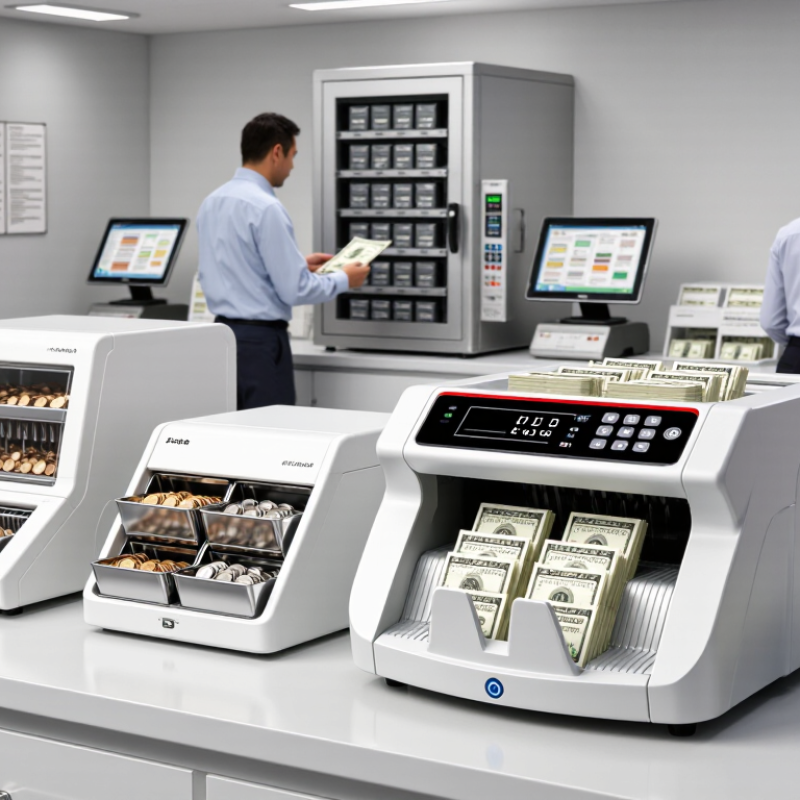
| Banknote counter | Businesses that count batches of notes regularly, such as cash offices and high-volume tills. | Low to moderate | Account for cleaning, wear-part replacement, calibration or adjustment where specified by the manufacturer, and service availability. | Test counting accuracy with the note types and conditions used in daily operations. Check for batch, add, and error-detection functions if needed. | A counter verifies quantity, not value or authenticity by itself. Staff should reconcile totals and inspect exceptions under documented procedures. |
| Coin counter and sorter | Organizations that handle enough loose coin to make manual counting slow or error-prone. | Low to moderate | Consider routine cleaning, sorting-disc or belt wear, jam-clearing access, and the cost of service visits. | Check supported coin denominations, counting speed for the actual workflow, reject handling, and whether the unit also sorts or totals coin. | If coin is weighed or measured for a commercial transaction, applicable local weights-and-measures rules may apply. A simple coin-counting function does not, by itself, establish legal-for-trade approval. |
| Counterfeit-detection device | Cashiers and cash offices that need an additional check for suspected counterfeit notes. | Low to moderate | Check software or currency-update arrangements, sensor cleaning, warranty coverage, and the process for handling failed or uncertain checks. | Confirm supported currencies and note series, test the device using appropriate procedures, and ensure staff know how to verify security features manually. | Detection aids do not guarantee authenticity. Follow current guidance and reporting procedures from the relevant authorities; requirements differ by country and currency. |
| Cash recycler | High-volume locations that need to accept, validate, store, and dispense cash from one controlled unit. | High | Include installation, software or integration charges, preventive maintenance, service response times, consumables, and downtime arrangements. | Assess transaction volume, capacity, supported notes and coins, integration with accounting systems, access permissions, and audit-log functionality. | The machine does not replace applicable cash-control, recordkeeping, or anti-money-laundering duties. Those obligations depend on the organization, activity, and jurisdiction. |
| Smart safe or cash deposit unit | Businesses that want controlled deposits, transaction records, and fewer manual cash-counting steps before collection or bank processing. | Moderate to high | Compare purchase or rental terms, connectivity and software fees, maintenance coverage, cash collection arrangements, and support outside business hours. | Review deposit limits, user permissions, receipt and reporting features, connectivity reliability, installation needs, and the process for resolving discrepancies. | Clarify who is responsible for custody, reconciliation, and records at each stage. Insurance, cash-in-transit, and data-protection requirements may apply under local rules or contracts. |



 © Copyright 2020 Tianjin Tanghaidongyang Valve Co., Ltd. All Rights Reserved.