| Typical continuous-use temperature | Up to approximately 260°C (500°F), depending on grade and application. | Up to approximately 200°C (392°F), depending on grade and application. | PTFE is generally preferred when sustained high-temperature performance is the priority. |
| Melting temperature | Approximately 327°C (621°F). | Approximately 260°C (500°F). | These are melting temperatures, not recommended continuous operating temperatures. |
| Processing and fabrication | Not conventionally melt-processable; commonly shaped by methods such as paste extrusion, compression molding, or ram extrusion. | Melt-processable by conventional thermoplastic methods, including extrusion and injection molding. | FEP can be a practical choice for seamless tubing, films, and complex molded shapes. PTFE often requires specialized processing. |
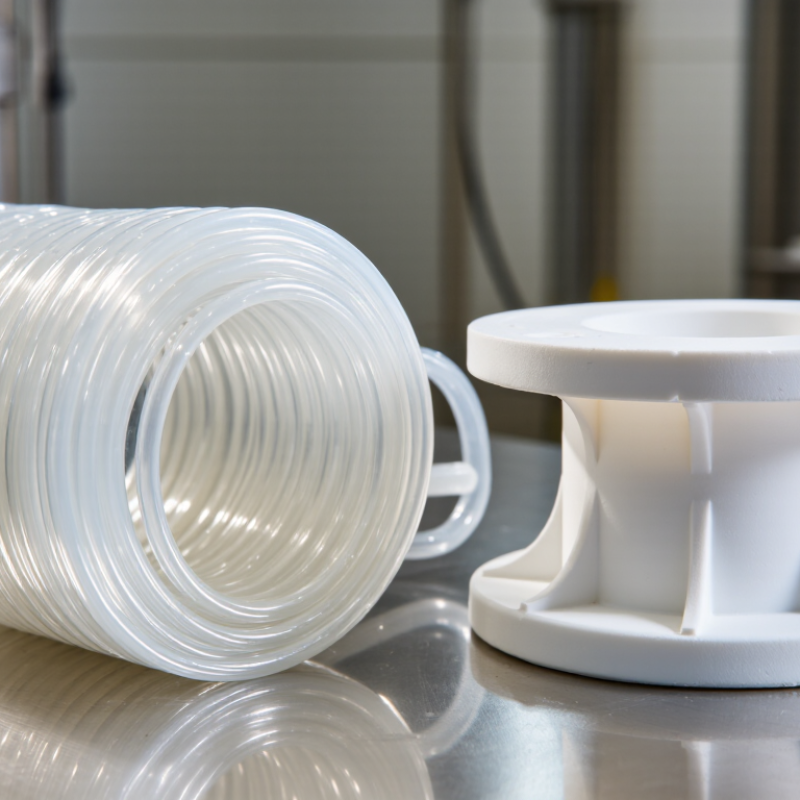
| Transparency | Typically opaque or translucent, depending on form and thickness. | Can be optically clear in suitable thin sections. | FEP is useful when visual inspection through tubing or film is desirable. |
| Chemical resistance | Broad resistance to many chemicals, including many corrosive substances. | Broad resistance to many chemicals, similar to PTFE for numerous applications. | Compatibility depends on the specific chemical, temperature, concentration, and exposure conditions; verify before use. |
| Friction and release | Known for very low friction and strong non-stick characteristics. | Also offers low friction and non-stick behavior, though PTFE is often selected when minimizing friction is especially important. | PTFE is commonly considered for sliding surfaces, seals, and low-friction components. |
| Electrical properties | Excellent electrical insulation; relative permittivity is typically about 2.1 at 1 MHz. | Excellent electrical insulation; relative permittivity is typically about 2.0–2.1 at 1 MHz. | Both are widely used for wire and cable insulation. Actual performance depends on grade, frequency, temperature, and test method. |
| Typical industrial uses | High-temperature seals, bearings, liners, gaskets, chemical-processing components, and electrical insulation. | Clear chemical-transfer tubing, wire and cable insulation, films, linings, and molded components. | Choose based on operating temperature, fabrication method, transparency needs, mechanical demands, and chemical exposure. |



 © Copyright 2020 Tianjin Tanghaidongyang Valve Co., Ltd. All Rights Reserved.