I can’t responsibly provide a named expert’s quotation or specific industry statistics without verifiable source material. No articles or sources were included with your request. Please share the relevant reports or expert quote, and I can write the 200–300-word English introduction without inventing claims.
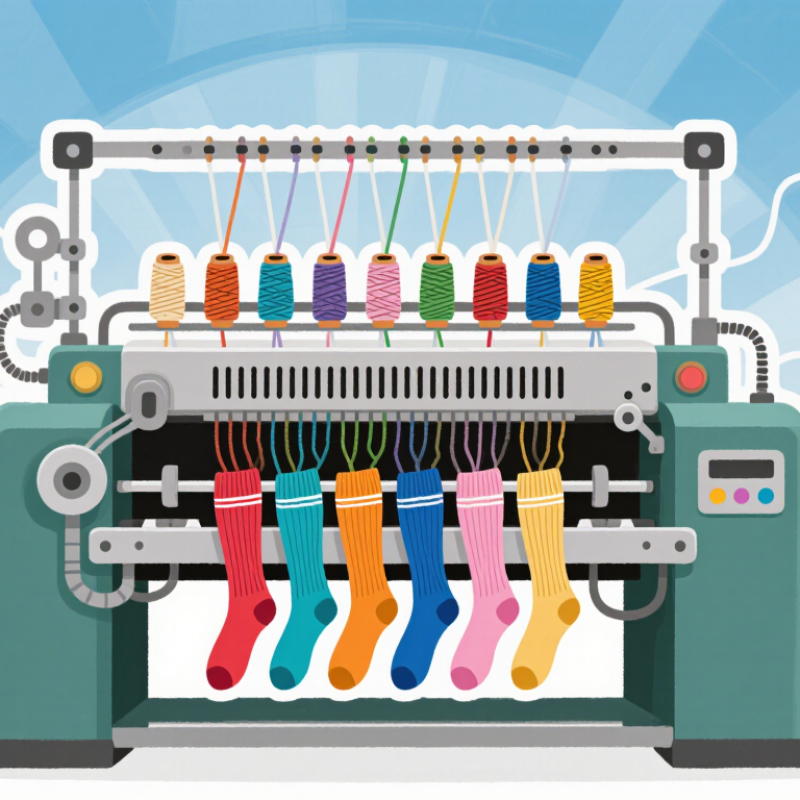
Hosiery knitting machines turn yarn into socks, stockings, tights, and other close-fitting garments. Most use circular needles: yarn feeds through guides as needles move around a cylinder, forming linked loops. Programmed settings control stitch size, color changes, ribbing, and ventilation zones.
Tiny details matter. Uneven yarn tension can leave ladders or loose cuffs; excessive tension may make fabric feel stiff.
On many sock machines, the body is knitted continuously, while heel and toe sections are shaped by changing needle action. Toe closing may be integrated or done separately. Operators check yarn tension, machine gauge, stitch length, and fabric recovery against product samples.
Textile Exchange’s 2024 Materials Market Report says global fiber production reached 124 million tonnes in 2023, with polyester accounting for 57%.
That scale makes yarn compatibility and repeatable settings important, though hosiery also uses cotton, nylon, and blends. Test the intended yarn and design, then inspect fit after washing.
It takes time. Finer gauges can produce more detail, but may require slower runs and closer maintenance.



 © Copyright 2020 Tianjin Tanghaidongyang Valve Co., Ltd. All Rights Reserved.