| Interior door or partition near a walking route | Human impact and contact with broken glass | Broken pieces should remain bonded to the interlayer to help limit openings and loose shards. | Consider a laminated make-up suitable for the expected impact and the size and support of the panel. Marking and visibility may also be important. | Check applicable safety-glazing rules, impact classification, panel dimensions, and frame compatibility. |
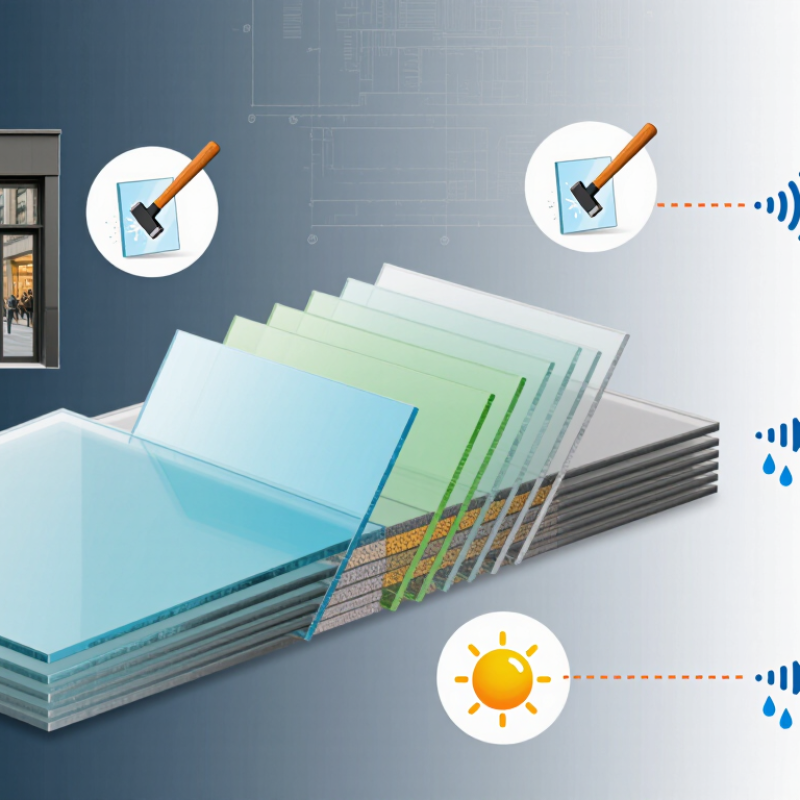
| Floor-to-ceiling exterior window or storefront | Human impact, wind pressure, and possible falling fragments | Retention should be appropriate to the exposure and the consequences of glass breakage. | Choose the glass build-up and interlayer for the design loads and environmental conditions. Laminated glass can retain fragments, but does not make the glazing unbreakable. | Verify wind loads, glass support, edge cover, sealant compatibility, and local code requirements. |
| Overhead glazing, skylight, or canopy | Falling glass fragments after breakage, as well as weather and structural loads | Strong fragment retention is generally important; the complete assembly must remain supported after breakage for the required period. | Use a design specifically evaluated for overhead use. Interlayer type, glass layers, panel size, slope, and support conditions all affect performance. | Have a qualified designer assess post-breakage behavior, drainage, temperature exposure, framing, and applicable overhead-glazing requirements. |
| Balustrade or glass guard | People leaning or falling against the barrier, and potential fall-through after breakage | The system may need to continue providing a barrier after one or more glass layers break. | Specify the required post-breakage behavior for the complete guard system, not just the glass. Edge-supported and point-fixed systems can behave differently. | Check design loads, glass and interlayer build-up, fixings, edge conditions, and project-specific post-breakage assessment. |
| Wet or humid exterior location | Moisture exposure at glass edges and possible loss of long-term durability | Fragment retention should be maintained throughout the intended service conditions. | Consider interlayer suitability for the exposure, edge protection, and the quality of the glazing details. Avoid assuming all interlayers perform identically in every environment. | Confirm manufacturer-neutral material data, edge-seal details, drainage, and compatibility with glazing compounds. |
| Security-sensitive opening | Repeated impacts or attempted forced entry | Glass and interlayer should help hold fragments together, with the required resistance established by testing. | Define the threat level and desired performance first. Ordinary laminated safety glass should not be assumed to provide a specified level of security protection. | Specify a relevant tested assembly and include the frame, anchorage, and hardware in the performance assessment. |



 © Copyright 2020 Tianjin Tanghaidongyang Valve Co., Ltd. All Rights Reserved.