| Well planning and site preparation | Surveying equipment, access and foundation equipment, conductor-handling tools, and rig-move equipment | Prepare the site, confirm the planned well location, and establish a stable foundation and working area. | Consider access, ground conditions, rig footprint and load requirements, environmental constraints, and the approved well plan. |
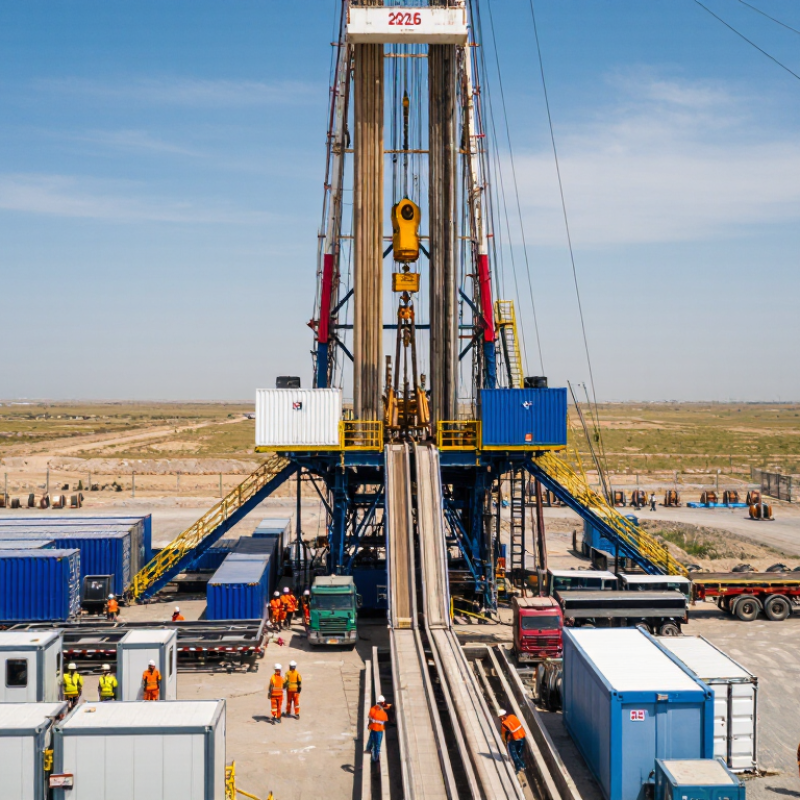
| Rig-up and initial spud | Drilling rig, mast or derrick, drawworks, hoisting system, rotary drive or top drive, drill pipe, and basic mud-circulation equipment | Handle the drill string, rotate the bit, and circulate drilling fluid as the well is started. | Match the rig’s rated hook load, depth capability, and circulation capacity to the planned well design and expected operating conditions. |
| Conductor and surface-hole drilling | Conductor or surface casing, suitable drill bits, casing-running tools, mud pumps, and a diverter system where required | Drill the upper hole sections and install casing to support shallow formations and provide a foundation for subsequent well-control equipment. | Choose hole and casing sizes from the casing program; account for shallow geology, groundwater protection requirements, and local regulations. |
| Intermediate-hole drilling | Drill collars, drill pipe, drill bits, bottom-hole assembly, directional tools if planned, mud pumps, and solids-control equipment | Drill through deeper formations while maintaining hole stability and, where necessary, controlling formation pressures. | Check the anticipated pressure and temperature environment, formation characteristics, hole trajectory, fluid properties, and compatibility of tools with the well plan. |
| Directional or horizontal section, if required | Directional-drilling bottom-hole assembly, measurement-while-drilling tools, logging-while-drilling tools when specified, and steerable motors or rotary-steerable equipment | Measure wellbore position and guide the bit along the planned trajectory. | Base the tool selection on the required trajectory, formation objectives, hole size, telemetry needs, tool operating limits, and data requirements. |
| Production or reservoir section | Reservoir-appropriate drill bits, drill string and bottom-hole assembly, drilling-fluid system, downhole measurement tools, and well-control equipment | Drill the final planned hole section while managing formation exposure and maintaining well control. | Consider reservoir sensitivity, expected formation pressures, fluid-loss and hole-cleaning requirements, temperature, and the planned casing or completion design. |
| Casing running and cementing | Casing, casing-running tools, centralizers, cementing unit, mixing equipment, cementing lines, and cement plugs | Run casing and place cement in the annulus to support the wellbore and isolate formations as designed. | Confirm casing dimensions and ratings against the casing program; select cementing equipment for the planned slurry volumes, pressures, and job procedure. |
| Well-control monitoring throughout drilling | Blowout preventer (BOP) stack as specified, choke manifold, accumulator system, mud-gas separator where required, and pit-volume and flow-monitoring equipment | Provide equipment for detecting and responding to well-control events in accordance with the approved well-control plan. | Verify pressure ratings, configuration, testing and maintenance status, required certification, and compliance with applicable regulations and well design. |
| Cuttings handling and drilling-fluid management throughout drilling | Shale shakers, desanders, desilters, centrifuges where needed, mud tanks, mixing equipment, and fluid-transfer pumps | Separate drilled solids from drilling fluid and support fluid conditioning and reuse. | Size and configure the solids-control system for the planned circulation rate, fluid type, expected solids load, and site waste-management requirements. |
| Logging and handover after drilling | Wireline logging tools or logging-while-drilling data, wellbore-cleaning tools, and equipment specified for the next operation | Acquire formation or wellbore information and prepare the well for the next planned operation. | Select services and tools based on the data objectives, well conditions, access requirements, and the approved completion or suspension program. |



 © Copyright 2020 Tianjin Tanghaidongyang Valve Co., Ltd. All Rights Reserved.