How to Choose the Right Servo Motor for Your Project?
Choosing the right Servo Motor is crucial for ensuring the success of your project. The global servo motor market is projected to grow significantly, reaching $6.0 billion by 2025, according to a recent ResearchAndMarkets report. This highlights the increasing reliance on servo motors in various industries, from robotics to automation.
Expert James Leach, a leader in the servo motor industry, states, “Selecting the wrong servo motor can derail an entire project.” Understanding the specific requirements of your application is essential. Factors such as torque, speed, and precision must be evaluated closely. However, many professionals overlook these details, leading to costly mistakes.
While there are many options available, the decision-making process can be overwhelming. The diversity of applications means that one size does not fit all. Some might settle for a standard model, neglecting the unique needs of their projects. Reflecting on these points can guide you in making an informed choice that aligns with your project's objectives.
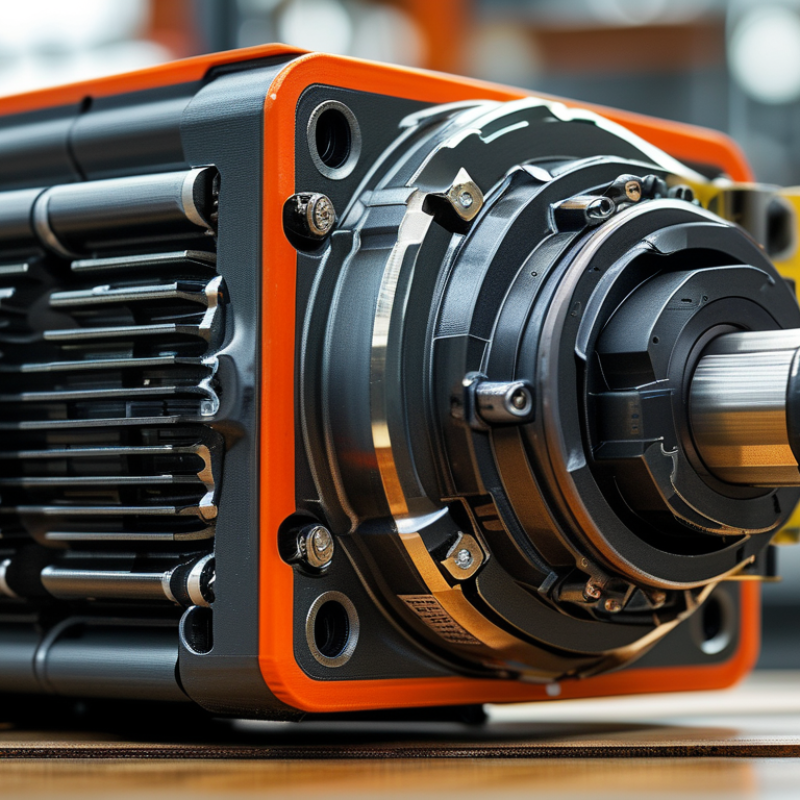
Understanding the Basics of Servo Motors and Their Applications
Servo motors play a crucial role in various applications, from robotics to automation. Understanding their basic functionality is essential for selecting the right motor. Most servo motors operate on the principle of feedback control, allowing for precise positioning. According to a report by the Servo Motor Market Analysis 2023, the global servo motor market is projected to reach $9.27 billion by 2025, highlighting their growing importance in industries.
In robotics, servo motors enable accurate movement and control of robotic arms. They provide the necessary torque and speed required for dynamic actions. It's notable that different applications may require distinct specifications. For example, a hobby robot might need smaller, less powerful motors, while an industrial robot may demand high-torque models. The selection process can be tricky; incorrect specifications could lead to motor failure or inefficient performance.
Also, considering environmental factors is crucial. Some servos perform poorly under extreme conditions, such as high temperatures or damp environments. Thus, it’s vital to assess your specific project requirements before making a choice. Data from industry analysts suggest that nearly 30% of automation failures stem from incompatible component selection. Awareness of these details can significantly affect project outcomes.
Key Specifications to Consider When Selecting a Servo Motor
Choosing the right servo motor involves several key specifications that can greatly impact your project's success. Torque is one of the most critical factors. It determines the motor's ability to move a load. Higher torque allows you to control heavier or more demanding mechanisms. However, overestimating your torque needs can lead to inefficiencies.
Speed is another significant specification. Different applications require varying speeds. For example, robotics might need rapid movements, while industrial applications may prioritize precision. Understanding your project’s requirements will help you select a motor that performs optimally.
Accuracy also plays a pivotal role in your choice. Some tasks require high precision, while others may tolerate more variance. Evaluating your project's needs can lead to better decisions. Keep in mind that a motor with high accuracy often comes at a higher cost. Balancing these specifications ensures that you do not overspend or compromise functionality.
Evaluating the Power and Torque Requirements for Your Project
When selecting a servo motor for your project, assessing the power and torque requirements is crucial. Power is essential for the motor to perform its intended tasks effectively. Start by identifying the load your servo will need to move. This includes understanding both the weight and any friction involved. If you're unsure, consider measuring these components, as overestimating can lead to selecting a motor that is too weak.
Torque is equally important in determining the motor's capabilities. It defines the twisting force the motor can apply. For projects requiring high precision, even small torque differences can impact performance significantly. Use torque calculators available online, or consult technical resources for accurate calculations based on your specifications. It's worth noting that many users underestimate the torque needed for sudden starts and stops. This can lead to unexpected failures in operational settings.
Additionally, consider environmental factors. Heat, humidity, and vibration can affect performance. A motor that performs well in a controlled setting may struggle in harsher environments. Think about continuous vs. peak torque requirements, as these influence your choice. A flexible approach may lead to better outcomes. Always remember that initial calculations might need adjustments as your project evolves.
Assessing Control Methods and Compatibility with Your System
When selecting a servo motor, assessing control methods and system compatibility is crucial. Various control techniques exist, such as PWM and serial communication. These methods impact your project’s responsiveness and precision. A study by the International Society of Automation highlights that proper control alignment can increase efficiency by up to 25%. This is significant for projects requiring fine-tuned movements.
Compatibility with your existing system is another key factor. Check if the motor's voltage and current ratings align with your setup. Industry reports reveal that mismatched systems often lead to performance lags or failures. About 30% of project delays stem from overlooked integration issues. This highlights the importance of thorough planning and testing during the selection process.
Take the time to evaluate the specifications and feedback control loops your project needs. Each application may demand different configurations. For instance, a robotics project might prioritize real-time feedback over simple task execution. Engage with industry experts or forums to gather insights. Collaborative learning can reveal common pitfalls encountered during motor selection, ensuring a more informed decision.
Budgeting and Sourcing the Right Servo Motor for Your Needs
When budgeting for a servo motor, consider your project's specific requirements. Think about the torque, speed, and precision needed. A higher torque motor will typically cost more. However, if your application demands it, the investment will be worthwhile.
Sourcing the right servo motor can be challenging. Search for reliable suppliers that offer a range of products. Don’t overlook used or refurbished units. They can provide excellent value for money. It’s essential to compare prices across different platforms. Sometimes, the lowest price may not guarantee quality. Look for detailed specifications and customer reviews. These elements can help you make informed choices.
As you refine your selection, be cautious. Purchasing a servo motor that does not meet your needs can lead to frustration and additional costs. Reflect on your choices. Are you compromising quality for price? Investing in the right motor will save you time and money in the long run. Always question if the chosen motor aligns with the desired performance. Choose wisely.


 © Copyright 2020 Tianjin Tanghaidongyang Valve Co., Ltd. All Rights Reserved.