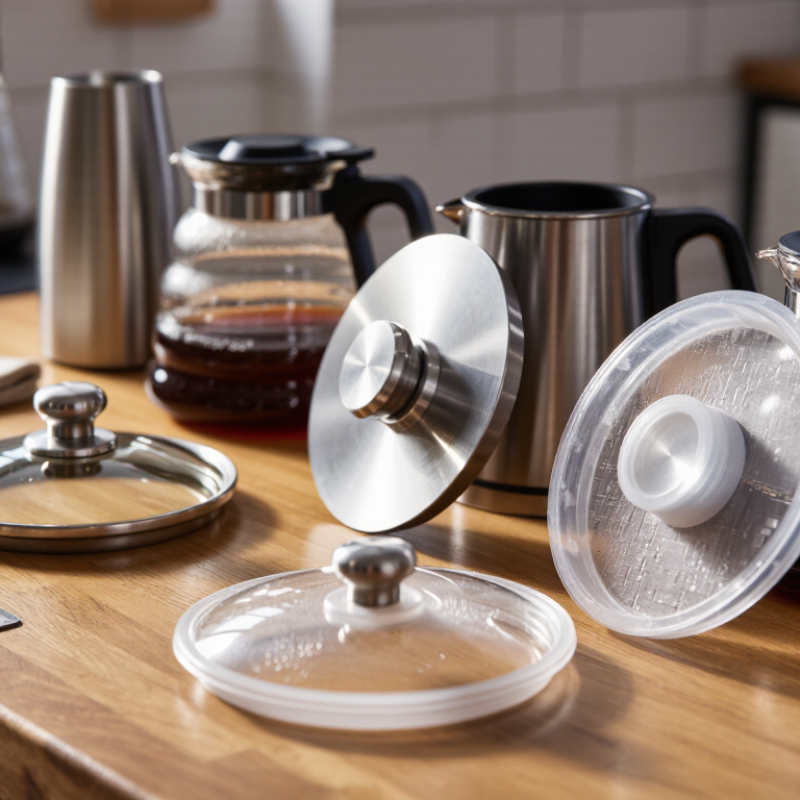
| Drop-in glass lid | Match the lid’s outer diameter and rim shape to the pot opening. Check that it sits level without rocking. | Usually rests on the rim rather than forming an airtight seal; steam can escape around the edge. | Works when the lid has a notch or cutout that clears the spout. Without one, it may need to be lifted while pouring. | Glass can become hot and may crack from impact or sudden temperature changes. Handle carefully and follow the pot’s care instructions. | Glass coffee pots designed with a simple, matching rim and a lid that is not intended to lock in place. |
| Snap-on plastic lid | Check the pot’s rim diameter, lip profile, and any tabs or grooves. A lid that is slightly too large or small may not stay attached. | Can reduce splashes and heat loss when properly seated, but is not necessarily leakproof or pressure-tight. | Look for a spout opening or pour notch that lines up with the pot’s spout when the lid is fully seated. | Confirm that the material is rated for the pot’s intended temperature and use. Avoid direct stovetop heating unless the manufacturer specifically permits it. | Everyday serving pots designed for a fitted, lightweight lid. |
| Threaded lid | Match the thread diameter and pitch; the lid should turn smoothly and seat without cross-threading. Similar diameters do not guarantee compatible threads. | May provide a closer closure, especially when paired with a gasket, but should not be assumed to be pressure-rated. | Check whether the lid has a pouring opening or must be unscrewed before pouring. | Inspect threads and any gasket for wear, residue, or distortion. Follow the product’s heating and cleaning directions. | Specialty coffee pots or carafes with a purpose-made screw closure. |
| Hinged flip-top lid | Confirm the hinge position, attachment points, and rim shape. The lid must close fully without obstructing the handle. | Typically helps keep out dust and limit splashing; sealing depends on the design and whether a gasket is present. | Often allows one-handed pouring when the flip top opens clear of the spout. | Check the hinge for stiffness or damage and clean around the joint to prevent residue buildup. | Serving pots intended for convenient, frequent pouring. |
| Gasketed press-fit lid | Compare the lid diameter and gasket profile with the pot opening. The gasket should sit evenly and compress without folding or slipping out. | Generally offers a closer fit than a plain drop-in lid, though performance varies and it should not be treated as a pressure seal. | Verify that a spout notch or pouring channel remains aligned when the lid is fitted. | Removable gaskets are easier to inspect and clean. Replace a cracked, stretched, or hardened gasket with a compatible part. | Carafes that need a snug lid to reduce drips and splashes during serving. |
| Insulated travel-carafe lid | Use the lid specified for the carafe’s exact opening and locking design. Check alignment marks, threads, or locking tabs as applicable. | Some designs use a gasket and closing mechanism to reduce leaks, but sealing ability depends on the specific construction and condition. | Choose a lid with a pour-through valve or opening that operates smoothly and closes securely after use. | Clean valves and seals regularly. Check care instructions before using a dishwasher, as heat can affect some lid components. | Portable insulated carafes made for transport and controlled pouring. |



 © Copyright 2020 Tianjin Tanghaidongyang Valve Co., Ltd. All Rights Reserved.