How to Choose the Best DC Solar Pump for Your Needs?
Choosing the right Dc Solar Pump requires careful consideration. The global market for solar pumps is expected to reach USD 1.4 billion by 2025, growing at a compound annual growth rate (CAGR) of 8.9%. This highlights the increasing reliance on solar energy in various applications, from agriculture to water supply.
When selecting a DC solar pump, it is essential to assess your specific needs. Factors like water source, required flow rate, and system compatibility come into play. A well-chosen pump can enhance efficiency and reduce operational costs. Yet, many consumers struggle with available options. Misunderstanding technical specifications often leads to expensive mistakes.
Recent studies indicate that inadequate installation or mismatched components can lead to suboptimal performance. Research shows that approximately 30% of solar pump systems fail to meet user expectations due to improper selection. Addressing these issues is vital. Adequate research and informed choices can ultimately maximize the benefits of a DC solar pump.
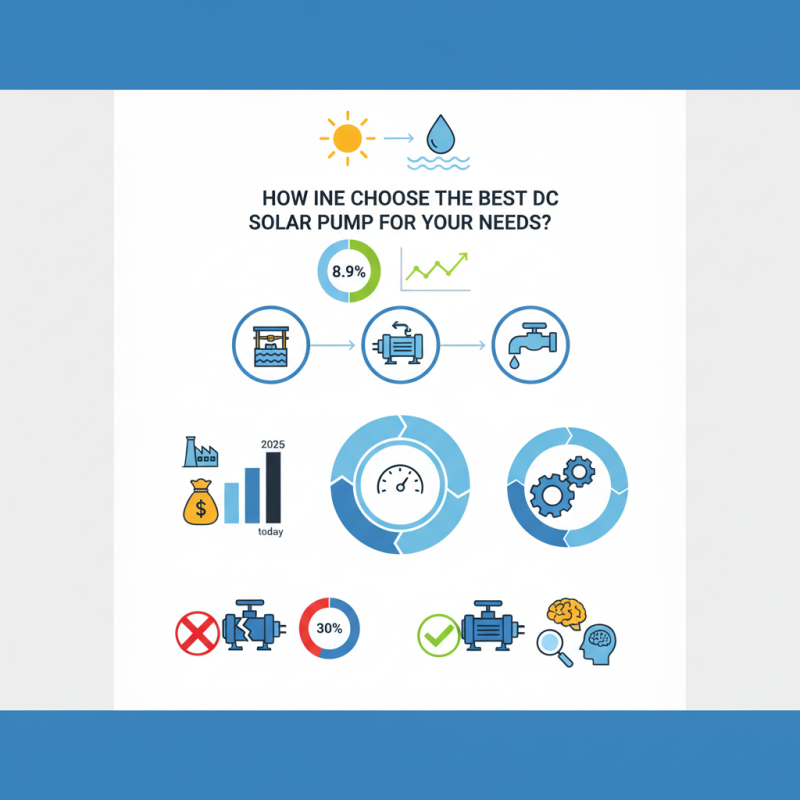
Factors to Consider When Selecting a DC Solar Pump
When selecting a DC solar pump, key factors play a crucial role. Begin by evaluating the flow rate. It refers to the volume of water the pump can move. Industry reports indicate that effective solar pumps typically offer flow rates ranging from 1 liter per minute to over 100 liters per minute. Assessing your water needs is essential. Are you watering a small garden or a large agricultural field?
Solar panel compatibility is another significant factor. Not all pumps work with all solar panels. A proper match ensures efficiency. Additionally, consider the pump's total power consumption. Many reports show that pumps using 50 to 150 watts can operate effectively under different sunlight conditions. It raises questions about energy optimization.
Durability is vital too. A pump exposed to outdoor elements needs to withstand harsh conditions. Many pumps fail within a year due to poor material choices. Users should look for products with corrosion-resistant materials. It’s important to weigh these factors against cost. Sometimes, lower-priced options offer disappointing performance. It’s a balancing act between budget and reliability. Regular maintenance is also crucial; customers often overlook this. Quality service and repair options contribute to a pump's long-term success.
Factors to Consider When Selecting a DC Solar Pump
Understanding Different Types of DC Solar Pumps
When selecting a DC solar pump, it's essential to understand the different types available. There are mainly three categories: submersible pumps, surface pumps, and diaphragm pumps. Each type serves unique functions based on the water source and application. Submersible pumps work well for deep wells since they can be submerged underwater. Surface pumps are ideal for shallow water sources, while diaphragm pumps offer great versatility for various tasks.
Considering efficiency, submersible pumps usually have a higher output per watt. However, they can be more challenging to install. Surface pumps, on the other hand, are easier but may not work in all situations. Diaphragm pumps are great for low-flow applications but may not achieve high pressure. Reflecting on your specific needs is crucial. Misjudging your requirements can lead to inadequate performance.
Evaluating the pump's head, capacity, and power consumption will also guide your decision. It is critical to think about where the pump will be installed. Environmental factors, such as temperature and humidity, can impact performance. Choosing the right pump requires careful research. Consider consulting experts or resources dedicated to solar technology for informed guidance.
Calculating Your Water Needs for Efficient Pump Selection
Calculating your water needs is crucial before selecting a DC solar pump. Start by assessing the quantity of water needed for your specific application. Are you using it for irrigation, livestock, or domestic purposes? Estimating your daily water requirements helps narrow down your options. It’s essential to consider peak demand periods as well. This ensures that your pump can handle the load efficiently.
Next, think about the vertical lift and distance the water needs to travel. This includes elevation changes and horizontal distances. The higher and farther the water must move, the more powerful the pump you’ll require. Use charts and calculators specific to DC solar pumps to estimate the flow rates needed. However, do remember that some factors can be unpredictable. Seasonal changes and soil absorption rates can impact overall usage.
Lastly, take the time to reflect on your system’s reliability. Solar power can be intermittent, depending on weather conditions. Adapting your water needs to various scenarios ensures you make an informed decision. Recognizing your limitations and understanding the nuances of solar pump technology is vital. Such reflections help in choosing wisely based on empirical experience rather than assumptions.
Evaluating the Quality and Durability of Solar Pumps
When selecting a DC solar pump, evaluating its quality and durability is vital. A robust solar pump can significantly influence its lifespan and efficiency. According to industry standards, high-quality solar pumps should have a lifespan of 15 to 20 years. However, many products fall short of this benchmark, often due to poor materials or inadequate design. Factors that affect durability include corrosion resistance, the quality of seals, and motor efficiency.
In the market, some reports suggest that around 30% of solar pumps fail within the first five years. This statistic emphasizes the importance of choosing wisely. Look for pumps with stainless steel components and durable casings to ensure they can withstand environmental stresses. Opt for models that have undergone rigorous testing.
Tips: Check for certifications. A reliable solar pump often has certifications indicating compliance with industry standards. Additionally, inquire about warranty offerings, as reputable manufacturers provide comprehensive coverage. Evaluate customer reviews for real-world insights into performance and longevity. Remember, while aesthetics and price matter, long-term efficiency is paramount.
Cost and Maintenance Considerations for DC Solar Pump Solutions
When considering a DC solar pump, cost and maintenance are crucial factors. The initial investment can vary significantly. Look for durable models that require less frequent replacement. Understand the installation costs associated with your chosen pump. These can add up, impacting your overall budget.
Maintenance is another essential concern. Regular checks on the solar panels, pump, and connections ensure efficiency. Clogged filters can reduce performance. Think about how often you can perform these checks. If you’re not inclined to do this yourself, hiring a professional adds to long-term costs.
Tips: Choose a solar pump with replaceable parts. This can reduce future repairs. Document all maintenance activities. This helps spot trends in performance and wear. Remember, simplicity in design often leads to lower maintenance. A complex system may seem appealing but can become a headache over time.


 © Copyright 2020 Tianjin Tanghaidongyang Valve Co., Ltd. All Rights Reserved.