| Galvanized steel | Resists corrosion when its zinc coating and painted finish remain intact. Scratches, cut edges, or damaged coatings can become vulnerable to rust, especially in damp or coastal environments. | Rigid and generally resistant to everyday knocks. Dents or damaged coatings may need repair to protect the underlying steel. | A strong enclosure can deter casual tampering, but security also depends on the lock, hinge design, mounting, and fasteners. | Strong, widely used, and often a practical choice where a rigid metal enclosure is required. | Can corrode if its protective finish is damaged; may be heavier than plastic alternatives. | General outdoor installations where a rigid enclosure and maintained protective finish are appropriate. |
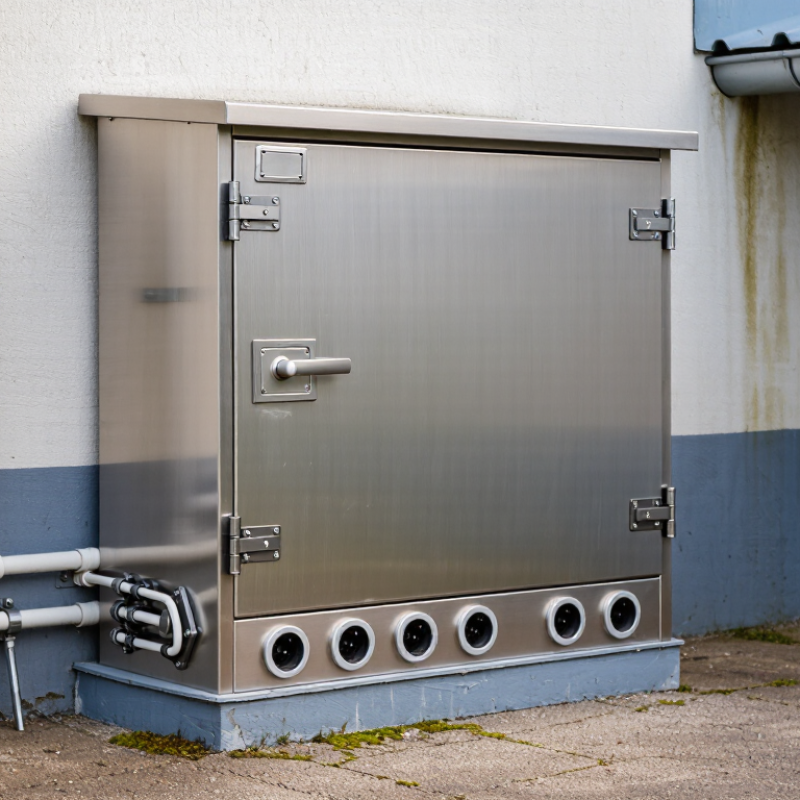
| Stainless steel | Offers good corrosion resistance, but performance depends on the stainless-steel grade, finish, environment, and maintenance. Salt exposure and surface contamination can still cause corrosion or staining. | Rigid and durable in normal service; surface scratches are possible. | Can provide a robust enclosure, although the locking and fixing system remain essential to overall security. | Useful in demanding environments where corrosion resistance is a priority. | Often costs more than coated steel or polymer options; the appropriate grade should be selected for the exposure conditions. | Locations with higher corrosion concerns, subject to suitable material grade and enclosure design. |
| UV-stabilized polycarbonate | Does not rust. Outdoor suitability depends on the formulation, UV stabilization, seals, and the enclosure’s stated environmental rating. | Can offer good impact resistance, but properties vary by design and temperature. Check the manufacturer’s impact and operating-temperature specifications. | A lockable design may deter casual access; plastic walls and fixing points may offer less resistance to forced entry than a suitably constructed metal enclosure. | Lightweight, non-corroding, and electrically non-conductive as a material. | Can be affected by UV exposure if not designed for outdoor use; may be vulnerable to cutting or force depending on construction. | Installations where low weight and corrosion resistance are useful and the enclosure meets local requirements. |
| Fiberglass-reinforced polyester (GRP) | Does not rust and is commonly selected for outdoor or corrosive environments. Weather performance depends on the resin, UV protection, seals, and enclosure design. | Rigid and durable, but resistance to impact and temperature extremes varies by product. | Security depends on wall thickness, hinges, lock, and mounting. A reinforced enclosure may provide better resistance than a lightweight plastic design, but check tested specifications. | Corrosion-resistant and electrically non-conductive as a material; suitable for a range of exposed locations when properly specified. | Can cost more than some basic options; material and construction quality vary between enclosures. | Outdoor sites where corrosion resistance and a non-metallic enclosure are priorities. |



 © Copyright 2020 Tianjin Tanghaidongyang Valve Co., Ltd. All Rights Reserved.