| Disc Chipper | Approximately 25–100 PTO hp | About 6–12 in (15–30 cm), depending on model | One or more knives mounted on a rotating disc | Converts branches and small logs into relatively uniform wood chips | Fresh branches, straight limbs, and small-to-medium logs | High throughput; produces consistent chips; well suited to continuous chipping work | Usually requires a powerful tractor and regular knife adjustment or sharpening; less suitable for highly irregular brush |
| Drum Chipper | Approximately 25–100 PTO hp | About 6–12 in (15–30 cm), depending on model | Knives fitted to a rotating cylindrical drum | Feeds and chips branches, limbs, and woody debris with strong cutting momentum | Mixed branches, larger limbs, and material requiring aggressive feeding | Strong self-feeding performance; handles dense woody material effectively; suitable for demanding workloads | Can draw substantial tractor power; heavier rotating components may increase machine weight and transport requirements |
| Flywheel Chipper | Approximately 15–60 PTO hp | About 3–8 in (8–20 cm), depending on model | Knives mounted on a high-speed flywheel | Produces chips from smaller branches and general tree-pruning waste | Green branches, pruning material, and light woody debris | Compact design; comparatively efficient for small farms, orchards, and property maintenance | Capacity is generally lower than that of larger disc or drum machines; oversized or crooked material may require pre-cutting |
| Chipper-Shredder Combination | Approximately 20–70 PTO hp | Chipping inlet commonly about 3–8 in (8–20 cm) | Separate or combined knives, hammers, flails, or shredding screens | Chips woody branches and reduces leaves, brush, crop residue, and lighter organic waste | Branches, leaves, vines, garden waste, and mixed green material | More versatile than a dedicated chipper; can create smaller shredded material suitable for composting or mulch | Shredding capacity and particle size depend on screen design; wet or stringy material may reduce flow and increase clogging |
| Hammer-Mill PTO Shredder | Approximately 20–60 PTO hp | Usually up to about 2–4 in (5–10 cm) for woody material | Free-swinging hammers rotating inside a housing, often used with screens | Breaks down brush, leaves, stalks, and small branches into smaller particles | Green waste, crop residue, leaves, light brush, and small-diameter branches | Produces relatively fine material; useful for composting, ground cover, and residue management | Not normally the best choice for large logs; particle size depends on screen openings, hammer condition, and material moisture |
| Heavy-Duty Forestry PTO Chipper | Approximately 50–150+ PTO hp | About 8–16 in (20–40 cm), depending on model | Large disc or drum rotor with industrial-grade knives and feed rollers | Processes large volumes of logs, branches, and forestry residue | Timber thinning waste, large limbs, logging residue, and storm debris | Very high capacity; designed for extended use and demanding material-handling conditions | Requires a suitably rated tractor, secure three-point or drawbar setup, adequate hydraulic capacity, and careful transport planning |
| Compact Orchard or Vineyard PTO Chipper | Approximately 15–40 PTO hp | About 2–6 in (5–15 cm), depending on model | Compact flywheel, disc, or small drum with manual or hydraulic feeding | Processes prunings directly after orchard, vineyard, or landscape maintenance | Fruit-tree prunings, grapevines, hedge trimmings, and small branches | Compact dimensions; easier to maneuver between rows; useful for returning chipped prunings to the soil | Limited by smaller infeed capacity; tangled vines and long flexible branches may need controlled feeding |
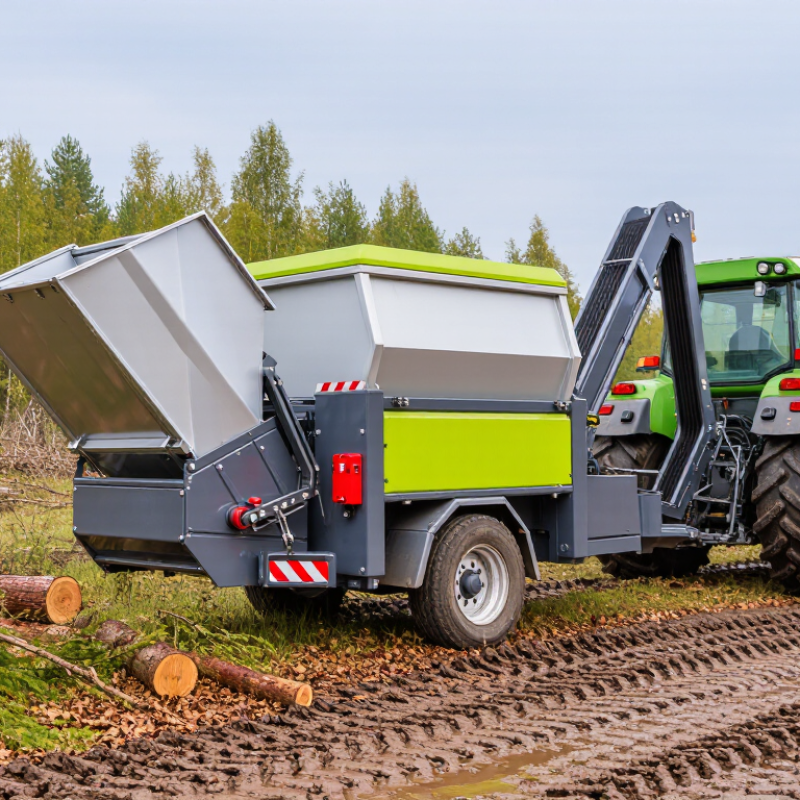
| High-Discharge PTO Chipper | Approximately 30–100 PTO hp | About 4–12 in (10–30 cm), depending on model | Disc or drum rotor with an adjustable discharge chute | Throws chips into a trailer, truck, windrow, or designated storage area | Branches and logs where chip placement or collection is important | Reduces manual handling; adjustable chute direction can improve loading efficiency and site cleanliness | Requires sufficient clearance around the discharge area; chip projection distance varies with rotor speed, material, and chute design |
| Low-Speed Mulching PTO Unit | Approximately 30–100 PTO hp | Typically up to about 2–6 in (5–15 cm) for woody brush | Flails, hammers, or fixed cutting tools on a horizontal or vertical rotor | Mulches brush and vegetation close to the ground rather than producing clean, uniform chips | Scrub, roadside vegetation, pasture encroachment, and light-to-medium brush | Useful for vegetation management; can leave material distributed across the work area | Not a direct substitute for a chipper when transportable wood chips are required; ground contact and debris can accelerate wear |
| Selection note: Choose the machine by matching the tractor’s usable PTO horsepower, PTO speed, hydraulic capacity, three-point hitch category, intended material, required chip size, and maximum branch diameter. The ranges shown are typical industry ranges and can vary substantially by machine configuration. |



 © Copyright 2020 Tianjin Tanghaidongyang Valve Co., Ltd. All Rights Reserved.