Choosing a boom length starts with the clear lane opening, not the painted lane markings. Measure from the barrier’s pivot point to the far edge the arm must protect. A small offset can leave a gap beside a curb or island. Check where mirrors, delivery vehicles, and turning wheels actually pass.
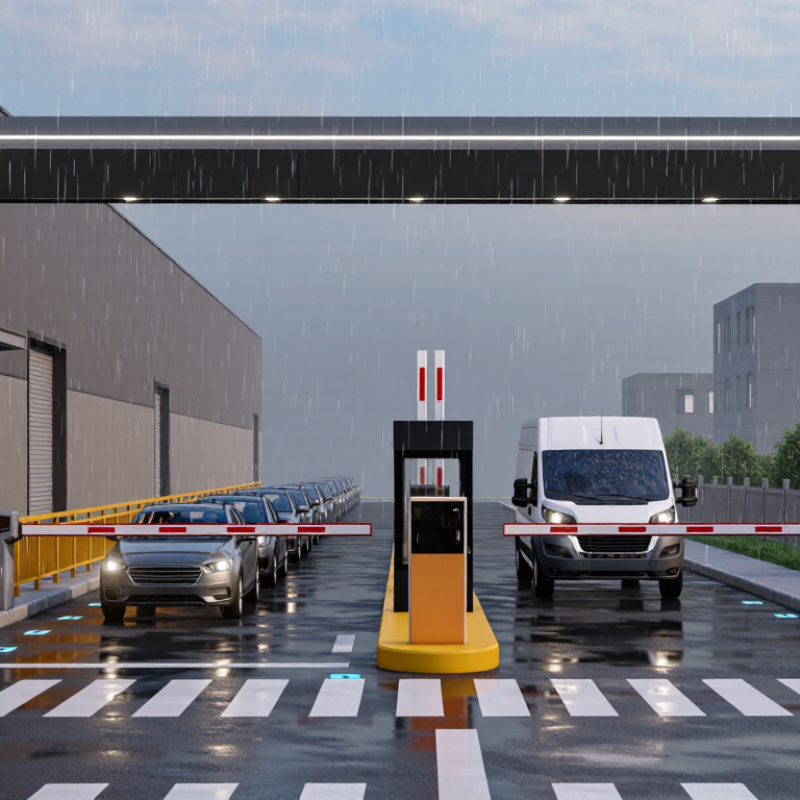
Many automated barriers use booms around 3–6 m long. A narrow car entrance may need less reach, while a broad service lane can require more. The arm should cover the opening without striking walls, signs, or vehicles waiting nearby. Allow for the pivot housing, too; it takes up space at the lane edge.
A drawing may look exact, yet a site visit can reveal a column or uneven kerb that changes the useful width. This is easy to miss.
Consider how vehicles approach. If drivers turn sharply, the vehicle’s front may sweep wider than the lane itself. For longer booms, ask the supplier to confirm the barrier’s rated arm length and suitable operating conditions. Wind exposure and frequent cycling can affect the required equipment.
Don’t choose a longer arm just to be safe; extra reach can create clearance and load issues. Mark the proposed pivot and arm path on the ground, then check it with a typical vehicle. A little awkward measuring now is better than discovering the mismatch after installation.



 © Copyright 2020 Tianjin Tanghaidongyang Valve Co., Ltd. All Rights Reserved.