Top 5 Desulfurization Equipment Tips for 2026 Canton Fair Buyers
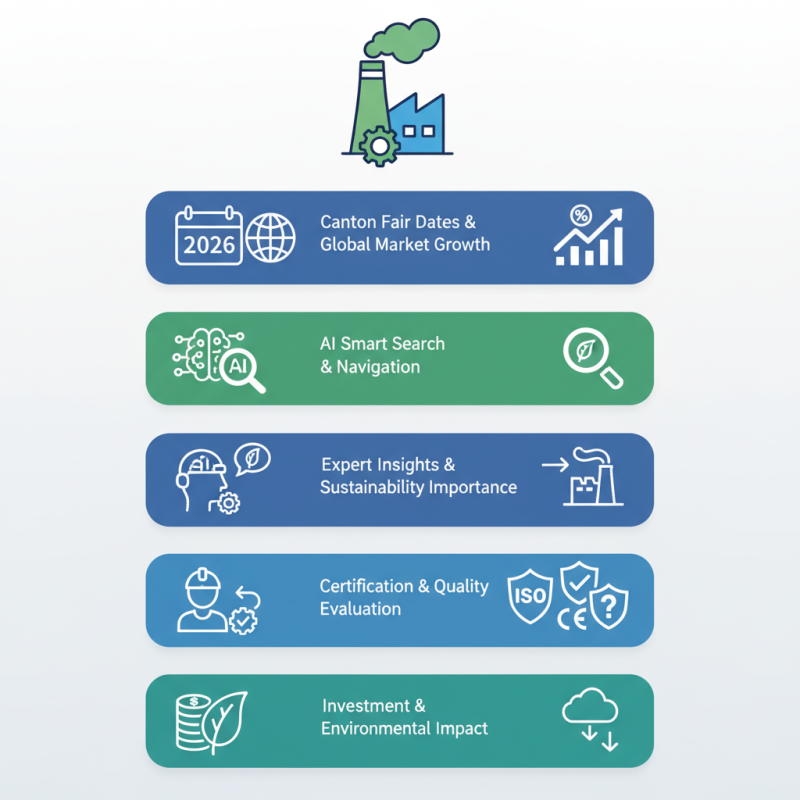
As the 2026 Canton Fair approaches, buyers should be aware of significant advancements in Desulfurization Equipment. The fair, scheduled from April 15 to May 5, will showcase leading manufacturers in this field. The integration of AI smart search and navigation will transform the buyer experience.
Recent industry reports indicate that the global desulfurization market is expected to grow at a CAGR of 5.3% by 2027. Experts like Dr. Emily Chen emphasize, “Effective desulfurization systems are essential for achieving sustainability in energy sectors.” This statement highlights the growing importance of technology in minimizing sulfur emissions.
However, buyers must critically evaluate providers' certifications, such as ISO and CE. Not all suppliers meet high standards. This is where the Canton Fair's AI tools will help ensure the right choices. Awareness of product quality is crucial. Investing wisely in Desulfurization Equipment can significantly impact environmental performance.
Key Types of Desulfurization Equipment to Consider for 2026 Canton Fair
When attending the 2026 Canton Fair, understanding the key types of desulfurization equipment is essential. Buyers should focus on three main categories: wet scrubbing, dry scrubbing, and hybrid systems. Wet scrubbing systems are often more efficient but can be quite complex. They use water to absorb sulfur oxides from the exhaust gas. However, managing water discharge can be a challenge.
Dry scrubbing systems, on the other hand, utilize dry absorbents. These systems are simpler and easier to maintain. They do, however, often require a higher initial investment. Hybrid systems combine the best of both approaches, yet they may complicate installation and operation. Each type has its pros and cons, so carefully assess your specific needs.
It's also crucial to consider energy efficiency and emissions standards. Equipment that minimizes energy consumption while maximizing sulfur removal is key. Look for innovative features but be cautious of overly complex machines. Simplicity often leads to better long-term performance. This careful consideration can save you costs and headaches down the line.
Understanding the Importance of Desulfurization in Industry Applications
Desulfurization plays a crucial role in various industrial applications. It reduces harmful sulfur emissions, safeguarding both the environment and public health. Many industries rely on efficient desulfurization techniques to meet regulatory standards. These techniques help in minimizing the impact of air pollution.
Without effective desulfurization, industries can face significant backlash. The damage to reputation and the financial costs can be high. Some companies might overlook the importance of investing in good equipment. They may choose cheaper alternatives, leading to higher emissions in the long run. This short-sightedness can harm both the planet and their profitability.
Understanding the nuances in desulfurization processes is essential for buyers. They need to consider efficiency, maintenance, and adaptability of the equipment. Investing in top-tier equipment is not just a trend; it is a necessity. Ultimately, the right choices can lead to cleaner air and a more sustainable industry. However, continual learning and adaptation are vital, as technology evolves quickly.
Top 5 Desulfurization Equipment Tips for 2026 Canton Fair Buyers
| Tip Number | Desulfurization Equipment Type | Key Features | Common Applications | Efficiency Rate |
| 1 | Wet Scrubber | High removal efficiency, flexible operation | Power plants, industrial boilers | 90%+ |
| 2 | Dry Scrubber | Low water usage, easy maintenance | Cement plants, metallurgy | 85%+ |
| 3 | Biological Desulfurization | Environmentally friendly, low cost | Wastewater treatment, gas processing | 75%+ |
| 4 | Activated Carbon Adsorption | High adsorption capacity, reusable media | Chemical industries, oil refining | 80%+ |
| 5 | Flue Gas Desulfurization (FGD) | High reliability, versatile design | Coal-fired power plants | 95%+ |
Factors to Evaluate When Choosing Desulfurization Equipment
When selecting desulfurization equipment, several key evaluation factors come into play. Efficiency is paramount. Modern systems can achieve up to 98% sulfur removal. This high efficiency indicates the capability of the equipment to meet stringent emission regulations.
Cost is another critical aspect. The initial investment might be high, but operational costs vary significantly. A report from the International Energy Agency highlights that energy consumption for desulfurization can range from 1 to 5 kWh per ton of sulfur removed. Buyers must analyze long-term costs versus upfront payments.
Additionally, consider maintenance needs. Some systems demand frequent checks and repairs, while others offer durability. The balance between reliability and ongoing support can be tricky. Manufacturers often emphasize robustness, but real-world performance can differ. Buyers should seek firsthand accounts or reviews. Such insights can allow for more informed decisions, uncovering potential shortcomings that data alone may not reveal.
Emerging Technologies in Desulfurization for 2026 Buyers
As the 2026 Canton Fair approaches, buyers should pay close attention to emerging technologies in desulfurization. New methods and systems are evolving rapidly. These advancements can significantly reduce sulfur emissions from various industries. They are not just effective; they are also designed to be more sustainable. Many technologies utilize innovative catalysts. These catalysts can enhance reactions, making desulfurization more efficient.
Consider mobile desulfurization units. They offer flexibility and real-time monitoring. This adaptability is crucial for buyers with specific needs. Additionally, some technologies integrate artificial intelligence. They optimize processes and reduce costs. However, implementing these technologies can be challenging. The initial investment might be high. Buyers must assess their long-term benefits versus costs carefully.
Testing new systems on a small scale is essential. This trial approach minimizes risks and aids in decision-making. While advanced solutions are promising, the reality is that not every technology will be suitable for all applications. Each operational environment is unique. Prepare to explore various options. Gathering insights during the Canton Fair can help in navigating this complex landscape.
Tips for Effective Negotiation and Purchase at the Canton Fair
Negotiating at the Canton Fair can be challenging. Understanding the needs of suppliers is key. Research your objectives and clarify your budget. Knowing what you want helps streamline your negotiations. Don't hesitate to ask for samples. This offers insight into the quality of the equipment.
When discussing prices, be prepared for some back and forth. Don’t feel rushed. Take your time to evaluate options. Sometimes, patience pays off. Remember, not every deal will meet your expectations. Be open to adjusting your approach if negotiations stall. This flexibility can lead to better outcomes.
It's also important to observe the overall market trends. Prices can fluctuate, and timing matters. If you notice a consistent trend, use that knowledge to your advantage. Engage with multiple vendors to understand different perspectives. This will prepare you for unexpected turns in negotiations. Ultimately, being well-informed can significantly enhance your purchasing experience at the fair.
Top 5 Desulfurization Equipment Tips for 2026 Canton Fair Buyers


 © Copyright 2020 Tianjin Tanghaidongyang Valve Co., Ltd. All Rights Reserved.