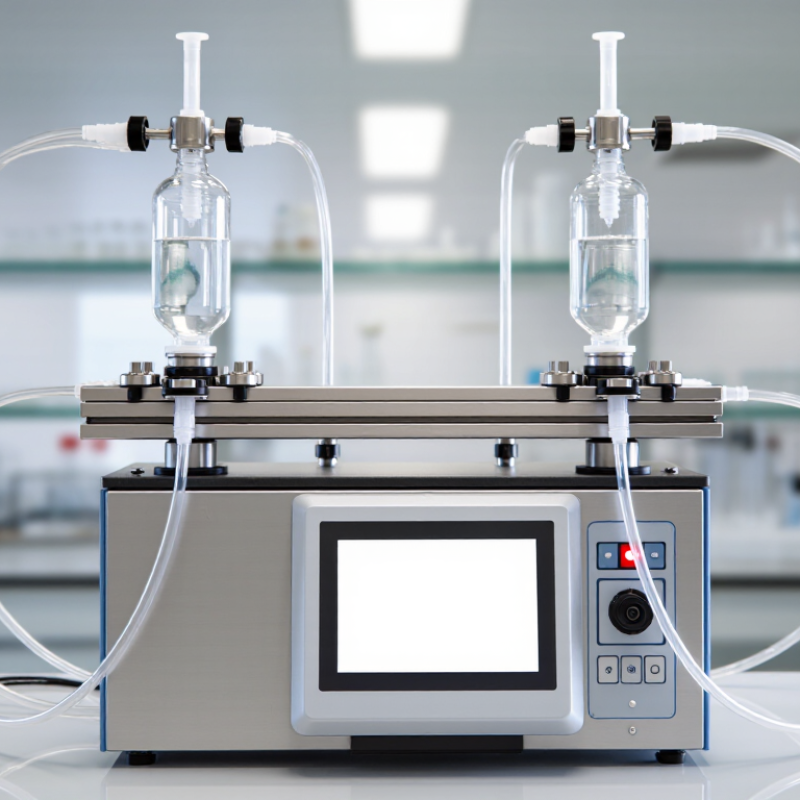
A dual-channel syringe pump runs two syringes through separate, independently controlled channels. Each channel has its own drive mechanism and settings, allowing different flow rates, start times, or stop times. One syringe can deliver a slow stream while the other briefly supplies a faster one. Small detail, big difference. This helps when two liquids need timed delivery into a shared mixing chamber.
Before operation, the user fits each syringe into its holder, secures the plungers, and enters the syringe size and target rate for each channel. The pump uses syringe dimensions to translate motor movement into a stated flow rate. If the wrong size is selected, the displayed rate may not match the liquid leaving the tip. That is easy to overlook. Tubing, liquid viscosity, and back pressure can also affect delivery, so check the outlet rather than trusting the screen alone.
Independent control does not mean unlimited flexibility. Channels may have different flow ranges, and syringe compatibility and setup instructions still matter. For repeatable work, record the syringe type, settings, and observed output, then verify performance at the intended rate. It is tempting to trust the display; I treat it as a setting, not proof of delivered volume. Similar settings do not guarantee identical output, since tubing or plunger fit can create small differences over time.



 © Copyright 2020 Tianjin Tanghaidongyang Valve Co., Ltd. All Rights Reserved.