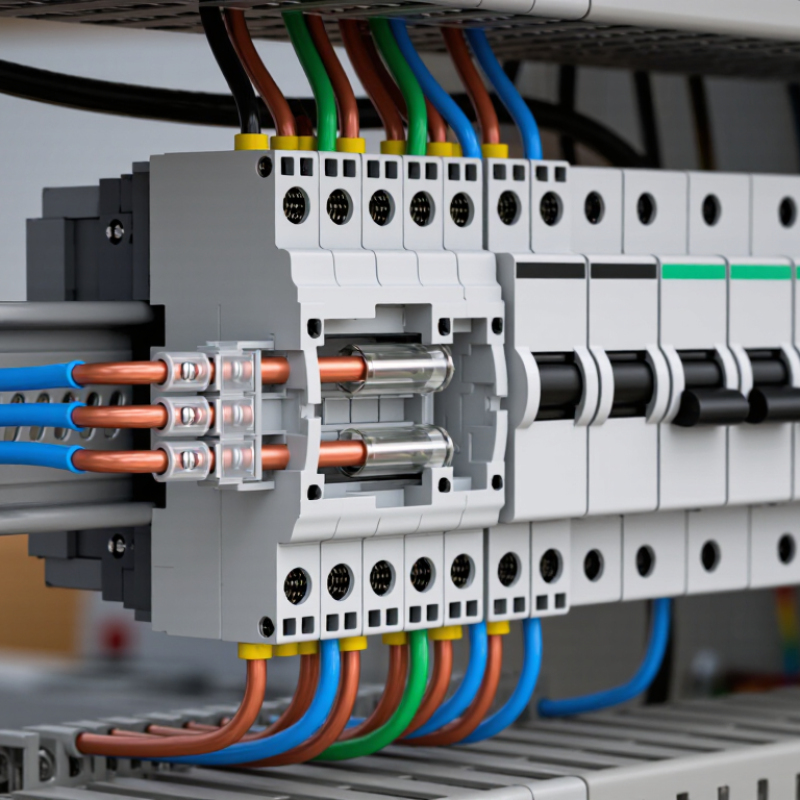
| Fuse terminal block | An electrical terminal block that incorporates a fuse holder in the connection path. | It connects a conductor to a circuit while placing a replaceable fuse in series with the protected circuit. | Choose a block compatible with the circuit voltage, current, conductor size, mounting system, and required fuse type. |
| Insulating housing | The nonconductive body that supports and separates the conductive parts. | It helps prevent accidental contact between live conductors and provides insulation between adjacent terminals. | Housing material, temperature rating, and insulation ratings should suit the installation environment and applicable standards. |
| Conductive current path | Metal contacts or a conductive bar inside the block. | It carries current from the incoming terminal, through the fuse, and to the outgoing terminal during normal operation. | Current capacity depends on the complete assembly, including the block, wire, fuse, and operating conditions. |
| Fuse holder or carrier | A fixed or removable part that positions and electrically connects the fuse. | It holds the fuse securely in the current path; some designs allow the carrier to open or be removed for fuse replacement. | Use only the fuse size and type specified for the particular terminal block. Isolate power before servicing unless the equipment is specifically designed for safe live operation. |
| Fuse element | A calibrated protective component that melts when current exceeds its time-current operating characteristics. | When an overcurrent persists long enough, the element melts and opens the circuit, interrupting current to the protected branch. | Fuse selection should account for the circuit’s normal load, expected inrush current, voltage, interrupting rating, and required protection characteristics. |
| Wire terminals | Clamping points, such as screw or spring terminals, used to secure conductors. | They make the electrical connection between field wiring and the block’s internal conductive path. | Match the terminal to the conductor material, cross-section, and preparation method. Follow the manufacturer’s stripping and tightening instructions. |
| Status indicator (optional) | An indicator fitted to some fuse terminal block designs. | Depending on the design, it may provide a visual signal when the fuse has operated; it does not replace electrical testing. | Indicators are not present on every model. Confirm their operating voltage and indication method before relying on them for troubleshooting. |
| Typical operating sequence | The normal and fault response of the assembled block. | Current flows through the fuse during normal operation. If an overcurrent causes the fuse element to melt, the circuit opens and current flow stops. | A fuse protects against specified overcurrent conditions; it does not eliminate all electrical hazards or guarantee protection from every fault. |



 © Copyright 2020 Tianjin Tanghaidongyang Valve Co., Ltd. All Rights Reserved.