Certificates

Certificates

How to Choose a Cell Phone Box Making Machine?

Choosing a Cell Phone Box Making Machine requires more than comparing production speed or purchase price. The right equipment must match your box structure, board material, order volume, and finishing requirements. A rigid magnetic box needs different forming capabilities from a folding carton with a simple tuck flap. Small details matter, such as board thickness, corner accuracy, glue control, and folding pressure.

In practical machine evaluations, inspect samples made from your actual paperboard. Check whether the edges remain clean after folding. Examine the corners under bright light. Uneven glue lines, slight wrinkles, or loose panels may become serious quality problems during mass production. Ask manufacturers for verified specifications, installation guidance, maintenance records, and references from comparable packaging companies. A reliable supplier should explain realistic output, not only advertise maximum speed.

Do not ignore operator skill.

Energy use, spare-part availability, noise levels, and factory space also affect long-term value. Some machines appear affordable but require frequent manual adjustment. Others deliver excellent precision but may exceed the needs of a small workshop. This is where careful judgment becomes necessary. My view is that no single machine suits every buyer, and even a technically advanced model can be a poor choice without proper training and after-sales support. A structured comparison of performance, durability, service, and total operating cost will help you select equipment with greater confidence.
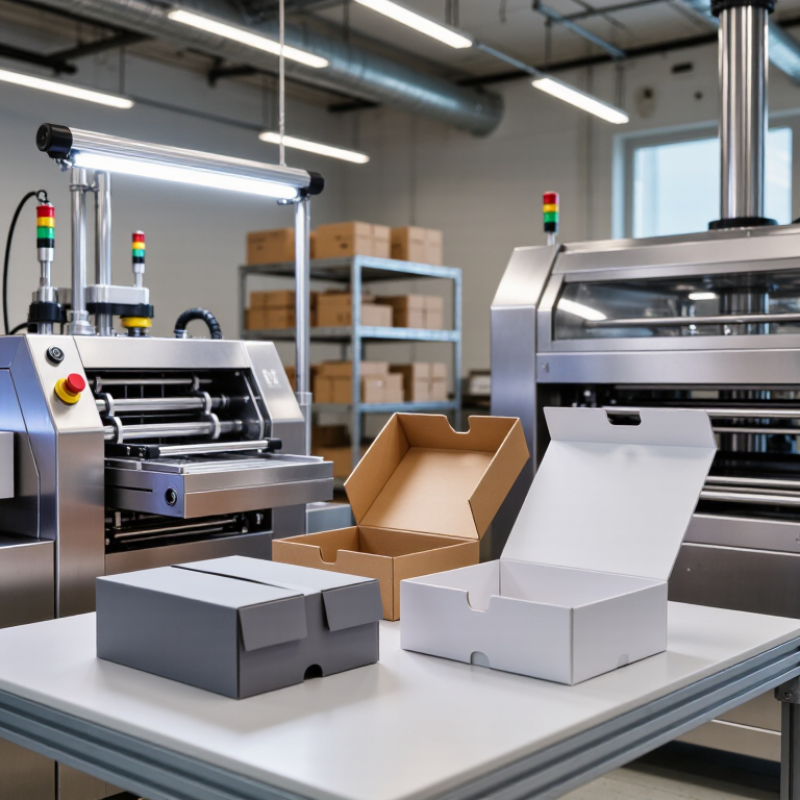
How to Choose a Cell Phone Box Making Machine?

Define Your Cell Phone Box Requirements and Production Goals

How to Choose a Cell Phone Box Making Machine?

Define Your Cell Phone Box Requirements and Production Goals

Begin with the box itself, not the machine catalogue. Record its length, width, height, board type, thickness, printing method, insert design, and required finish. A phone box may include a rigid lid, a tight-fitting tray, or a folded carton with protective compartments. Each structure requires different forming pressure, tooling, and changeover time.

Production volume also needs a realistic estimate. IDC’s Worldwide Quarterly Mobile Phone Tracker reported approximately 1.24 billion smartphone shipments globally in 2024. Your factory may serve only a small regional market, however. Do not select equipment for worldwide-scale output without confirmed orders. Define daily output, working hours, acceptable waste, and future product variations. Small errors multiply.

The machine should match your board range and tolerance requirements. Ask whether it supports your preferred paperboard grammage, scoring depth, glue application, folding accuracy, and inspection process. Smithers’ packaging industry research continues to identify paper-based packaging as a major growth area, driven partly by sustainability expectations and changing retail formats. This makes material flexibility useful, but flexibility can reduce speed. Be careful with that trade-off. A machine rated at 2,000 boxes per hour may perform slower when handling thicker board, complex inserts, or frequent size changes. Request sample production using your actual dielines before purchasing. The sample may reveal problems that specifications hide.

Compare Box-Making Machine Types and Suitable Materials

How to Choose a Cell Phone Box Making Machine?

Cell phone packaging usually requires clean edges, stable dimensions, and a smooth surface. The machine type should match the box structure and material. A rigid box machine suits two-piece boxes made from greyboard and coated paper. It forms strong walls and gives a premium, protective feel. This option works well for smaller batches with detailed wrapping requirements.

A folder-gluer fits folding cartons made from SBS, FBB, or coated kraft paper. These boards are lighter and easier to crease than greyboard. The machine folds panels and applies adhesive at high speed. For mass production, an automatic die-cutter and folder-gluer line can reduce manual handling. Check board thickness, crease accuracy, glue control, and waste levels before purchasing. A practical test with your actual paper is essential.

Corrugated machines suit shipping boxes rather than retail phone cartons. Their fluted structure protects products during transport, but it may look too bulky for store shelves. Some manufacturers combine a rigid inner box with a corrugated outer carton. That approach improves protection, though it increases material use and setup time. Do not judge a machine by speed alone. A fast line can still produce uneven corners or crushed creases. I once underestimated drying time on coated paper; the box looked acceptable, but wrapped edges loosened later. That mistake showed why sample testing needs several days, not one afternoon. Exact dimensions, daily output, available floor space, and operator skill should guide the final choice.

Evaluate Machine Specifications, Speed, and Precision

How to Choose a Cell Phone Box Making Machine?

Evaluate Machine Specifications, Speed, and Precision

Choosing a cell phone box making machine starts with the box structure, not the advertised speed. Measure the required board thickness, maximum sheet size, folding depth, and adhesive options. A machine should handle your actual materials without constant adjustments. In production, small mismatches can create loose corners, cracked surfaces, or lids that do not close properly.

Speed matters, but usable output matters more. Check the rated speed against setup time, material changes, and reject rates. A machine running at 3,000 pieces per hour may produce fewer acceptable boxes after frequent stoppages. Ask for a live test using your board, printed sheets, and preferred box dimensions. Watch the feeder, folding guides, glue lines, and delivery stack. Precision should remain stable during longer runs. It is easy to judge the first ten boxes. The hundredth box tells more.

Tips: Compare repeatability, not only maximum speed. Inspect corner alignment with a simple sample gauge.

Confirm whether operators can adjust guides safely and quickly. Request maintenance records, training details, and measurable tolerance data.

Leave room for honest uncertainty; some machines perform differently after installation. A careful trial is more reliable than a polished demonstration.

Check Automation, Customization, Safety, and Maintenance Features

How to Choose a Cell Phone Box Making Machine?

Automation should match your production rhythm, not simply look impressive. Check whether the machine supports automatic feeding, folding, gluing, positioning, and inspection. Stable sensors can reduce crooked edges and wasted paper. Ask about changeover time between box sizes. Five minutes matters during busy orders. More automation is not always better. Complex systems may require highly trained operators and costly troubleshooting.

Customization is equally important. Confirm the working range for box length, width, height, and cardboard thickness. Test coated paper, recycled board, and textured materials before purchasing. Some machines handle one material well but struggle with another. Request sample boxes from your own designs. Small details matter, such as sharp corners, magnetic closures, windows, or internal inserts. A flexible machine can grow with changing phone models, but excessive options may complicate daily operation.

Safety and maintenance deserve direct inspection. Look for enclosed moving parts, emergency stops, warning sensors, and clear access doors. Safety features should support applicable workplace requirements. Maintenance panels should open without dismantling half the machine. Check lubrication points, cleaning procedures, diagnostic displays, and spare-part availability. Ask for training records and service response times. A reliable machine still needs care. Dust accumulates quickly. I would also observe a full production cycle, not only a polished demonstration. A machine may perform beautifully for ten minutes and disappoint after several hours. That possibility deserves honest attention.

Calculate Total Costs and Select a Reliable Supplier

A cell phone box making machine should be judged by total cost, not its purchase price. The Smithers report, The Future of Global Packaging to 2028, values the global packaging market at about 1.17 trillion dollars in 2023. It forecasts roughly 1.42 trillion dollars by 2028. This growth increases pressure on factories to improve output without creating expensive waste.

Build a five-year cost sheet before contacting suppliers. Include the machine price, shipping, installation, training, electricity, maintenance, tooling, labor, and rejected boxes. Add downtime risk. For example, a line producing 1,200 boxes per hour may appear efficient. However, a two-hour daily stoppage can erase its expected profit. Ask for tested speed using your paperboard, folding design, glue, and printing quality. Catalog figures are not enough. They rarely show difficult production conditions.

Supplier reliability needs evidence. Request factory acceptance testing, production samples, spare-parts lists, warranty terms, and response-time commitments. Check whether technicians can support your region. Ask for references from similar box sizes and materials. The ISO 9001 quality-management framework can help you examine process control, but certification alone proves little. I would also compare three written quotations. One hidden cost can change the decision. My own spreadsheet would include a ten percent contingency, because installation delays and tooling adjustments are common. I would not pretend every forecast is accurate. A supplier who explains limitations may be safer than one promising perfect performance.

How to Choose a Cell Phone Box Making Machine? - Calculate Total Costs and Select a Reliable Supplier

Machine Option Suitable Box Type Typical Output Maximum Sheet Size Estimated Machine Price (USD) Estimated Installation and Training (USD) Estimated Shipping and Insurance (USD) Estimated First-Year Maintenance (USD) Estimated Total First-Year Cost (USD) Supplier Selection Considerations
Semi-Automatic Rigid Box Line Two-piece rigid boxes, lift-off lid boxes, premium phone packaging 8–15 boxes/minute 700 × 500 mm $28,000–$45,000 $2,500–$4,000 $2,000–$4,500 $1,500–$2,500 $34,000–$56,000 Verify manual labor requirements, glue accuracy, board thickness range, and availability of replacement forming tools.
Automatic Folding Carton Folder-Gluer One-piece folding cartons, tuck-end boxes, sleeve-style phone boxes 80–180 meters/minute 1,200 × 1,000 mm $55,000–$95,000 $4,000–$7,000 $4,000–$8,000 $3,000–$5,000 $66,000–$115,000 Check fold precision, changeover time, minimum blank size, glue detection, and compatibility with coated paperboard.
Automatic Rigid Box Making Machine High-quality rigid phone boxes with paper-wrapped board and inserts 18–35 boxes/minute 600 × 450 mm $75,000–$135,000 $5,000–$9,000 $5,000–$10,000 $4,000–$7,000 $89,000–$161,000 Prioritize stable corner-folding performance, servo control, quick-format adjustment, and documented production test results.
Integrated Phone Box Production Line Printing, die cutting, folding, gluing, forming, and inspection in one workflow 30–60 boxes/minute 1,000 × 700 mm $150,000–$280,000 $10,000–$18,000 $10,000–$20,000 $8,000–$14,000 $178,000–$332,000 Confirm line synchronization, software integration, operator training, spare-part stock, and after-sales response time.
Cost Comparison Assumption The first-year total includes the machine, standard installation and training, estimated shipping and insurance, and routine maintenance. Electricity, factory renovation, labor, tooling upgrades, taxes, and financing charges are excluded.

Supplier Reliability Checklist: Request a written quotation with machine configuration, production sample requirements, warranty duration, acceptance-test criteria, spare-parts list, delivery schedule, payment terms, installation scope, and service response times. A reliable supplier should provide verifiable references, clear technical documentation, remote troubleshooting support, and a defined warranty process.



