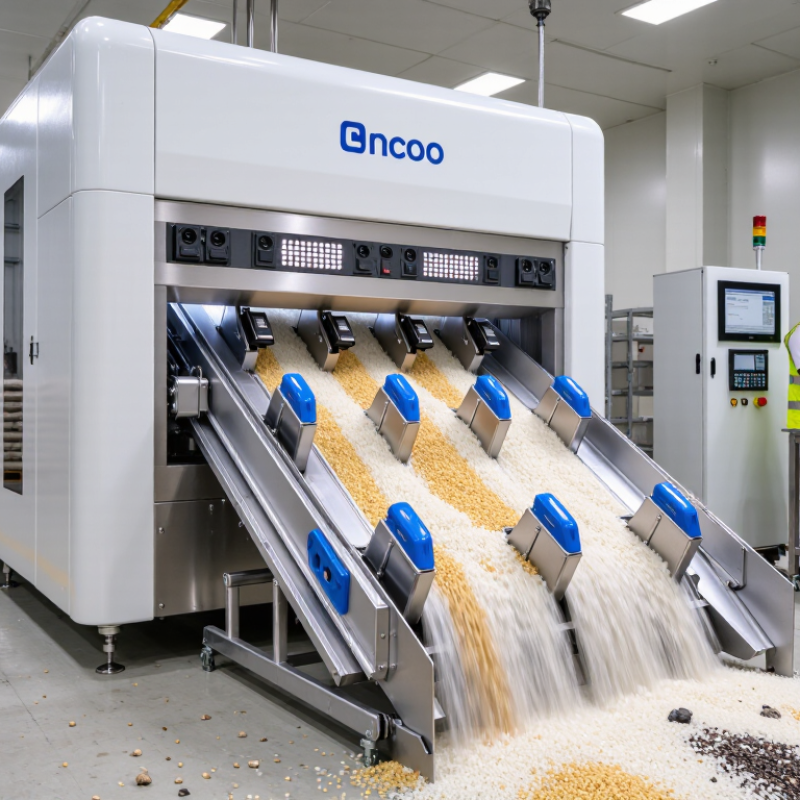
| Sorting Principle | Optical sorting systems use cameras, sensors, image-processing software, and air ejectors to identify and remove particles with different visual characteristics. | Separating discolored, immature, damaged, chalky, or foreign particles from edible rice. | Confirm that the sensing technology is suitable for the rice variety, defect type, and required purity level. |
| Color Detection | The system compares the color and brightness of individual grains with programmed acceptance criteria. Common detectable differences include black, yellow, red, brown, and heavily discolored grains. | Improving the visual uniformity of milled white rice, parboiled rice, or specialty rice. | Request test results using representative samples, because grain color and defect contrast vary by crop and processing condition. |
| Shape and Size Recognition | Some systems use image analysis to identify irregular shapes, broken pieces, narrow grains, or size-related abnormalities in addition to color differences. | Removing atypical grains and supporting consistent product grading after milling. | Check whether shape or size sorting is a standard function, an optional function, or dependent on software configuration. |
| Foreign-Material Removal | High-resolution optical inspection can help detect visually contrasting materials such as stones, glass-like fragments, husk particles, plastic pieces, and other contaminants. | Additional quality control after cleaning, husking, whitening, or polishing. | Do not treat optical sorting as a complete replacement for cleaning, magnets, metal detection, or other food-safety controls. |
| Throughput | Capacity depends on the number of channels, feed design, grain size, moisture, defect concentration, and the quality target. Rated capacity is normally expressed in tonnes per hour. | Small mills, commercial rice plants, contract processors, and large-scale export operations. | Compare tested capacity at the required purity and recovery level rather than relying only on the maximum nominal rating. |
| Purity and Recovery | Purity describes the reduction of unwanted material in the accepted product, while recovery describes how much acceptable rice remains in the final product. | Balancing premium appearance with acceptable product yield during commercial sorting. | Define the target purity, allowable good-grain loss, reject ratio, and number of sorting passes before purchasing. |
| Air-Ejection System | Fast pneumatic valves use short air pulses to divert detected defects from the acceptable grain stream. Air quality and pressure stability directly affect performance. | High-speed removal of individual defective grains and small foreign particles. | Check compressed-air requirements, filtration, moisture control, valve maintenance, and availability of replacement parts. |
| Feed and Material Handling | A stable, evenly distributed single-layer flow helps cameras inspect grains consistently and reduces overlapping particles. | Continuous processing of rice after the product has been adequately cleaned and classified. | Evaluate vibration control, chute design, feed uniformity, dust management, and compatibility with the existing conveyor system. |
| User Interface | Modern systems generally provide a digital interface for selecting recipes, adjusting sensitivity, monitoring alarms, and reviewing operating parameters. | Switching between rice varieties, quality grades, and different defect-removal requirements. | Look for intuitive controls, recipe storage, multilingual support where needed, password permissions, and clear alarm messages. |
| Lighting and Calibration | Stable illumination and periodic calibration are essential because changing light intensity, dust accumulation, or sensor contamination can affect defect recognition. | Maintaining consistent sorting results during long production runs and seasonal changes in raw material. | Confirm calibration procedures, light-source service life, inspection-window cleaning access, and operator training requirements. |
| Hygiene and Construction | Food-processing equipment should use cleanable contact surfaces, controlled dust pathways, and materials suitable for dry grain handling. | Rice mills operating under food-hygiene programs and quality-management systems. | Assess access for cleaning, dust collection, surface finish, protective covers, drainage of compressed-air systems, and sanitation procedures. |
| Energy and Utilities | The main utility requirements are electrical power and clean, dry compressed air. Actual consumption varies with capacity, channel count, and air-ejection frequency. | Facilities planning electrical distribution, air compressors, filters, and operating costs. | Request documented power and air-consumption data at the intended throughput, not only at idle conditions. |
| Maintenance | Routine tasks may include cleaning lenses and chutes, checking air filters, inspecting ejector valves, verifying calibration, and removing accumulated dust. | Keeping sorting accuracy stable and reducing unplanned production interruptions. | Review preventive-maintenance intervals, technician access, spare-parts lead times, and local service capability. |
| Installation Layout | The sorter requires suitable space for feeding, accepted and rejected product discharge, inspection access, electrical connections, compressed air, and dust control. | New mill design, production-line upgrades, and replacement of older sorting equipment. | Prepare a layout using equipment dimensions, service clearances, inlet and outlet heights, air-pipe routing, and operator-access requirements. |
| Application Fit | The best configuration depends on rice variety, grain length, moisture, defect profile, incoming cleanliness, required output quality, and production scale. | White rice, parboiled rice, brown rice, aromatic rice, specialty grades, and mixed-quality raw material. | Conduct a sample trial with actual production material and compare purity, recovery, throughput, and operating stability. |



 © Copyright 2020 Tianjin Tanghaidongyang Valve Co., Ltd. All Rights Reserved.